The parties are now ready for your support and your votes. In Mojácar, according to the Boletin Oficial de la Provincia, there are thirteen.
Remember, when looking at a party under these conditions, concentrate on the top names on each party's list. No one in Mojácar can be reasonably expected to make it into the government if his name is sloshing around the bottom. Such a person might garner a few votes for the party, but clearly they are just foot-soldiers there for the top names on the party list.
You can scroll down to an earlier post regarding the Mojácar parties.
I'll add here that Mojacar Nueva has the most foreigners (practically the whole list), but with two in the top four names. Most of the full list is mono-lingual in English.
Ciudadanos Europeos de Mojácar also has two foreigners in the top four (me and Jenny Hayes at numbers two and three), and four more later on...
Levante Sostenible has one (Astrid the Veterinaria at nº 3). The Partido Popular has Albert Werner at nº 4. The PAL has one at nº 4, and the GIAL has Wieland Eckler at nº 3.
Other parties have the odd foreigner at the waaay back, including PSA (one at 12) and the PA has two at 8 and 9. The PSOE has none at all.
Whether 'foreigners' - that is non-Spanish Europeans - are the way forward or not, it seems clear that a town hall with 135 workers in it where not one of them speaks English, in a town where half the population only speaks English, is certainly not the way forward. European candidates need to be bi-lingual and have a full understanding of Spanish issues, society and so on. I hope that can be said of all of our European candidates
Wednesday, April 25, 2007


House Sales Plummit
The construction companies on the Spanish stock market are in free-fall after the penny dropped recently about the lack of sales in Spain.
Locally, one can point to ‘land grabs’, ‘condemned houses’, ‘off-plan homes’, greedy commissions (up to 50% in some cases – you will have seen their brightly decorated cars), unfinished homes, mortgaged homes and other frauds. Sales to foreigners being one area where we have seen a fall over this time last year.
Sales to British buyers across Spain, incidentaly, have been running at around 70,000 per year.
The larger picture is, of course, the extreme increase in house prices nationally, with an average annual increase of around 20% - which has now been proven unsustainable in the long run.
The first construction company to ‘wipe a billion euros’ off its books in one day, on Monday this week, was the Valencian constructor Astroc. Others immediately followed suit.
According to a recent report, the building companies are hocked to the banks for 250,000 million euros (December 2006) – which is the equivalent to 25% of the PIB (GNP). Some 30% more homes are being built that are being bought, according to ‘Ahorro Financial Corporation’, putting at immediate risk some 200,000 jobs.
Locally to the Baja Almanzora, it will be interesting to see which Estate Agents are here for the long picture - 'in good times and bad' - and which were just after some fast money.
Locally, one can point to ‘land grabs’, ‘condemned houses’, ‘off-plan homes’, greedy commissions (up to 50% in some cases – you will have seen their brightly decorated cars), unfinished homes, mortgaged homes and other frauds. Sales to foreigners being one area where we have seen a fall over this time last year.
Sales to British buyers across Spain, incidentaly, have been running at around 70,000 per year.
The larger picture is, of course, the extreme increase in house prices nationally, with an average annual increase of around 20% - which has now been proven unsustainable in the long run.
The first construction company to ‘wipe a billion euros’ off its books in one day, on Monday this week, was the Valencian constructor Astroc. Others immediately followed suit.
According to a recent report, the building companies are hocked to the banks for 250,000 million euros (December 2006) – which is the equivalent to 25% of the PIB (GNP). Some 30% more homes are being built that are being bought, according to ‘Ahorro Financial Corporation’, putting at immediate risk some 200,000 jobs.
Locally to the Baja Almanzora, it will be interesting to see which Estate Agents are here for the long picture - 'in good times and bad' - and which were just after some fast money.
Saturday, April 21, 2007
What's the Hurry, Henry?
(From The New Entertainer, June Edition 2004)
I was walking down the street the other day, minding my own business, when (out of an orange coloured sky) a car hooted behind me which practically gave me a heart attack. What's the hurry?
It's not like there's any room on the pavement for me to walk which is why I understandably choose the street. The pavement is full of trees, cracks, holes, dust-bins, ONCE stands, chairs and tables, parked motorcycles, telegraph poles, telephone booths, low flying shop awnings (duck, or lose an eye), an old iron bench, a half-filled skip, prams and trolleys, visitors from the north (who evidently don't know the rules), shop signs, accordion players, traffic directions and postcard stands. Many motorists have parked at least two wheels on the pavement, which varies arbitrarily from several metres wide to the width of a hand. Some flagstones and cornerstones are missing. A dusty square hole suggests a departed tree.
A pavement, in Spain, is rather like the tile skirting in a room: it's there strictly for show.
So there I was, walking down the street, dodging the pedestrians, cars, motorbikes and ice-cream carts when this car honked behind me! Not that I took any notice.
The cars are double-parked down the High Street, the Calle Mayor, some with their emergency lights on giving the impression that the drivers will soon return. A bus disgorges passengers from the middle of the street while the traffic waits with more or less patience behind. A motorbike with several passengers takes to the pavement. Its exhaust pipe appears to be missing.
In front of the bank, work-men are inexplicably painting a new zebra crossing. They will just do half the street (protected by red cones) this morning and perhaps they will return tomorrow to do the rest. Perhaps not. There's a zebra crossing on the other street which was never finished, as if the diligent street-crossing pedestrian will be obliged to give up his object in mid-flow, or perhaps he'll pass obligingly through into another dimension. Like most of the people in the scene, I am only faintly interested in what the painted white stripes are for: a decoration...? a service...? Do children try just to walk on the stripes for good luck?
In Almería city, the town hall has painted them in attractive red and white bands. The opposition councillors are complaining: they should just be in white. Preferably a white that fades after a few weeks...
A family of gypsies is standing on the pavement now, just opposite a zebra crossing. Are they thinking of using it, or is it just a comfortable place to stand. The traffic hesitates slightly in doubt. But no, it's just a variation of the companionable group standing on a street corner, chatting away agreeably while, inadvertently, breaking the flow. Who's in a hurry anyway?
Seduced by the white lines, a visitor lurches into the street. Streets are indeed for crossing, nobody disputes this, but the white lines are not there to make you forget to look at the oncoming traffic, or to forgo waving a rolled up newspaper at it. A car pulls to a halt as the visitor heads blindly across the street towards the souvenir shop: the car behind swerves and accelerates past the first one, narrowly missing the opportunity to make the 'sucesos' page of the provincial daily. The nearby municipal policeman, shocked into inaction, decides it is time to go and have a quiet nip in the English bar. Perhaps he won't have to pay.
I am sat at a nearby table under a spreading tree, trying to ignore a panhandling dog who somehow thinks I might share my tapa with him. Buggeroff I tell him, flapping my paper in his direction. Shame tuts an oily Englishwoman at a sunny table nearby. The dog edges hopefully towards her. It growls at an approaching street vendor clutching several miracle spanner kits and a fishing rod. Looky looky, he mumbles disconsolately at the Englishwoman as the dog edges him off.
I get up to pay, to find that someone has picked up the bill already. The bank manager... the cop... or, surely not the barman? He's an Atletí supporter.
A wave of horns echoes down the street as the double parked cars take their inevitable and regular toll. It's a perfect moment to amble across to the shade and check out the blind man's lottery results. Money back or try again! A bicycle has been chained to the bench in front, slowing the pedestrian traffic down still further. I'm not too judgmental about this, seeing as the bike is mine. I release it from the bench and we slowly walk along the street towards the port and the prospect of a fish lunch. I'm not in a hurry.
I was walking down the street the other day, minding my own business, when (out of an orange coloured sky) a car hooted behind me which practically gave me a heart attack. What's the hurry?
It's not like there's any room on the pavement for me to walk which is why I understandably choose the street. The pavement is full of trees, cracks, holes, dust-bins, ONCE stands, chairs and tables, parked motorcycles, telegraph poles, telephone booths, low flying shop awnings (duck, or lose an eye), an old iron bench, a half-filled skip, prams and trolleys, visitors from the north (who evidently don't know the rules), shop signs, accordion players, traffic directions and postcard stands. Many motorists have parked at least two wheels on the pavement, which varies arbitrarily from several metres wide to the width of a hand. Some flagstones and cornerstones are missing. A dusty square hole suggests a departed tree.
A pavement, in Spain, is rather like the tile skirting in a room: it's there strictly for show.
So there I was, walking down the street, dodging the pedestrians, cars, motorbikes and ice-cream carts when this car honked behind me! Not that I took any notice.
The cars are double-parked down the High Street, the Calle Mayor, some with their emergency lights on giving the impression that the drivers will soon return. A bus disgorges passengers from the middle of the street while the traffic waits with more or less patience behind. A motorbike with several passengers takes to the pavement. Its exhaust pipe appears to be missing.
In front of the bank, work-men are inexplicably painting a new zebra crossing. They will just do half the street (protected by red cones) this morning and perhaps they will return tomorrow to do the rest. Perhaps not. There's a zebra crossing on the other street which was never finished, as if the diligent street-crossing pedestrian will be obliged to give up his object in mid-flow, or perhaps he'll pass obligingly through into another dimension. Like most of the people in the scene, I am only faintly interested in what the painted white stripes are for: a decoration...? a service...? Do children try just to walk on the stripes for good luck?
In Almería city, the town hall has painted them in attractive red and white bands. The opposition councillors are complaining: they should just be in white. Preferably a white that fades after a few weeks...
A family of gypsies is standing on the pavement now, just opposite a zebra crossing. Are they thinking of using it, or is it just a comfortable place to stand. The traffic hesitates slightly in doubt. But no, it's just a variation of the companionable group standing on a street corner, chatting away agreeably while, inadvertently, breaking the flow. Who's in a hurry anyway?
Seduced by the white lines, a visitor lurches into the street. Streets are indeed for crossing, nobody disputes this, but the white lines are not there to make you forget to look at the oncoming traffic, or to forgo waving a rolled up newspaper at it. A car pulls to a halt as the visitor heads blindly across the street towards the souvenir shop: the car behind swerves and accelerates past the first one, narrowly missing the opportunity to make the 'sucesos' page of the provincial daily. The nearby municipal policeman, shocked into inaction, decides it is time to go and have a quiet nip in the English bar. Perhaps he won't have to pay.
I am sat at a nearby table under a spreading tree, trying to ignore a panhandling dog who somehow thinks I might share my tapa with him. Buggeroff I tell him, flapping my paper in his direction. Shame tuts an oily Englishwoman at a sunny table nearby. The dog edges hopefully towards her. It growls at an approaching street vendor clutching several miracle spanner kits and a fishing rod. Looky looky, he mumbles disconsolately at the Englishwoman as the dog edges him off.
I get up to pay, to find that someone has picked up the bill already. The bank manager... the cop... or, surely not the barman? He's an Atletí supporter.
A wave of horns echoes down the street as the double parked cars take their inevitable and regular toll. It's a perfect moment to amble across to the shade and check out the blind man's lottery results. Money back or try again! A bicycle has been chained to the bench in front, slowing the pedestrian traffic down still further. I'm not too judgmental about this, seeing as the bike is mine. I release it from the bench and we slowly walk along the street towards the port and the prospect of a fish lunch. I'm not in a hurry.
Saturday, April 14, 2007
Feng Shui at Astrid's House in Mojácar


Sevillana (Endesa) has been busy the last few days erecting pylons across the rambla from Mojácar. The mayor, D. Gabriel Flores, together with his team of buffoons, appears to have done nothing about this situation.
Wake up! Wake up!
Wednesday, April 11, 2007
A couple of Parties Selected from Wikipedia
There are now 3,099 political parties in Spain, with 30 new parties being registered every day last month. This means there is now one for every 10,000 inhabitants.
Here's a couple of them (taken from http://en.wikipedia.org/wiki/Wikipedia).
Citizens for Blank Votes (Ciudadanos En Blanco) is a Spanish political party.
In Spanish electoral law, a distinction is made between valid votes, blank votes (votos en blanco) and null votes. Blank votes are interpreted as correctly executed votes for "none of the above", and consistently about 2% of votes are blank. Voting "blank" is not the same thing as abstaining, and so it has been argued that blank votes should be recognized as legitimate by apportioning empty seats in representative bodies according to the number of blank votes. Abstainers, the argument continues, exclude themselves from the democratic process and so need not be recognized in this way.The platform of Ciudadanos En Blanco is that, if elected, their candidates will leave their seats vacant, until such time as the Spanish electoral law is reformed to recognize blank votes in the manner described above. At that point, the party will have no more reason to exist.
The Overwhelmed and Annoyed Citizens (Ciudadanos Agobiados y Cabreados) is an extraparliamentary Spanish political party.
They are principally annoyed at the justice system in Spain.
Not to mention overwhelmed.
Here's a couple of them (taken from http://en.wikipedia.org/wiki/Wikipedia).
Citizens for Blank Votes (Ciudadanos En Blanco) is a Spanish political party.
In Spanish electoral law, a distinction is made between valid votes, blank votes (votos en blanco) and null votes. Blank votes are interpreted as correctly executed votes for "none of the above", and consistently about 2% of votes are blank. Voting "blank" is not the same thing as abstaining, and so it has been argued that blank votes should be recognized as legitimate by apportioning empty seats in representative bodies according to the number of blank votes. Abstainers, the argument continues, exclude themselves from the democratic process and so need not be recognized in this way.The platform of Ciudadanos En Blanco is that, if elected, their candidates will leave their seats vacant, until such time as the Spanish electoral law is reformed to recognize blank votes in the manner described above. At that point, the party will have no more reason to exist.
The Overwhelmed and Annoyed Citizens (Ciudadanos Agobiados y Cabreados) is an extraparliamentary Spanish political party.
They are principally annoyed at the justice system in Spain.
Not to mention overwhelmed.
Monday, April 09, 2007
Vera becomes a City
José Luis Rodriguez Zapatero, the president of Spain, has recently bought a bungalow on Vera Playa for a modest 440,000 euros. Actually, it’s not very big, at 120 square metres, and it used to belong to an Englishman who no doubt took a tidy profit. The problem (according to Interviú – a racy Spanish magazine) is that Vera is planning the largest re-zoning of territory in Spain, with an estimated 400,000 new neighbours to lean over the wall of Zapatero’s pad to ask if they can borrow a cup of sugar.
The magazine estimates the profits for the builders of the Vera urbis of 115,000 homes, countless hotels and golf courses, at around 8,000 million euros. To do this, Vera needs to become a special ‘zona estratégica’ to ignore the strict new building rules being brought in by the Junta de Andalucía. The magazine reckons that if the plans put forward by the eight surrounding town halls were to be approved, then the Baja Almanzora would be, in a few years, the largest urban concentration in Spain – larger in area than Madrid.
Of course, there’s not enough roads, water, electric and – if we keep on putting up basketball courts – then beaches as well.
It’s the politicians to get to make these decisions, sometimes with a little help. One builder taken away recently by judge Baltazar Garzón's tax police, had this written in his computer: ‘if we get what we want, we shall pay XX 35 million and a further 15 million for the party’. Pesetas, perhaps.
The dry ramblas – river-beds – are filling with houses and shopping malls. Flooding is inevitable. You want green space? How about the space inside the roundabouts? That’s green (according to the Vera town hall planners).
Unlike 94% of the entire municipality of Vera – to be under brick and mortar.
The magazine estimates the profits for the builders of the Vera urbis of 115,000 homes, countless hotels and golf courses, at around 8,000 million euros. To do this, Vera needs to become a special ‘zona estratégica’ to ignore the strict new building rules being brought in by the Junta de Andalucía. The magazine reckons that if the plans put forward by the eight surrounding town halls were to be approved, then the Baja Almanzora would be, in a few years, the largest urban concentration in Spain – larger in area than Madrid.
Of course, there’s not enough roads, water, electric and – if we keep on putting up basketball courts – then beaches as well.
It’s the politicians to get to make these decisions, sometimes with a little help. One builder taken away recently by judge Baltazar Garzón's tax police, had this written in his computer: ‘if we get what we want, we shall pay XX 35 million and a further 15 million for the party’. Pesetas, perhaps.
The dry ramblas – river-beds – are filling with houses and shopping malls. Flooding is inevitable. You want green space? How about the space inside the roundabouts? That’s green (according to the Vera town hall planners).
Unlike 94% of the entire municipality of Vera – to be under brick and mortar.
Thursday, April 05, 2007
The Record Books
Ah - Mojácar. Always different.
The politics here are different as well.
Take the 2003 elections. Out of an electorate of 2500 voters, we had nine parties to choose between. Thirteen seats and nine different parties. It could only end in tears.
And so it proved. Currently, at the dog end of the legislature... and four years down the line... we have ended up with just six councillors in the ayuntamiento of which - lemme see - all six of them are considered 'transfugas' or 'deserters' by their respective ex-parties. Yep, we have an entire government representing precisely nobody.
But wait, there's more.
I'm working in a political group which will hopefully bring in the forasteros and extranjeros into local politics. It's called Ciudadanos Europeos de Mojácar. See the website. Now, together with the CEM, these are the following groups and parties.
CEM Angel Medina and me as 'number two'.
PP with Rosmari Cano
GIAL Diego García
Partido Andalucista with Diego Marullo
PSOE briefly with Beatriz Gomez - now to be led by Beatriz' son Felipe
Asamblea de Izquierdas with Carlos Cervantes
Partido Democratico de Mojácar (a catch-all party of transfugas)
Partido Independiente de Mojácar with Maati (town hall weenie)
Partido Socialista de Andalucía (Pedro Suarez from the swimming pool shop)
Mojácar Nueva with Enrique the Eccentric
Partido de Almería with Diego the Petrol Station.
Izquierda Unida with Patxi Rubio.
Partido del Levante Sostenible (comes from Levante sin Cables) with José Luis Artero (the non-aligned councillor who famously brought down the Carlos Cervantes government two years ago) .
The politics here are different as well.
Take the 2003 elections. Out of an electorate of 2500 voters, we had nine parties to choose between. Thirteen seats and nine different parties. It could only end in tears.
And so it proved. Currently, at the dog end of the legislature... and four years down the line... we have ended up with just six councillors in the ayuntamiento of which - lemme see - all six of them are considered 'transfugas' or 'deserters' by their respective ex-parties. Yep, we have an entire government representing precisely nobody.
But wait, there's more.
I'm working in a political group which will hopefully bring in the forasteros and extranjeros into local politics. It's called Ciudadanos Europeos de Mojácar. See the website. Now, together with the CEM, these are the following groups and parties.
CEM Angel Medina and me as 'number two'.
PP with Rosmari Cano
GIAL Diego García
Partido Andalucista with Diego Marullo
PSOE briefly with Beatriz Gomez - now to be led by Beatriz' son Felipe
Asamblea de Izquierdas with Carlos Cervantes
Partido Democratico de Mojácar (a catch-all party of transfugas)
Partido Independiente de Mojácar with Maati (town hall weenie)
Partido Socialista de Andalucía (Pedro Suarez from the swimming pool shop)
Mojácar Nueva with Enrique the Eccentric
Partido de Almería with Diego the Petrol Station.
Izquierda Unida with Patxi Rubio.
Partido del Levante Sostenible (comes from Levante sin Cables) with José Luis Artero (the non-aligned councillor who famously brought down the Carlos Cervantes government two years ago) .
Thursday, March 29, 2007
Solidaridad

There's an arresting looking picture that is on the blogspot for the CEM, http://ciudadanoseuropeosdemojacar.blogspot.com . If you don't vote, then you can't complain! The local elections are upon us and it is important that the foreign residents who have the vote inform themselves about the different parties on offer (most foreigners can vote - those from the European Union plus the Norwegians, who are over 18 and on the padrón).
The CEM is a local party, as its name suggests, just for Mojácar. With enough support, there will at last be European councillors in the Mojácar town hall.
Friday, March 16, 2007
Bah Humbug
So why would the increasingly soviet government of Zapatero push through its ‘most important piece of legislation’ just now, after two years of running the country? The legislation in question is to give women equal rights (very laudable). However, to produce this new set of rules just now, just before the local elections of May 27th, when one of the points is that women should hold at least 40% of the list of every and any party. That's cynical.
Wonderful, say the women, who will immediately award a gold star to the socialists.
It’s only fair, say the men, who will give a silver star to the socialists.
In fact, it’s absurd. The voter will vote according to his conviction. A party without any women candidates won’t receive much support from the general public - anywhere in the Christian world.
To manipulate the very voting process is vile and disgraceful. A group will select the best and most qualified people they can – regardless of sex.
Hey Mr Zap, what about women priests or female Masons? How about female footballers (forty per cent of Real Madrid would be nice). Are you going to move against them as well?
There is an answer to those political groups who had prepared ahead of this idiotic new law and are a bit top heavy with the men – you can now declare yourself a woman without a ‘snip’ or indeed a psychologist.
Yes, in soviet Spain, that’s a perfectly legal solution.
Wonderful, say the women, who will immediately award a gold star to the socialists.
It’s only fair, say the men, who will give a silver star to the socialists.
In fact, it’s absurd. The voter will vote according to his conviction. A party without any women candidates won’t receive much support from the general public - anywhere in the Christian world.
To manipulate the very voting process is vile and disgraceful. A group will select the best and most qualified people they can – regardless of sex.
Hey Mr Zap, what about women priests or female Masons? How about female footballers (forty per cent of Real Madrid would be nice). Are you going to move against them as well?
There is an answer to those political groups who had prepared ahead of this idiotic new law and are a bit top heavy with the men – you can now declare yourself a woman without a ‘snip’ or indeed a psychologist.
Yes, in soviet Spain, that’s a perfectly legal solution.
Saturday, March 03, 2007
Whatever You Want
Batasuna advierte al Gobierno: 'Sin Navarra no queremos nada' The title says that Batasuna, the 'socialist', nationalist (and illegal) party that is the political wing of the ETA wants to add Navarra - an independent state with little interest in either Marxism or rebellion - into its fold or 'no deal'. Now the government is falling over backwards to be able to say to the voters - 'look, we have tamed ETA!' and, to this end, has allowed a terrorist called Iñaki de Juana Chaos to be sent from his prison sick-bed to a hospital in the Basque Country and from there to home detention once his health improves from his long and agonising hunger strike (remember Bobby Sands). Iñaki is remembered for having murdered 25 people in his heyday.
The Basque extremists reckon that - since Navarra was not only part of the Basque Country from 1006 to 1035, together with three French provinces - it should be returned as part of a package. Furthermore, they think that Pamplona (the capital of both Navarra and the right-wing Opus Dei catholic organisation) must be the capital of this new, Marxist state.
And Zapatero wants to talk to these people.
Encouraged by events, ten prisoners in Almeria's unpleasant prison El Acebuche have now said that they will go on a hunger strike until they are sent home to Mum.
In other news, the president's new (written) nickname comes from how you pronounce ZP in Spanish which is 'zeta pe' or rather ZETAP. Very clever...!
Pamplona will be the host of a public protest against the neighbouring nationalists' claims of annexation on Saturday 17th March. The ZP govt. doesn't think we should go...
The Basque extremists reckon that - since Navarra was not only part of the Basque Country from 1006 to 1035, together with three French provinces - it should be returned as part of a package. Furthermore, they think that Pamplona (the capital of both Navarra and the right-wing Opus Dei catholic organisation) must be the capital of this new, Marxist state.
And Zapatero wants to talk to these people.
Encouraged by events, ten prisoners in Almeria's unpleasant prison El Acebuche have now said that they will go on a hunger strike until they are sent home to Mum.
In other news, the president's new (written) nickname comes from how you pronounce ZP in Spanish which is 'zeta pe' or rather ZETAP. Very clever...!
Pamplona will be the host of a public protest against the neighbouring nationalists' claims of annexation on Saturday 17th March. The ZP govt. doesn't think we should go...
Wednesday, February 28, 2007
Media Monopolies
That great apologist for democracy, the Zapadente of Spain, has cajoled the Supreme Court into changing its rule about radio and television licences. The idea was, no operator could have more than 50% of any one market but, don't you know, the free market economy should take care of that. Well, mix ‘free market economy’ with politics and you get the chap who supports your government receiving all the licences and the advertising revenue that goes with them. So, in the PSOE nación of Andalucia, the Ser gets the lion’s share of the radio stations (they were even given ours by Chaves, forcing the COPE Mojácar to re-tune elsewhere). In fact, in Andalucía, thee are hardly any COPE stations – and the few that survive are on the Medium Wave (not under Seville’s control).
Now, new licences are available – thanks to the government – in, uh,… just the PP controlled towns and cities throughout Andalucía. Guess who is going to get all those nice new licences.
The Ser, by the way, belongs to Spain’s answer to Murdoch. He is called Jesús Polanco and he appeared on the scene at the same time as his friend Felipe Gonzalez. Polanco also controls Canal Digital (Canal Plus satellite TV, the only satellite system in Spain), ‘El País’ the leading newspaper, many other newspapers and magazines (‘La Voz de Almería’ being one of the seediest); ‘Santillana’ children’s school-books (plus, of course, the content therein), Channel Four TV (‘La Cuatro’), and massive businesses and media monopolies in Latin America.
Now, new licences are available – thanks to the government – in, uh,… just the PP controlled towns and cities throughout Andalucía. Guess who is going to get all those nice new licences.
The Ser, by the way, belongs to Spain’s answer to Murdoch. He is called Jesús Polanco and he appeared on the scene at the same time as his friend Felipe Gonzalez. Polanco also controls Canal Digital (Canal Plus satellite TV, the only satellite system in Spain), ‘El País’ the leading newspaper, many other newspapers and magazines (‘La Voz de Almería’ being one of the seediest); ‘Santillana’ children’s school-books (plus, of course, the content therein), Channel Four TV (‘La Cuatro’), and massive businesses and media monopolies in Latin America.
Wednesday, February 21, 2007
Some New Apartments
 Poor Steve - that's his house, the white one you can hardly see to the right of the crane. His land is rather easier to see - it starts on the other side of the huge gash in the valley there and wanders off behind. Of course, he can't build as much as a bee-hive there, while the front bit is the second stage of a mass of apartments (off scene to the left).
The Seprona people (the branch of the Guardia Civil that deals with 'the destuction of the natural habitat') put him on to 'Costas' which deals with coastal and river-lands. This, claims Steve, is a dry river bed, a 'rambla'. You can't build in a dry river bed because every ten years or so, it becomes a raging wet river-bed for a day or two. Well no, he was told, it's a 'barranco' - a 'ravine'!
Except his bit.
Monday, February 19, 2007
The Strange Case of the Murdered Mayor
There was a board-game on the shelf, a game I hadn’t seen in years. If I tell you that Colonel Mustard was found, dead, in the library with a bloodied candlestick lying next to him, you will probably remember the afternoons sat on the floor all those years ago, surrounded by your family and friends, as you struggled to unmask the murderer.
I’ve forgotten if you used dice, or cards, but the game was called Cluedo.
In Spain, murders are usually as humdrum as they are anywhere else. Usually it’s a family member and the case is quickly solved. Sometimes it’s a terrorist, whether from the Basque Country (ETA), from Catalonia (Terra Lliure) or, as it appears, from North Africa as in the case of the 11th March 2004 bombings in Madrid.
Sad little murders performed by frustrated husbands or scheming step-mothers; together with dreadful killings committed by enraged and disturbed individuals to make a political point. Murders where the victims are usually unknown to the killers and the only criterion is ‘how many can I kill?’
However, Hercule Poirot would have been pleased this winter by the murder of the mayor of Fago, a tiny and forgotten village in the far north of Spain, located at the end of some sorry track high in the Pyrenean province of Huesca.
Fago has just thirty inhabitants and all of them were initially under suspicion after the mayor was found dead, in a ditch, with four heavy-bore shotgun wounds to his head and face.
There were many different motives as well. Miguel Grima had held back on hunting licences, had stopped the village bar from putting out tables and chairs and had upset the local farmers as well.
So one night, as the snow lay quietly on the hills around, a few sharp explosions woke the villagers.
On the death of the mayor, the nation’s press came to the tiny village to search for details. A gruesome murder and a handful of suspects. Was it Mrs Purple, who said she was in the kitchen… or Father Black who was in the church? Perhaps that vixen Miss Pink had something to do with it, or the postman, Mr White, or, as he clearly prefers to be called, Señor Blanco.
The police were also much in evidence, taking down the details of everyone’s alibis and checking the corpse and the crime-scene for clues.
The general feeling gathered by both the press and the detectives was that no one in the tight-lipped community cared for their alcalde. He had been mayor for more than a decade, and had managed to be involved in some fifty court-cases against his fellow villagers or the occasional home owning ‘week-enders’ for all kinds of spiteful reasons. There was no one to mourn him and, as one villager, loosened by a glass or two of wine, suggested to a Daily Telegraph correspondent - ‘revenge is a dish best served cold’.
The murder of the Partido Popular mayor occurred on January 12th and three weeks later, after the nation had been pulling out its collective hair in curiosity, a man stepped forward to take the blame. I did it, said the PSOE candidate for the village’s top job.
Santiago Mainar has been in prison since the beginning of February, and was briefly seen by the public as he was transferred to the provincial clink. ‘I’m innocent’, he shouted, to the evident frustration of the police.
A week later, another man turned himself in, claiming that he had pulled the trigger of the shot-gun: one-two, one-two. He was quickly released. ‘We have our man’ said a police spokesperson, unconvincingly.
The case is still open and the details remain elusive even if the motive is clear. But then, everyone had a motive. Perhaps they cooked up the whole plot in the bar (at an inside table). A bottle of blood-red wine and a few glasses. A whisper from a little girl. ‘Daddy, I found this game’.
I’ve forgotten if you used dice, or cards, but the game was called Cluedo.
In Spain, murders are usually as humdrum as they are anywhere else. Usually it’s a family member and the case is quickly solved. Sometimes it’s a terrorist, whether from the Basque Country (ETA), from Catalonia (Terra Lliure) or, as it appears, from North Africa as in the case of the 11th March 2004 bombings in Madrid.
Sad little murders performed by frustrated husbands or scheming step-mothers; together with dreadful killings committed by enraged and disturbed individuals to make a political point. Murders where the victims are usually unknown to the killers and the only criterion is ‘how many can I kill?’
However, Hercule Poirot would have been pleased this winter by the murder of the mayor of Fago, a tiny and forgotten village in the far north of Spain, located at the end of some sorry track high in the Pyrenean province of Huesca.
Fago has just thirty inhabitants and all of them were initially under suspicion after the mayor was found dead, in a ditch, with four heavy-bore shotgun wounds to his head and face.
There were many different motives as well. Miguel Grima had held back on hunting licences, had stopped the village bar from putting out tables and chairs and had upset the local farmers as well.
So one night, as the snow lay quietly on the hills around, a few sharp explosions woke the villagers.
On the death of the mayor, the nation’s press came to the tiny village to search for details. A gruesome murder and a handful of suspects. Was it Mrs Purple, who said she was in the kitchen… or Father Black who was in the church? Perhaps that vixen Miss Pink had something to do with it, or the postman, Mr White, or, as he clearly prefers to be called, Señor Blanco.
The police were also much in evidence, taking down the details of everyone’s alibis and checking the corpse and the crime-scene for clues.
The general feeling gathered by both the press and the detectives was that no one in the tight-lipped community cared for their alcalde. He had been mayor for more than a decade, and had managed to be involved in some fifty court-cases against his fellow villagers or the occasional home owning ‘week-enders’ for all kinds of spiteful reasons. There was no one to mourn him and, as one villager, loosened by a glass or two of wine, suggested to a Daily Telegraph correspondent - ‘revenge is a dish best served cold’.
The murder of the Partido Popular mayor occurred on January 12th and three weeks later, after the nation had been pulling out its collective hair in curiosity, a man stepped forward to take the blame. I did it, said the PSOE candidate for the village’s top job.
Santiago Mainar has been in prison since the beginning of February, and was briefly seen by the public as he was transferred to the provincial clink. ‘I’m innocent’, he shouted, to the evident frustration of the police.
A week later, another man turned himself in, claiming that he had pulled the trigger of the shot-gun: one-two, one-two. He was quickly released. ‘We have our man’ said a police spokesperson, unconvincingly.
The case is still open and the details remain elusive even if the motive is clear. But then, everyone had a motive. Perhaps they cooked up the whole plot in the bar (at an inside table). A bottle of blood-red wine and a few glasses. A whisper from a little girl. ‘Daddy, I found this game’.
Wednesday, February 14, 2007
Sevillana v. People Power

The electric company Sevillana was stymied in its attempt to raise a pylon on private land behind Turre on Tuesday 13th February. A band of labourers were erecting the offending pylon when the owner of the land and a group of people from Levante sin Cables Aereos arrived and 'took possession' of the field. You can see from the picture that this particular piece of land had been ploughed ready for planting a crop. As the two sides took position, a company engineer called the police and eventually a stunning twelve of them arrived. While a few people were quite excited by what was going on, the general feeling was calm, although a crop-dusting helicopter working the area passed overhead spraying something over the company - probably Nembutol.
The scene reminded me of a book called 'The Milagro Beanfield War' where a developer needs to run a large water-pipe over a smallholder's field of beans.
Eventually, the day was taken by the protestors and the engineers were sent away by the police, who agreed that their expropriation papers were not in order.
On the following day, Sevillana were once again sent off the land by the police, as they still didn’t have the right documents. By Thursday 15th February, The engineers were looking for other activities as a judge in Seville failed to give Sevillana a judicial order to remove the protestors from the land. A victory for the 'little guy'.
On a more serious note, the overhead cables are coming. The lack of available power (!) means that those delightful new apartments being built along the Mojacar coast cannot be occupied as they can't receive a new electricity licence from Sevillana (part of Endesa, the company due to be sold to the German E.On soon). The solution to the shortage of power is to build another line - eleven kilometres with at least 42 massive pylons, 25 metres high, stretching from Los Gallardos to Mojácar, running over private land, near houses and along the riverbed below the mountain town of Mojácar, disturbing the view.
The simple answer is either to build the line underground or indeed to bring the power on another line from Carboneras where Spain's fourth largest (and dirtiest) power station is located.The regular surges and snaps in the local electricity current are due, says Sevillana, to them being right on the brink of a meltdown. This is patent rubbish, as the amount of power used at this time is considerably less than during the summer months and Sevillana is just playing a game of brinkmanship.
Another tactic, according to press reports, is for the company to encourage the developers to make representation themselves, arguing understandably that their buildings or urbanisations need electricity.
Since, of course, Sevillana acts as a monopoly, it is hard to go up against them and the company has become used to steamrolling over any complaints.
Levante without Overhead Cables
The LSCA 'Levante sin Cables Aereos' is run by the well known local historian Juan Grima. The lawyer for the group is José Ramón Cantalejos, who is on record as saying that some landowners might have paid an ‘under-the-table’ fee to move the line away from their estates. The group has an English branch which is chaired by Jeanne Henny and she encourages as many people as possible to join. ‘Only with numbers will our voices be heard’, says Jeanne.To join in, contact Jeanne on lscaextranjeros@aol.com or fill out a membership form (available from The New Entertainer in the Radio Cope tower at the Parque Comercial on Mojacar Playa or at the Campsa Petrol Station in Los Gallardos), with fifteen euros membership fee.
Between the threat of expropriation and demolition of homes, the overhead cables, the water line in Sopalmo and, eventually, the trench between the coast and the hills which will house the AVE high-speed train, it is increasingly evident that the local residents must take an interest in the local infrastructure and become involved in their municipalities, their politics and their future.
Sunday, February 11, 2007
Sopalmo Protest
 Sopalmo is a tiny village between Mojácar and Carboneras. Today it was the scene of a protest against the water company, Aguagest, which wants to run a mains water pipe from the Carboneras desalination plant, straight through the village, and to build a large water deposit just above. As Spanish watchers will remember, a water deposit just above a centre of population can be dangerous, as happened in Melilla a few years back, when nine people died after a prefabricated wall in the the water deposit gave way - see La Semana November 1997(http://www.lasemana.es/037/soc.html ). Today, the protest went off peacefully and one can only hope that the publicity will have some effect. Curiosly, Mojácar is under threat from various large companies - Aguagest, Sevillana (who wants to destroy the view from the village by building a line of pylons), various shady speculators (as usual), and the government (who wants to devide the entire valley into two parts, the left and right bank of the AVE high speed (no stops) train).
Strong government is needed!
Wednesday, February 07, 2007
Second-rate

It's hard work this new version of Blogger.
Ahem. About the axe-head. I bought it in a weak moment from a large ferretería on the beach (who everybody who knows, knows who). As usual, it was made in that bit of China that even the Chinese avoid, and after returning home with this thing, and following a couple of healthy swings against an intrusive branch, the neck of the damn thing broke and the flying axe-head nearly brained the dog.
I usually don't use this joker on the beach because he is the old style 'never give a sucker an even break' sort, and most if not all of his stock is rubbish.
Take the plastic skillet that, when I tried to lever a fried egg out of the pan, the skillet actually melted into the mess. The frying pan where the handle fell off (probably the weight of the egg and skillet mixture). How about the garden fork, where the tines bent backwards the first time I stabbed the earth with it. Or the anglepoise lamp with the springs missing (people often wander around the shop looking for bits missing from their own purchase, and they will feel no pain at all as they wrench a fresh spring, cog or whoojumy off of one on the shelf). Then there was the garden trowel where the handle fell off - turned out there was no metal bit inside the handle to give it any strength at all!.
I almost always go to one of the other ferreterias, and come home with reasonably good stock. But this place...
Monday, January 15, 2007
The Record Book
Mojácar leads the way once again! The town was the premier tourist destination thirty years ago and its totem, the Indalo, hanging from a gold necklace, was recognised as readily in the Kensington High Street as the Faubourg St. Jacques. The town’s name was known throughout Western Europe, even though no one knew what province it was in. Walt Disney came from Mojácar: Antonio Bienvenida the famous bullfighter had a home here. The one day vice president of Spain, Alfonso Guerra had a place as did the future president of Andalucía Rodriguez de la Borbolla. Famous Spaniards and some notable foreigners, together with a clutch of jolly bars and a well-founded reputation for fun made Mojácar the best known resort in Andalucía after Torremolinos and Marbella.
So, it took a while, but our inept political class eventually trashed it.
Soon, we filled the beach with houses, apartments and basketball courts, brought in the tour operators and sold the Indalo logo to the Almerian tourist board. We removed the statue of the mojaquera with her cántaros from the route of the new motorway (and, for several years, even the road exit signs for Mojácar). We overbuilt with no thought to the infrastructure and the beauty of the area; we dumped Walt Disney while – at the same time – we attempted to turn our small and agreeable community into an embarrassing copy of Disneyworld.
Soon, the pueblo, the real Mojácar of old, became so difficult to reach, that many people, admittedly attracted to the area because of the box-like white village on the hill, spend their time ruefully admitting that they never go ‘up there’ any more. There’s no parking, they say, and the town now sells little more than tee shirts and comical ashtrays anyway. Much of the old charm of the pueblo has been pulled down – the original arches that led out of the Plaza Nueva, the Arco de Lucinda, the old fuente, the old Castillo… Structurally speaking, the town hall appears to be decorating the pueblo in a similar ‘tee shirt’ style, with little winking coloured lights and sunken spotlights and orange street lights and some neon…
Our summer guests appear to be more concerned with graffiti than with history, with reproduction pottery than with art and with bathtub gin rather than a cocktail at The Laughing Gibbet.
So, from being not just the leader of the province in fame and notoriety, Mojácar has now slumped behind Roquetas, El Ejido, Almerimar, Aguadulce, Vera, Cuevas, Albox and probably Carboneras as well. It’s now ‘small fry’ which is why we don’t get much support in infrastructure from the Junta de Andalucía or the Diputación Provincial. Well done, our local politicians!
However, it is appropriately in the subject of politics where Mojácar has once again risen to the top, broken the mould and astonished the type setters at the Guinness Book of Records.
As readers may recall, Mojácar fielded nine parties at the last election (a record in itself) of which six groups received enough votes to produce our thirteen councillors. After various changes, betrayals, court cases and accusations of impropriety, the situation by Christmas was that the two councillors from the PSOE (although, without the support of the rank and file membership) were running the town with the help of three other councillors that had deserted their own parties (and their voters) in favour of continuing the agony that this legislature has become. How many voters do they think that they are representing?
At Christmas, Angel Medina resigned from the GIAL (one of the opposition parties) and actually…. Went home!
Well, nothing like that had ever happened before. A councillor resigning and giving way to a fresh face; instead of… taking another group’s shilling and staying on as a ‘turncoat’, a ‘transfuga’. Very twenty-first century! Where will it all end?
With Angel’s departure from the opposition benches, a new councillor, the next on the list, arrived to take his place. This was Matthew Shatford, the first foreigner to get into a town hall anywhere in Andalucía and the first, of course, for Mojácar.
This excellent news, to have a ‘European’ in a local council, must be tempered slightly by Matthew’s unconventional ‘first day in class’- where he left his party and crossed the floor to join the government of Gabriel Flores who now controls a rag-bag of six councillors – just one short of a majority.
The prize for all this is a large chunk of publicly owned land which the mayor is anxious to sell, to contribute towards old debts incurred by the massive fireworks, free pop concerts, lights and decoration of the past eighteen months. With still one person short of this prize, the mayor must turn to other sources to pay the bills. A previous mayor sold off the Indalo – perhaps this one could sign Walt Disney over to Vera…
So, it took a while, but our inept political class eventually trashed it.
Soon, we filled the beach with houses, apartments and basketball courts, brought in the tour operators and sold the Indalo logo to the Almerian tourist board. We removed the statue of the mojaquera with her cántaros from the route of the new motorway (and, for several years, even the road exit signs for Mojácar). We overbuilt with no thought to the infrastructure and the beauty of the area; we dumped Walt Disney while – at the same time – we attempted to turn our small and agreeable community into an embarrassing copy of Disneyworld.
Soon, the pueblo, the real Mojácar of old, became so difficult to reach, that many people, admittedly attracted to the area because of the box-like white village on the hill, spend their time ruefully admitting that they never go ‘up there’ any more. There’s no parking, they say, and the town now sells little more than tee shirts and comical ashtrays anyway. Much of the old charm of the pueblo has been pulled down – the original arches that led out of the Plaza Nueva, the Arco de Lucinda, the old fuente, the old Castillo… Structurally speaking, the town hall appears to be decorating the pueblo in a similar ‘tee shirt’ style, with little winking coloured lights and sunken spotlights and orange street lights and some neon…
Our summer guests appear to be more concerned with graffiti than with history, with reproduction pottery than with art and with bathtub gin rather than a cocktail at The Laughing Gibbet.
So, from being not just the leader of the province in fame and notoriety, Mojácar has now slumped behind Roquetas, El Ejido, Almerimar, Aguadulce, Vera, Cuevas, Albox and probably Carboneras as well. It’s now ‘small fry’ which is why we don’t get much support in infrastructure from the Junta de Andalucía or the Diputación Provincial. Well done, our local politicians!
However, it is appropriately in the subject of politics where Mojácar has once again risen to the top, broken the mould and astonished the type setters at the Guinness Book of Records.
As readers may recall, Mojácar fielded nine parties at the last election (a record in itself) of which six groups received enough votes to produce our thirteen councillors. After various changes, betrayals, court cases and accusations of impropriety, the situation by Christmas was that the two councillors from the PSOE (although, without the support of the rank and file membership) were running the town with the help of three other councillors that had deserted their own parties (and their voters) in favour of continuing the agony that this legislature has become. How many voters do they think that they are representing?
At Christmas, Angel Medina resigned from the GIAL (one of the opposition parties) and actually…. Went home!
Well, nothing like that had ever happened before. A councillor resigning and giving way to a fresh face; instead of… taking another group’s shilling and staying on as a ‘turncoat’, a ‘transfuga’. Very twenty-first century! Where will it all end?
With Angel’s departure from the opposition benches, a new councillor, the next on the list, arrived to take his place. This was Matthew Shatford, the first foreigner to get into a town hall anywhere in Andalucía and the first, of course, for Mojácar.
This excellent news, to have a ‘European’ in a local council, must be tempered slightly by Matthew’s unconventional ‘first day in class’- where he left his party and crossed the floor to join the government of Gabriel Flores who now controls a rag-bag of six councillors – just one short of a majority.
The prize for all this is a large chunk of publicly owned land which the mayor is anxious to sell, to contribute towards old debts incurred by the massive fireworks, free pop concerts, lights and decoration of the past eighteen months. With still one person short of this prize, the mayor must turn to other sources to pay the bills. A previous mayor sold off the Indalo – perhaps this one could sign Walt Disney over to Vera…
Tuesday, January 02, 2007
Nationalism in the Basque Country
To the surprise of much of the population of the day, the world didn’t end, as most Christians had feared, with a roaring of trumpets as the year 1000AD rolled around. Many people had given away all their possessions in anticipation of the arrival of the Heavenly Kingdom, and, one hopes that they had the grace to feel a bit foolish after the snows receded. Shortly after the world didn’t end, some six years after the non-event, Sancho el Grande became king of Navarra. His reign was marked by the Moors to the south, still in control of what would one day become Spain, and the provinces to the northwest, which form the present Basque Country. As Sancho absorbed these provinces by war – and later parts of southwestern France, the Kingdom of Navarre, mainly Basque speaking, became, for a short while, the apogee of Euskal Herria, or ‘the greater Basque homeland’.
The world moved on. The three northern provinces, part of Aquitaine, became the French 'Pyrenees Atlantiques’, the three Spanish provinces to the west became the Basque Autonomy and Navarra and its capital city of Pamplona became its own autonomy. While officially bi-lingual, unlike the French provinces, Navarra is divided between its under-populated northern Pyrenean area which shares spoken Basque with Spanish, and the rest of the province, including its capital, where Spanish is practically the only language used.
The Basque freedom movement, for want of a better term, is stuck on the history of Sancho’s brief kingdom, and wants the entire area, including the French provinces, to be re-united under the nation of Euskal Herria, with its capital city as Pamplona!
According to a Basque website, in Nafarroa (Navarra), only 10% of the inhabitants speak Euzkara, despite being officially a ‘two-language’ province.
The Batasuna party describes itself as representing the izquierda abertzale, or the ‘left-wing patriots’. They are, of course, the political wing of ETA, or Euskadi Ta Askatasuna (literally ‘Basque Country and Liberty’), the terrorist organisation that is prepared to kill for a Greater Marxist-Leninist Basque State.
Not all Basques are supporters of Batasuna, and a milder form of nationalism has generally ruled the Basque Country as the PNV (Partido Nacionalista Vasco). This group is, if anything, slightly rightist or at least pragmatist in its policies and had considered itself a member of the International Christian Democrats before the Partido Popular engineered its ousting. It is now within the European Democratic Party coalition. Certainly, the PNV is keen on holding as much power locally as possible – a form of nationalism - and it looks towards an eventual independence, but it is not as forthright as, for example, the Catalonian equivalent.
Returning to the extremists in the Spanish Basque Country (they are considerably quieter in France as the French will not allow regional languages at all and will fall heavily on any independence talk), the Batasuna want three things of Madrid. That Basque ‘political’ prisoners should be held in Basque jails (they are usually shipped as far away as the national courts can send them); that the government lifts its ban on outlawed political parties and associations such as Batasuna and, impossibly, that the traditional seven provinces should be granted their own state - even if the majority of the inhabitants were against such a proposal, the true Basque considers (what the founder of the PNV Sabino Arana might describe as) the purity of the Basque race and its moral supremacy over other Spaniards.
The Basque condition is, of course, utterly different from the Catalonian idea of nationalism, which, while once again based on historical anecdote, is more concered with the economic implications of its actions. The Andalucian version of nationalism, currently under discussion in the Seville parliament, hasn’t even that to go by, as, historically, Andalucía belongs to the Moors.
I would be glad to receive any correction on the foregoing - keeping political opinion down as far as possible. Thanks.
The world moved on. The three northern provinces, part of Aquitaine, became the French 'Pyrenees Atlantiques’, the three Spanish provinces to the west became the Basque Autonomy and Navarra and its capital city of Pamplona became its own autonomy. While officially bi-lingual, unlike the French provinces, Navarra is divided between its under-populated northern Pyrenean area which shares spoken Basque with Spanish, and the rest of the province, including its capital, where Spanish is practically the only language used.
The Basque freedom movement, for want of a better term, is stuck on the history of Sancho’s brief kingdom, and wants the entire area, including the French provinces, to be re-united under the nation of Euskal Herria, with its capital city as Pamplona!
According to a Basque website, in Nafarroa (Navarra), only 10% of the inhabitants speak Euzkara, despite being officially a ‘two-language’ province.
The Batasuna party describes itself as representing the izquierda abertzale, or the ‘left-wing patriots’. They are, of course, the political wing of ETA, or Euskadi Ta Askatasuna (literally ‘Basque Country and Liberty’), the terrorist organisation that is prepared to kill for a Greater Marxist-Leninist Basque State.
Not all Basques are supporters of Batasuna, and a milder form of nationalism has generally ruled the Basque Country as the PNV (Partido Nacionalista Vasco). This group is, if anything, slightly rightist or at least pragmatist in its policies and had considered itself a member of the International Christian Democrats before the Partido Popular engineered its ousting. It is now within the European Democratic Party coalition. Certainly, the PNV is keen on holding as much power locally as possible – a form of nationalism - and it looks towards an eventual independence, but it is not as forthright as, for example, the Catalonian equivalent.
Returning to the extremists in the Spanish Basque Country (they are considerably quieter in France as the French will not allow regional languages at all and will fall heavily on any independence talk), the Batasuna want three things of Madrid. That Basque ‘political’ prisoners should be held in Basque jails (they are usually shipped as far away as the national courts can send them); that the government lifts its ban on outlawed political parties and associations such as Batasuna and, impossibly, that the traditional seven provinces should be granted their own state - even if the majority of the inhabitants were against such a proposal, the true Basque considers (what the founder of the PNV Sabino Arana might describe as) the purity of the Basque race and its moral supremacy over other Spaniards.
The Basque condition is, of course, utterly different from the Catalonian idea of nationalism, which, while once again based on historical anecdote, is more concered with the economic implications of its actions. The Andalucian version of nationalism, currently under discussion in the Seville parliament, hasn’t even that to go by, as, historically, Andalucía belongs to the Moors.
I would be glad to receive any correction on the foregoing - keeping political opinion down as far as possible. Thanks.
Monday, January 01, 2007
Second Class Europeans
With the arrival of 2007, two new countries joined the European Union: Romania and Bulgaria, making us 27 countries and half a billion people. However – at least in socialist Spain and New Labour Britain – the new citizens of our great European Experiment are to be deemed ‘second class’ for two years. They can join, but they can’t work freely. So, lucky things, they can wear the twelve stars underwear, they can even present their ghastly songs in the Eurovision Song Contest (and perhaps even win just to show how much we love them), but they can’t work in the rest of Europe.
In point of fact, there are already over 450,000 Romanians and 60,000 Bulgarians living in Spain and registered on the padrón (ya know – who the hell wants to live in Bulgaria where the average wage is fourpence a week?).
Now, Angela Merkel, the President of Europe for the next six months, wants to have another go at 'selling' the European Charter, but she is going to have to ignore the Romanians and the Bulgarians, since, you know, they are not going to be able to work in other parts of Europe than their own and are, rather obviously, not going to vote yessah-marm for that unlovely constitution that the French and the Danes shat on a couple of years ago.
Angela should probably consult with the twenty or fifty million Europeans who live in other parts of Europe – true ‘Europeans’ when you think of it – people who would like to consider themselves as Europe’s genuine ‘Second Class Citizens’ since they will not (according to the European Constitution) be able to vote in either their own or their adopted country’s national and regional elections and who will not be represented – for obvious reasons – in Brussels. So, these sorry-ass Romanians and Bulgarians will just have to wait in line: they are Europe’s Third Class Citizens!
In point of fact, there are already over 450,000 Romanians and 60,000 Bulgarians living in Spain and registered on the padrón (ya know – who the hell wants to live in Bulgaria where the average wage is fourpence a week?).
Now, Angela Merkel, the President of Europe for the next six months, wants to have another go at 'selling' the European Charter, but she is going to have to ignore the Romanians and the Bulgarians, since, you know, they are not going to be able to work in other parts of Europe than their own and are, rather obviously, not going to vote yessah-marm for that unlovely constitution that the French and the Danes shat on a couple of years ago.
Angela should probably consult with the twenty or fifty million Europeans who live in other parts of Europe – true ‘Europeans’ when you think of it – people who would like to consider themselves as Europe’s genuine ‘Second Class Citizens’ since they will not (according to the European Constitution) be able to vote in either their own or their adopted country’s national and regional elections and who will not be represented – for obvious reasons – in Brussels. So, these sorry-ass Romanians and Bulgarians will just have to wait in line: they are Europe’s Third Class Citizens!
Saturday, December 23, 2006
Beach Furnishings

A beach isn't a playa, it would appear, unless it's covered in various attractions for those who aren't content with swimming, drinking and kicking sand into weedy looking people's faces.
Therefore, the Junta de Andalucia parcels out occasional spiffs to those lucky towns which are on the seaside to help furnish their playas with all of those good things a playa evidently needs.
In Mojácar, a recent 1,2 million euros playa-lift gave us wheelchair accesible showers, signs, flags, palm trees (very nice) and endless sports and kiddywink areas. We now have both of these last attractions spaced evenly, every two hundred metres or so, along our entire front. As you can see, they go downhill fast.
The basketball court in the back there, is finished with astroturf. Very hardy and long-lasting no doubt, but - Heavens! A ball won't bounce on astroturf!
What it will do, is bounce or fly onto the road (immediately on the right).
It seems unfair that only beaches should have these admittedly rather hideous looking attractions and neither the rest of the town, nor indeed those unfortunate towns to the inland should have them. On the other hand, they don't have beaches which need 'taming'.
Tuesday, December 19, 2006
One of Those Days
One of those days - I was just writing those words when the power flickered and jumped, and another fifty computers from the Lower Almanzora sent out a puff of smoke and, simultaneously, in ASKII, they shouted, well, fuck it, I'm outta here. Sevillana's master-plan to persuade our local politicos to allow them to string up a fresh new high power line across our view is to have leetle cuts about once a day. Not ee-nuff power, they sob over the phone if you yell at them; but, oddly, there's enough power in the middle of the summer when fifty thousand air conditioners are being goosed.
There is the Mother of all Power Stations in Carboneras, recently voted by Greenpeace as being the forth dirtiest in Spain (twentieth in Europe) and, of course, one of the biggest. Enough power to burn the entire province off the map. We have other power units locally, including a modest solar power station (well, it's the biggest in Europe, after all, we do have a lot of sunshine) and two diesel burning power plants respectively in Palomares and Antas. Roll on, the German takeover of Endesa (Sevillana) says I.
Anyway - I was going to make a small point over the Andalucian tax authority.
They sent me a letter saying I owed them some money, which I signed receipt of in triplicate, adding my special tax number and inside leg measurement. So today, finding myself at a loose end, I went to their office in Vera (you wanna try parking in Vera), pockets just abulging and abursting with cash, to be told by an ill-dressed looking specimen in the forth office I went to that, thenkyou, no not here I had to go to Almería. A day wasted. The problem, it turned out, was my name. In keeping with most foreigners, I have a first, middle and last name. In Spain, and vive la diference says I, you have various first names ('nombres') ending usually in María - regardless of sex, followed by two surnames, a patronymic and a matronymic: your father's and mother's first surnames respectively (called 'apellidos'). My own name might be something like Lenox María Chuckleberry Smith, with the Chuckleberry being the vital name, registrywise, even if I prefered to go by the more pedantic Smith. As our colourful president, José Luís Rodríguez Zapatero does. You probably know all of this, but then, you probably don't work among those dozy people that make up the tax-collectors.
So, having looked me up under Chuckleberry in three different offices, to which I was passed with a singular lack of interest on their part and a rapidly increasing amount on my own, to say nothing of the 4.5% compound figured out by some computer deep in the bowels of the earth somewhere in out Capital City, I was eventually told that I must away to Almería if I wanted to pay, or, at any rate, to leave them in peace in their comfortable crib in Vera.
In real life, creditors are always much more taken by the idea of relieving you of a few readies. Not when the dazzling institution of la burocracia española gets involved. The fun is all in the paperwork, the needless turns around the city, the 'gone for coffee' or 'come back tomorrow' appointments.
Once, in Huercal Overa (a grungy town that doubles as our main tax office), I went to pay my five bob. You must collect a form from them, go to the bank, their bank, and pay your cash and then return to them with the receipt. This puts off quite a lot of citizens and makes the funcionarios life easier. The bank they had an account in was closed for repairs. I had to drive to Puerto Lumbreras, in the next province, to pay my shillings and obtain a ticket. Now, how much time do you have to waste?
I return back to the office, where, after a great deal of telephoning both Almería and Vera, and explaining that my name was really Chuckleberry, they graciously allowed that I could pay, both locally and tomorrow. But to hurry, before they charged me extra interest.
Friday, December 01, 2006
The POTA - Andalucia's new building rule
Builders, politicians and bankers are not happy. The latest rules regarding building homes in the province of Almeria, an order known as the POTA originating in the Junta de Andalucía, make for depressing reading. The POTA is the territorial plan for infrastructure and homes in the province, a kind of super-PGOU or General Plan. In Mojacar, for example, the Seville government would allow (according to calculations from the provincial builders association) just 76 new homes per year. Other towns are equally grim: Albox 141, Bedar 10, Cuevas 144, Los Gallardos 36, Lubrin 21, Turre 36 and Zurgena 29. Currently, building runs at around four times these numbers. This new order would produce several reactions, apart from the immediate job-loss (between 15,000 and 18,000 province-wide). Prices for new homes would sky-rocket and builders would be obliged to resort to extreme tactics to get planning permissions. Town halls, which live in part due to building licences,would have to raise their tax rates spectacularly. Furthermore, due to another rule from the Junta de Andalucía, 30% of those homes built must be VPO (price controlled council houses).
Saturday, November 11, 2006
Local Elections in May 2007
The Vote
There remains some confusion about foreign nationals being able to vote in local elections in Spain next year (May 27th, 2007).
All those members of EU countries who are over eighteen and are registered on their town hall registry, the padrón, may vote (and, indeed, run for office) as long as they have signed the voting-form sent out by the INE (the National Institute for Statistics that is also the Election Office).
Norwegians may vote, but not stand for office (a bi-lateral agreement with this non-EU country stands).
Romanians and Bulgarians may vote and also run for office (these countries join the EU on January 1st 2007).
If you signed the form in 2003, then you will remain on the electoral list.
Some EU citizens have already filled out their voting-form expressing their wish NOT to vote. This can be remedied for those who have had second thoughts, by returning to the town hall and re-applying for their right to vote from the person who runs the registry (in Mojácar, it’s Carmen).
Copies of these forms (for those on the padrón, who wish, or now wish, to vote and haven’t signed a form) are available at the office of The New Entertainer, in the COPE Radio tower at the Parque Comercial on Mojácar beach. These are a formal declaration of one’s right to vote in local and European elections.
Copies also available from the British Embassy at http://www.ukinspain.com/
Why Vote?
To live in a community must suppose one’s support and interest in that community’s future. That your town or neighbourhood is safe, clean, quiet, secure and attractive (is it?). That there are enough doctors, teachers, police, postmen, garbagemen, gardeners and so on (are there?). That your community has enough parking spaces, green spaces, cultural offers, electricity, sewage, water, sports stadia and so on (does it?). That your nationality is represented in the town hall: where people will speak your language and understand your concerns (no comprendo?). That the amount of speculative building is strictly controlled so that your community grows naturally and your property increases in value (does it?).
Those who can vote but won’t make the effort are, in effect, against integration and improving their surroundings.
Who to vote for.
There will be a variety of parties looking for your support. Most (if not all) will have similar programs (everything to be better, cleaner, taller…). Both local-issue parties as well as national parties (Conservative PP, socialist PSOE, nationalist PA, communist IU etc) will be seeking power. In most municipalities, two, three or four parties would seek office, although famously, in Mojácar there were nine parties in 2003.
A party with some British candidates on its list (in high position if they are to get into the town hall) would be a useful start...
A Party
A party will produce a list of names (the number of council seats plus a couple of spare names – in Mojácar, a total of thirteen plus two). These fifteen names will be a list for Party X. Party Y and Party Z will also produce their own lists. The number of votes counted at the election will produce a harvest of names from each list. These names become the new councillors. The parties will then decide on the new mayor and balance of power according to their strength in numbers. In the event of a majority (seven or more out of thirteen), the party concerned takes office. The first name on their list being the mayor, the following names being the new councillors. Roughly, if there were thirteen hundred votes counted for thirteen seats, then every one hundred votes would produce a councillor. The voter will bring his passport or another I.D. (with photograph) and he then votes by choosing a candidature from the different parties running for office (a white paper with the party name and its list of candidates) and then placing that in an envelope and then into the ballot box.
Timing
European citizens have to be on the padrón and to have claimed their right to vote at least four months before Voting Day (May 27th 2007) so should have completed their papers by mid January. After this cut-off date, the Election Board (INE) will post a list of all those who have the right to vote. This may be amended but not added to.
Feel free to use this article..
Monday, November 06, 2006
The Hot Bath

I was tired, stressed and gloomy. It was the perfect moment to go home and have a long hot bath. No power or water cuts in Paradise today, for a change, so I was soon bubbling gently in a steamy soupy tub while practicing my scales.
The Romans had an impressive water system, based on the laws of gravity. Their aqueducts were designed to allow water to fall exactly seventeen cms per kilometre, a speed that allows for the smallest speed of flow. These aqueducts fed public fountains, some wealthier private homes, and above all, the public baths, which Romans felt was the nadir of their civilization. In their baths, they were cleansed physically and mentally. To a Roman citizen, the baths were civilization.
Rome, by the first century AD, had 420 kilometres of aqueducts feeding it from different sources. A hydrographer recently noted that New York didn’t overtake Ancient Rome in volume of water consumed until 1985, and the Romans, of course, had neither electricity or pumps, or rubber washers or plastic piping to help them.
Some of those remarkable aqueducts, built two thousand years ago and used to refresh all of their cities throughout the Empire, are still extant and there are even a few left in Spain, including some that still work! Water was rarely a problem which is how they could build such large cities.
I don’t care for showers. They are violent, fast, and efficient rather like a flight on Air Vobiscum. To continue the simile, a bath is slow and pleasant, roomy and cultural (that is, if you read a book in the tub or listen to the radio or you like to sing). A bath has the same finality but takes its time, a bit like the train to Madrid.
Bathing has always been a civilized event, as can be shown by the Arabs with their hammam, and the Scandinavians, the Russians and the Japanese with their different traditions. Saunas, Turkish baths, Jacuzzis and the rest of them are for relaxing in and, yes, wasting a bit of water.
The average amount of water used by a Spaniard is 175 litres per day. This is a couple of goes on the lavatory, a shower, washing a few dishes and some teeth, a shave, a coffee and a quick squirt with the watering can along the window-box. Now, along comes the ministry with a chilling new order. Spaniards are to use 60 litres per day and to pay a surcharge on anything over.
As a Roman once said while looking out of a window in his bath-house – ‘Bugger me! The Barbarians are at the gates’.
Thursday, October 26, 2006
Good Odds
Somebody sent me a cutting from The Spectator. It’s a picture of a woman looking at her calendar, which is clearly labelled August, and saying – ‘Oh, Daaaling, only a hundred and twenty shopping days left before Christmas’.
Bloody season on us already.
I thought I’d get this piece over with a bit earlier this year and concentrate on the one good thing that Santa brings. Namely - fantasy. It’ll just cost you twenty euros to buy a slice of magic and, the sooner you buy one, the longer you’ll enjoy it. You see – it burns out on Lottery Day, which in this case is December 22nd.
It’s the ‘decimo de navidad’, the Christmas lottery.
I win giant sums on the lottery every week, according to the various e-mails that come my way via Nigeria. Sadly, they are all scams. There is no such thing as a huge prize on offer when you never bought a ticket. But here, the ‘decimo’, in fact a tenth of a lottery sheet, which cost you those few bob, will keep you in fantasy, in lalaland, from now until the draw. For the shrapnel in your pocket, you could have three hundred thou in your hot and sweaty for Christmas. In fact, the moment you buy that ticket, you already do have the money, at least until you hear different, you just can’t spend it yet. But you can dream.
A friend says that you have more chance of being hit on the head by a fellow who forgot to pull his rip-cord than winning the Big One. Quite an image, but he’s quite wrong. I’ve already won!
Anticipation is half of the pleasure, although it’s true that I would prefer the gut-wrenching excitement of seeing my lottery ticket on the front page of the daily newspaper. With me attached to it in a proprietary sort of way. Still, I’m having lots of fun these days mentally ordering my new car, my new apartment in Marbella (they are surprisingly cheap at the moment), my crate of old and fine wines and a well deserved holiday for two in Australia.
If there’s anything left after that, perhaps a butler, a Cesna and a yacht might help soak up the remainder.
For some reason, the Lotería de Navidad is known by the English as ‘El Gordo’ when this is just the slang name for the main prize, available from any of the national lotteries that come out, more or less, twice weekly, plus indeed any other huge chance pay-out. There are so many different ways of winning a fortune – or betting one – with the football pools (las quinielas), the daily ONCE blind association’s draw, the ‘primitiva’, the lottos and so on.
Then there is the fascination for the one-armed bandit, whose merrily twinkling lights are always working to intrigue you into slipping the damn thing a euro or two while you are trying to sink a quick nip after a long day at the office. There is even an association to help ludopaths (as they are apparently called – those crazed gamblers who haven’t figured out that the House always wins). It claims that there are a million sufferers in Spain and attempts to wean them off the dice, the cards and games of chance. I bet you know one.
So, it’s risky business buying a lottery ticket and entering into the world of chance, although I feel oddly confident. As the fantasy-writer Terry Pratchett explained once, ‘a million to one in my book is practically a certainty’.
While Homer Simpson would (indubitably) say: ‘A million to one – I like them odds’.
Bloody season on us already.
I thought I’d get this piece over with a bit earlier this year and concentrate on the one good thing that Santa brings. Namely - fantasy. It’ll just cost you twenty euros to buy a slice of magic and, the sooner you buy one, the longer you’ll enjoy it. You see – it burns out on Lottery Day, which in this case is December 22nd.
It’s the ‘decimo de navidad’, the Christmas lottery.
I win giant sums on the lottery every week, according to the various e-mails that come my way via Nigeria. Sadly, they are all scams. There is no such thing as a huge prize on offer when you never bought a ticket. But here, the ‘decimo’, in fact a tenth of a lottery sheet, which cost you those few bob, will keep you in fantasy, in lalaland, from now until the draw. For the shrapnel in your pocket, you could have three hundred thou in your hot and sweaty for Christmas. In fact, the moment you buy that ticket, you already do have the money, at least until you hear different, you just can’t spend it yet. But you can dream.
A friend says that you have more chance of being hit on the head by a fellow who forgot to pull his rip-cord than winning the Big One. Quite an image, but he’s quite wrong. I’ve already won!
Anticipation is half of the pleasure, although it’s true that I would prefer the gut-wrenching excitement of seeing my lottery ticket on the front page of the daily newspaper. With me attached to it in a proprietary sort of way. Still, I’m having lots of fun these days mentally ordering my new car, my new apartment in Marbella (they are surprisingly cheap at the moment), my crate of old and fine wines and a well deserved holiday for two in Australia.
If there’s anything left after that, perhaps a butler, a Cesna and a yacht might help soak up the remainder.
For some reason, the Lotería de Navidad is known by the English as ‘El Gordo’ when this is just the slang name for the main prize, available from any of the national lotteries that come out, more or less, twice weekly, plus indeed any other huge chance pay-out. There are so many different ways of winning a fortune – or betting one – with the football pools (las quinielas), the daily ONCE blind association’s draw, the ‘primitiva’, the lottos and so on.
Then there is the fascination for the one-armed bandit, whose merrily twinkling lights are always working to intrigue you into slipping the damn thing a euro or two while you are trying to sink a quick nip after a long day at the office. There is even an association to help ludopaths (as they are apparently called – those crazed gamblers who haven’t figured out that the House always wins). It claims that there are a million sufferers in Spain and attempts to wean them off the dice, the cards and games of chance. I bet you know one.
So, it’s risky business buying a lottery ticket and entering into the world of chance, although I feel oddly confident. As the fantasy-writer Terry Pratchett explained once, ‘a million to one in my book is practically a certainty’.
While Homer Simpson would (indubitably) say: ‘A million to one – I like them odds’.
Sunday, October 22, 2006
Marriage

Jessica and Oscar tied the knot yesterday in great style as the leaders of two gangster clans. Around two hundred people took part in the event, which started with aboat trip, with no cement over-shoes, out of Garrucha and along the coast. Steve from The Universal Life Church performed the simple ceremony. A large dinner and dance was held at the Hotel Mexico later on in the evening. Our congratulations and best wishes.
Thursday, October 12, 2006
The Snails of Palomares
A USAF B52 was taking on fuel from a flying tanker somewhere over Vera on January 21st 1966 when something went wrong – the two aircraft touched, and exploded. Debris rained down on the fields and coastline below, including four unarmed nuclear bombs.
I mean, ‘four bombs which hadn’t been armed’, rather than ‘four defenceless bombs’. That would have been cruel.
The gerfuffle as the remains of the aircraft, blobs of raw plutonium and the four bombs were re-secured by the Americans are well known. Two bombs landed on the ground in Palomares (‘falling open and melting everything in their path’ according to unverifiable reports) and the other two fell in the sea, where one was soon found while the forth was finally located in a deep trench off the coast several months later by Alvin, that cute little mini-sub that starred in National Geographic magazines of the period. Antonio the wise old fisherman with the 150-metre ice-blue stare suggesting fully-fledged insanity may have helped. He was certainly cheaper to fuel.
Franco was on board the Fifth Fleet American destroyer for a brief visit and toying with a complimentary Easter bunny as the bomb was fortuitously hauled aboard.
A suggestion from the time was that the last bomb was in a very deep hole in the sea and was impossible to extract, so a plastic reproduction had been lowered off the other side of the ship to be triumphantly raised in front of the mad Caudillo to cheer him up.
Fraga Irribarne the Minister of Tourism, perhaps unaware of this sleight of hand, famously took a dip in the sea with the American ambassador at the time to show there was no radiation. On the other hand, they carefully enjoyed their frolic in front of the Mojacar Parador, some ten kilometres down the coast.
The Marines removed 800,000 tons of topsoil, fertile and safe, and took it to South Carolina, because, you see, there was no radiation.
It's now used to grow terbacca.
A small desalination plant was built in Palomares by the Americans for thirty million dollars as a kind gesture (it was quickly closed down after the resident engineer moved to Mojacar to open a beach bar and, seeing that he wasn't coming back, the Catalan caretaker sold the guts of the building for scrap). A few rusting Geiger counters were left to record the ambient radiation level – if only there was any – and new construction extending from Vera Playa into Palomares and Villaricos was given the go-ahead by forward thinking planners (I could have written ‘greedy capitalists’).
A recent test on Palomares snails (please pay attention here if you count gastropods in your carefully balanced diet) has shown a higher than normal level of radiation. That luminous slime they leave as they melt their way over the rocks is, apparently, smokin’.
The American Department of Energy, together with the CIEMAT Spanish atomic agency, has now bought ten hectares of land which had been previously cleared by speculators ready for some building, although the dust already raised and blown to the heavens by the tractors and… no, I’m not going there.
The public consortium will now clean this piece of land over the next two years.
Local ecologists have reacted to the news by saying that a much larger area needs to be sanitised.
The half-life of plutonium is a lot longer than ours.
For the meantime, don’t eat the snails.
I mean, ‘four bombs which hadn’t been armed’, rather than ‘four defenceless bombs’. That would have been cruel.
The gerfuffle as the remains of the aircraft, blobs of raw plutonium and the four bombs were re-secured by the Americans are well known. Two bombs landed on the ground in Palomares (‘falling open and melting everything in their path’ according to unverifiable reports) and the other two fell in the sea, where one was soon found while the forth was finally located in a deep trench off the coast several months later by Alvin, that cute little mini-sub that starred in National Geographic magazines of the period. Antonio the wise old fisherman with the 150-metre ice-blue stare suggesting fully-fledged insanity may have helped. He was certainly cheaper to fuel.
Franco was on board the Fifth Fleet American destroyer for a brief visit and toying with a complimentary Easter bunny as the bomb was fortuitously hauled aboard.
A suggestion from the time was that the last bomb was in a very deep hole in the sea and was impossible to extract, so a plastic reproduction had been lowered off the other side of the ship to be triumphantly raised in front of the mad Caudillo to cheer him up.
Fraga Irribarne the Minister of Tourism, perhaps unaware of this sleight of hand, famously took a dip in the sea with the American ambassador at the time to show there was no radiation. On the other hand, they carefully enjoyed their frolic in front of the Mojacar Parador, some ten kilometres down the coast.
The Marines removed 800,000 tons of topsoil, fertile and safe, and took it to South Carolina, because, you see, there was no radiation.
It's now used to grow terbacca.
A small desalination plant was built in Palomares by the Americans for thirty million dollars as a kind gesture (it was quickly closed down after the resident engineer moved to Mojacar to open a beach bar and, seeing that he wasn't coming back, the Catalan caretaker sold the guts of the building for scrap). A few rusting Geiger counters were left to record the ambient radiation level – if only there was any – and new construction extending from Vera Playa into Palomares and Villaricos was given the go-ahead by forward thinking planners (I could have written ‘greedy capitalists’).
A recent test on Palomares snails (please pay attention here if you count gastropods in your carefully balanced diet) has shown a higher than normal level of radiation. That luminous slime they leave as they melt their way over the rocks is, apparently, smokin’.
The American Department of Energy, together with the CIEMAT Spanish atomic agency, has now bought ten hectares of land which had been previously cleared by speculators ready for some building, although the dust already raised and blown to the heavens by the tractors and… no, I’m not going there.
The public consortium will now clean this piece of land over the next two years.
Local ecologists have reacted to the news by saying that a much larger area needs to be sanitised.
The half-life of plutonium is a lot longer than ours.
For the meantime, don’t eat the snails.
Wednesday, October 04, 2006
El Culebrón
Let's see:
Nine parties stood in 2003 in the local Mojacar elections.
About 2,500 people voted.
Six parties got enough votes to obtain councillors.
The biggest party was the conservative PP. It got four councillors.
The usual alternative to the PP is the socialist PSOE. It got two councillors.
The other four parties - one left, two right and one nationalist - all shrimpy groups with two or less councillors, between them raised a quorum with seven votes. The mayor was Carlos from the Hard Left (AiZ).
Two years later, there was a motion of censure against Carlos with one guy from the nationalist party (PA) crossing the floor and joining an unlikely coalition of the PP and PSOE. The new mayor was Gabriel, from the PSOE (with its two councillors).
An agreement was apparently reached between the two plotters, Gabriel (PSOE) would be mayor for a year and Rosmari (PP) would become mayoress for the final year. No one had seen this document.
A year passed.
A few more months passed.
Gabriel eventually agreed that he would pass the staff to his partner on October 2nd and when the day arrived, he announced, to no one's great surprise, that he had changed his mind and was not going to quit his position.
The PP (under threat, apparently, from Head Office) walked.
The famous document from the motion of censure surfaced today. In it, the two socialist councillors and Rosmari (from the PP) agree to divy up the town hall between them.
As the four members of the PP walk out of the town hall (and their monthly wage), one falters for a moment... and goes back inside.
The current make up (as of today) is
Gabriel - Mayor PSOE
La Peque - PSOE councillor
El Transfuga - the ex PA turncoat from 2005
Jose Luis Cano - ex PP (he's presumably been fired).
In the opposition, as of today...
Two hard left (AiZ)
Two right independent (GIAL)
One right independent (NGM)
One nationalist (PA - used to be 2)
Three conservatives (PP - used to be four)
- that's a total of nine members of the opposition...
So - a lame duck government until the next crisis - or until the next local elections of late May 2007. Don't miss them, now!
Nine parties stood in 2003 in the local Mojacar elections.
About 2,500 people voted.
Six parties got enough votes to obtain councillors.
The biggest party was the conservative PP. It got four councillors.
The usual alternative to the PP is the socialist PSOE. It got two councillors.
The other four parties - one left, two right and one nationalist - all shrimpy groups with two or less councillors, between them raised a quorum with seven votes. The mayor was Carlos from the Hard Left (AiZ).
Two years later, there was a motion of censure against Carlos with one guy from the nationalist party (PA) crossing the floor and joining an unlikely coalition of the PP and PSOE. The new mayor was Gabriel, from the PSOE (with its two councillors).
An agreement was apparently reached between the two plotters, Gabriel (PSOE) would be mayor for a year and Rosmari (PP) would become mayoress for the final year. No one had seen this document.
A year passed.
A few more months passed.
Gabriel eventually agreed that he would pass the staff to his partner on October 2nd and when the day arrived, he announced, to no one's great surprise, that he had changed his mind and was not going to quit his position.
The PP (under threat, apparently, from Head Office) walked.
The famous document from the motion of censure surfaced today. In it, the two socialist councillors and Rosmari (from the PP) agree to divy up the town hall between them.
As the four members of the PP walk out of the town hall (and their monthly wage), one falters for a moment... and goes back inside.
The current make up (as of today) is
Gabriel - Mayor PSOE
La Peque - PSOE councillor
El Transfuga - the ex PA turncoat from 2005
Jose Luis Cano - ex PP (he's presumably been fired).
In the opposition, as of today...
Two hard left (AiZ)
Two right independent (GIAL)
One right independent (NGM)
One nationalist (PA - used to be 2)
Three conservatives (PP - used to be four)
- that's a total of nine members of the opposition...
So - a lame duck government until the next crisis - or until the next local elections of late May 2007. Don't miss them, now!
Saturday, September 30, 2006
Bearing Witness
I was reminded once again this week how useless the judicial system is here. I had witnessed a fight about eighteen months ago and had been interviewed by the police. On Thursday I had to go to the juzgado in Almería - the courthouse - to tell the judge 'yep' and 'indeedy' when asked if I was me and was this 'ere statement true.
So, a trip to the Big Al to hang around in the pasillos outside the juzgado penal number two. There are no chairs for the large number of fiends, friends, families, witnesses, lawyers, funcionarios and hangers on, so I sat on the floor and read my book. You can't not attend, forgive the double negative, or you'll get fined.
Never ever go anywhere in Spain without a book. Especially a grammar. I keep War and Peace in the car for these occasions. In the original Russian.
So, two hours late, the clerk comes out and announces to los interesados - me and some dangerous looking kid (and his appallingly dangerous looking family) - that the case had been postponed until next March as the kid's lawyer hadn't shown up.
A whole morning lost for nothing.
Spain's justice system is notoriously slow as this vignette illustrates.
Don't add to it by being a witness.
So, a trip to the Big Al to hang around in the pasillos outside the juzgado penal number two. There are no chairs for the large number of fiends, friends, families, witnesses, lawyers, funcionarios and hangers on, so I sat on the floor and read my book. You can't not attend, forgive the double negative, or you'll get fined.
Never ever go anywhere in Spain without a book. Especially a grammar. I keep War and Peace in the car for these occasions. In the original Russian.
So, two hours late, the clerk comes out and announces to los interesados - me and some dangerous looking kid (and his appallingly dangerous looking family) - that the case had been postponed until next March as the kid's lawyer hadn't shown up.
A whole morning lost for nothing.
Spain's justice system is notoriously slow as this vignette illustrates.
Don't add to it by being a witness.
Monday, September 18, 2006
A Small Protest
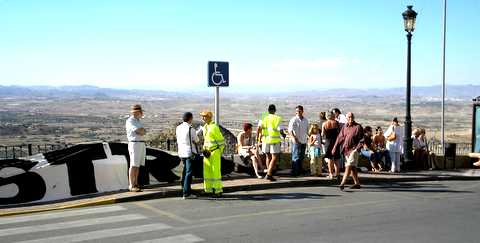
There was a protest on today over the proposed parking-centre for Mojácar pueblo. No one came.
It was a nice warm day, and although the organisers – Salvemos Mojácar – had attempted to cover their backs by warning that observers would be taking names, the fact was, the protest was a failure.
They usually are in the pueblo, which likes to complain noisily but keep a weather eye on the political fall-out of any public commentary. One never knows, does one?
Previous protests in the village included one years ago against Bartolome Flores’ destruction of the old fuente, when the foreigners took it into their heads to carry banners through the square. I remember one fellow, clutching a notice that said ’90,000 pounds to wash my knickers’ getting beaten over the head with his own placard by a mojaquero who told me afterwards – ‘yes, we are against remodelling the fountain, but no foreigner is going to tell us what to do’. So – what's the plan, José? Stand at the back and look slightly indignant.
Quite – the old ‘softlee softlee catchee monkey’ approach.
Another memorable march, when Rosmari, now the current leader of the PP, first switched sides from the PSOE to the conservatives back in 1993, thus ending Bartolome’s reign in the town hall. A handful of people gingerly traipsed up the hill with ‘Rosmari, devuelvame mi voto’ banners (Gimme my vote back).
The protestors’ arguments are probably specious. The view from the village would be the same from above the parking-centre as from El Mirador. Extra parking could mean (a drum roll) extra cars: more tee-shirts and humourous ashtray sales and more comfort for residents. It could, of course, if they built more offices and shops there, also mean the opposite.
Salvemos Mojácar and other local protest groups have had some success in slowing down the developers’ dream of a new and decidedly scruffier Marbella. The frightful Hotel El Algorrobico – apparently one of seven hotels, fifteen hundred homes and a golf course – has been stopped dead. Not, perhaps, knocked down, demolished, raised and returned to the original dust, but, ‘stopped’ at least.
The twenty-storey hotel is now a political chestnut, and has put the socialist Junta de Andalucía, town hall of Carboneras and the Ministry for the Environment at loggerheads. It’ll cost a fortune to knock it down, but it is palpably illegal. Perhaps some magnificent compromise will be reached – a hostal for sub-Saharan immigrants or a home for battered mothers. Perhaps it will just sit there and rot.
The pressure groups and local protestors want a return to a simpler life. No argument from me on that score, except for the small problem that going back in time is impossible. I would certainly like to drive about on the beach rather than inching forward, trapped in a column behind a cement lorry and the Wally Trolley. I would prefer to park in the village square than half a kilometre away at the bottom of a dusty hill. I prefer the old days when there were no beggars or accordion players. Put me down for twenty five Peseta beers and kind Swedish girls.
Mojácar needs sensible dialogue towards where we intend for our town to go. Orange boiler suits and whistles aren’t helping.
Bugged
There’s a fly, just one, that lives in the bedroom. He’s there on and off during the day, particularly at siesta-time. He will land on your arm and pace up and down, performing those essential fly-moves that are designed, apparently, with the sole purpose of pissing you off. I make what to a fly is a laughably slow swipe at him. He effortlessly dodges by hand.
Perhaps he’s a she. It’s hard to tell. One thing I know, however, is that he's impervious to sprays. He laughs with an eerie little chuckle, almost a buzz, as he wings through the poisonous mist. From his position upside-down on the ceiling, he practically twirls his moustache in a debonair manner as he watches me settle again. A hiss from me and a buzz from him. Rightback attcha!
He makes another pass which I ignore for the moment. He lands again and begins to amble up my leg.
The latest spray I have, from the House of Bloom, claims to be effective even against moscas persistentes. Persistent flies. I blast half a can straight between his eyes and return to the bed, attempting to focus on my book again, which I can’t remember if I’ve read before.
I turn the page and find a note there written in pencil. It looks a bit like my handwriting.
It’s our own fault. In other times, the light over the door would attract insects at night, fireflies, damson flies and shield bugs (those green ones that buzz loudly and smell agreeably of pine). It was a bucolic, earlier age, which has now passed into history. We insisted on our comforts and moaned because the plug-in pest killer wasn’t working any more. We scratched. Finally, our patience gone, we complained so much earlier this summer about the flies and the mosquitoes that the town hall spent some of their hard-earned firework-money on massive fumigations, with the result that few insects survived. There’s no more butterflies, beetles, dragon flies or Golden Splendour Beetles left. No thrips, coleoptera, fritillaries, mantids or Death’s Head Moth to soothe our souls with the wonder of Mother Nature. Just the toughened survivors: flies, fleas, mossies and cockroaches…
Of course, there are those poor humans who hate all insects, just because they once got stung. This is like hating all aliens just because you were once kidnapped, transported and indecently probed by Martians, as I believe recently occurred to one of our councillors. There’s something about it in this book I’m holding in my hands as I drift asleep-
The fly is back, it loops an impressive turn through the mist of falling woodworm from the beams before it returns to wash its feet on my nose, running its tiny fingers through my eyebrows and drooling spitefully on my cheek. Fully alert now, I seek cover. I try and continue reading under the sheet, but fail on several counts.
At night, it comes back, and if the moon is full, it will have switched into a smaller, faster shape; a shrill whine and a taste for blood.
I’ll stay awake, fearful and alarmed.
Frightened, you see, because he can metamorphose from one kind of insect to another. From mosca to mosquito. He is that most terrifying of creatures, half one thing, half the other.
He is, of course, a were-fly.
Perhaps he’s a she. It’s hard to tell. One thing I know, however, is that he's impervious to sprays. He laughs with an eerie little chuckle, almost a buzz, as he wings through the poisonous mist. From his position upside-down on the ceiling, he practically twirls his moustache in a debonair manner as he watches me settle again. A hiss from me and a buzz from him. Rightback attcha!
He makes another pass which I ignore for the moment. He lands again and begins to amble up my leg.
The latest spray I have, from the House of Bloom, claims to be effective even against moscas persistentes. Persistent flies. I blast half a can straight between his eyes and return to the bed, attempting to focus on my book again, which I can’t remember if I’ve read before.
I turn the page and find a note there written in pencil. It looks a bit like my handwriting.
It’s our own fault. In other times, the light over the door would attract insects at night, fireflies, damson flies and shield bugs (those green ones that buzz loudly and smell agreeably of pine). It was a bucolic, earlier age, which has now passed into history. We insisted on our comforts and moaned because the plug-in pest killer wasn’t working any more. We scratched. Finally, our patience gone, we complained so much earlier this summer about the flies and the mosquitoes that the town hall spent some of their hard-earned firework-money on massive fumigations, with the result that few insects survived. There’s no more butterflies, beetles, dragon flies or Golden Splendour Beetles left. No thrips, coleoptera, fritillaries, mantids or Death’s Head Moth to soothe our souls with the wonder of Mother Nature. Just the toughened survivors: flies, fleas, mossies and cockroaches…
Of course, there are those poor humans who hate all insects, just because they once got stung. This is like hating all aliens just because you were once kidnapped, transported and indecently probed by Martians, as I believe recently occurred to one of our councillors. There’s something about it in this book I’m holding in my hands as I drift asleep-
The fly is back, it loops an impressive turn through the mist of falling woodworm from the beams before it returns to wash its feet on my nose, running its tiny fingers through my eyebrows and drooling spitefully on my cheek. Fully alert now, I seek cover. I try and continue reading under the sheet, but fail on several counts.
At night, it comes back, and if the moon is full, it will have switched into a smaller, faster shape; a shrill whine and a taste for blood.
I’ll stay awake, fearful and alarmed.
Frightened, you see, because he can metamorphose from one kind of insect to another. From mosca to mosquito. He is that most terrifying of creatures, half one thing, half the other.
He is, of course, a were-fly.
Friday, September 15, 2006
¿Donde está Benji?
This one appears in El Indálico (September 2006)
Hay poca gente hoy en día que no tenga un teléfono móvil.
Por estar empezando a llegar a la edad de la chochera, en la que olvido todo y hasta olvido lo que he olvidado, he tenido que introducir unas rutinas en mi vida para ahorrar viajes y paseos inútiles. Ahora, cuando salgo por las mañanas, canto una pequeña cantinela que me ayuda recordar no olvidar mis trastos. Más o menos es algo como, “anteojos, billetera, teléfono y testículos”, a la música de “Viva España” (y toco los cuatro puntos de la cruz).
Soy propietario de un móvil desde hace unos tres años. Si todavía no se manejarlo bien, si no puedo acceder a Internet, utilizar la brújula o encender la linterna, por mi condición de ser “mayor de edad”, al menos puedo llamar o contestar en la mayoría de los casos. No siempre tengo éxito, porque, a pesar de vivir a cien metros de una torre de telefonía móvil, en mi panorámica diaria, no tengo cobertura en la casa menos en el cuarto de baño. Así, sentado en el trono, hago mis negocios, tanto personales como comerciales.
-¿Qué es este ruido?
-Es que está pasando un coche.
-Suena más como un camión.
El otro problema es el diseño moderno del aparato. Si tocas este botón, se activa el altavoz. En la calle, o sentado en una cafetería, habitualmente guardo el móvil en el bolsillo de mis estrechos pantalones Levis, en consecuencia tengo a veces problemas al sacarlo sin tocar el botón antes mencionado.
-¡Si!, dice una voz desde mi pantalón.
-¡Oiga! Espere un momento, chillo, mientras intento sacar mi mano y el aparato juntos, pero no unas monedas, papeles, chicles, el billetero, las llaves y otras sorpresas y tesoros. Es un poco como la historia del mono y el cacahuete: el mono mete la mano en un jarrón en el que hay un cacahuete dentro. Si cierra el puño para cogerlo no puede sacar la mano. Por tanto o saca la mano vacía o no la saca.
Mi pantalón, mientras tanto, sigue conversando, con la consiguiente diversión de la camarera lituana.
A pesar de sus inconvenientes, el móvil es muy útil. Tiene una pantalla que expone la lista entera de mis contactos y amigos y fielmente me dice quien me está llamando (mientras tenga mis gafas a mano y no haya olvidado cantar mi rima esa mañana al salir y darme cuenta de que las he dejado en casa).
Los que no quieren que vea su número de teléfono en la pantalla, pueden mandar la información de que se trata de una “identidad oculta” para mantener su anonimato. Casi siempre se trata de alguien buscando a un tal “Benji” que, supongo que fue el abonador anterior a mí.
-¿Benji?- No dicen mas.
-Hello. Yes. Bonjour. Gruss Gött, Yo soy Benji. Oui, Diga... y feliz viaje. No importa como conteste, porque cuelgan enseguida. Todos cuelgan, cabe decir, menos una, que empezó a hacerme preguntas raras. Supuse que se trataba de una policía de inmigración que buscaba al tipo. Para felicitarla, y suponiendo que tenía una buena cuenta para gastos extraordinarios, la mandé a Miami para seguir con sus investigaciones.
La gente están llamándonos, a Benji y a mí, todos los días del verano. Estoy convencido de que se trata de un mafioso, y, por el acento de la gente que me llama, a lo mejor es uno de éstos que trabajan traficando con las personas. Sospecho que el número del teléfono de Benji (ahora el mío) está pintado todavía en algunas chabolas de Mauritania, o quizás en la puerta de un banco allí, y que lo anotan personas que van buscando viaje a las Canarias donde encontrarán una vida mejor. Visto el volumen de pateras y la amnistía casi automática del gobierno español, es sin duda un gran negocio. Me sorprende incluso, dada la peligrosidad del trayecto, que los responsables de bajar el número de muertos en las carreteras españolas no estén proyectando hacer algo parecido en las vías marítimas entre el continente africano y las playas españolas. Podrían salvar muchas vidas y ayudar aún más en el esfuerzo de hacer más multi-culturales nuestras ciudades.
No tiene nada que ver con lo anterior, pero ¿has visto que el Rubalcaba y La Bufanda están interesados en dar el sufragio activo y pasivo a todos los del Tercer Mundo que han recibido, “excepcionalmente”, su permiso de quedarse aquí para que voten en las elecciones locales? Vaya... vaya... ¿A quien elegimos?
El desaparecido Benji, el que antes ostentaba mi número de teléfono, y suponiendo que no se presente pronto como candidato por el ayuntamiento de Valencia, probablemente estará ya en el fondo del océano junto con algunos de sus clientes. O quizás la suerte haya sido otra y, con una residencia nueva – y un nuevo número de teléfono – está construyendo una urbanización enorme al sur de Madrid pagada con dinero negro (nunca mejor dicho).
Éste es un país lleno de oportunidades para todos, siempre que tengas un móvil.
Hay poca gente hoy en día que no tenga un teléfono móvil.
Por estar empezando a llegar a la edad de la chochera, en la que olvido todo y hasta olvido lo que he olvidado, he tenido que introducir unas rutinas en mi vida para ahorrar viajes y paseos inútiles. Ahora, cuando salgo por las mañanas, canto una pequeña cantinela que me ayuda recordar no olvidar mis trastos. Más o menos es algo como, “anteojos, billetera, teléfono y testículos”, a la música de “Viva España” (y toco los cuatro puntos de la cruz).
Soy propietario de un móvil desde hace unos tres años. Si todavía no se manejarlo bien, si no puedo acceder a Internet, utilizar la brújula o encender la linterna, por mi condición de ser “mayor de edad”, al menos puedo llamar o contestar en la mayoría de los casos. No siempre tengo éxito, porque, a pesar de vivir a cien metros de una torre de telefonía móvil, en mi panorámica diaria, no tengo cobertura en la casa menos en el cuarto de baño. Así, sentado en el trono, hago mis negocios, tanto personales como comerciales.
-¿Qué es este ruido?
-Es que está pasando un coche.
-Suena más como un camión.
El otro problema es el diseño moderno del aparato. Si tocas este botón, se activa el altavoz. En la calle, o sentado en una cafetería, habitualmente guardo el móvil en el bolsillo de mis estrechos pantalones Levis, en consecuencia tengo a veces problemas al sacarlo sin tocar el botón antes mencionado.
-¡Si!, dice una voz desde mi pantalón.
-¡Oiga! Espere un momento, chillo, mientras intento sacar mi mano y el aparato juntos, pero no unas monedas, papeles, chicles, el billetero, las llaves y otras sorpresas y tesoros. Es un poco como la historia del mono y el cacahuete: el mono mete la mano en un jarrón en el que hay un cacahuete dentro. Si cierra el puño para cogerlo no puede sacar la mano. Por tanto o saca la mano vacía o no la saca.
Mi pantalón, mientras tanto, sigue conversando, con la consiguiente diversión de la camarera lituana.
A pesar de sus inconvenientes, el móvil es muy útil. Tiene una pantalla que expone la lista entera de mis contactos y amigos y fielmente me dice quien me está llamando (mientras tenga mis gafas a mano y no haya olvidado cantar mi rima esa mañana al salir y darme cuenta de que las he dejado en casa).
Los que no quieren que vea su número de teléfono en la pantalla, pueden mandar la información de que se trata de una “identidad oculta” para mantener su anonimato. Casi siempre se trata de alguien buscando a un tal “Benji” que, supongo que fue el abonador anterior a mí.
-¿Benji?- No dicen mas.
-Hello. Yes. Bonjour. Gruss Gött, Yo soy Benji. Oui, Diga... y feliz viaje. No importa como conteste, porque cuelgan enseguida. Todos cuelgan, cabe decir, menos una, que empezó a hacerme preguntas raras. Supuse que se trataba de una policía de inmigración que buscaba al tipo. Para felicitarla, y suponiendo que tenía una buena cuenta para gastos extraordinarios, la mandé a Miami para seguir con sus investigaciones.
La gente están llamándonos, a Benji y a mí, todos los días del verano. Estoy convencido de que se trata de un mafioso, y, por el acento de la gente que me llama, a lo mejor es uno de éstos que trabajan traficando con las personas. Sospecho que el número del teléfono de Benji (ahora el mío) está pintado todavía en algunas chabolas de Mauritania, o quizás en la puerta de un banco allí, y que lo anotan personas que van buscando viaje a las Canarias donde encontrarán una vida mejor. Visto el volumen de pateras y la amnistía casi automática del gobierno español, es sin duda un gran negocio. Me sorprende incluso, dada la peligrosidad del trayecto, que los responsables de bajar el número de muertos en las carreteras españolas no estén proyectando hacer algo parecido en las vías marítimas entre el continente africano y las playas españolas. Podrían salvar muchas vidas y ayudar aún más en el esfuerzo de hacer más multi-culturales nuestras ciudades.
No tiene nada que ver con lo anterior, pero ¿has visto que el Rubalcaba y La Bufanda están interesados en dar el sufragio activo y pasivo a todos los del Tercer Mundo que han recibido, “excepcionalmente”, su permiso de quedarse aquí para que voten en las elecciones locales? Vaya... vaya... ¿A quien elegimos?
El desaparecido Benji, el que antes ostentaba mi número de teléfono, y suponiendo que no se presente pronto como candidato por el ayuntamiento de Valencia, probablemente estará ya en el fondo del océano junto con algunos de sus clientes. O quizás la suerte haya sido otra y, con una residencia nueva – y un nuevo número de teléfono – está construyendo una urbanización enorme al sur de Madrid pagada con dinero negro (nunca mejor dicho).
Éste es un país lleno de oportunidades para todos, siempre que tengas un móvil.
Saturday, September 09, 2006
Content
Here we are with a fine opportunity to write about Spain.
We have a newspaper or a magazine, together with some bloke who is going to wander around the bars and sell advertising, another chap with an old van who says he knows the area well and will deliver, a young wiz-kid for the layout on the computer and a printer up in Ciudad Real who won’t charge too much.
Between the adverts in the mag, we are going to have spaces, which will need filling. We are going to need a writer.
Now, the given. We are in Spain; we are continually learning about this country and we are all, readers and publisher alike, part of the same great adventure.
So, let’s print articles about lipstick. Articles about the North American fox, about fennel, Coronation Street, Tony Blair, Red China, Marks and Spencer’s, Manchester, fajitas, Iraq, facelifts and the price of strawberries… in Oxford.
There’s a splendid opportunity to write about sports (if such a thing grabs you), about the victory of the Spanish basketball team, the Spanish Grand Prix champion, our cycling and of course, our football. But no, with the exception of the odd incoherency about or from David Beckham, we are treated to articles about Fulham or Arsenal.
To remind us further that we are now living in Spain – presumably at our own free will – we are offered the week’s or even month’s television entertainment. The Sky satellite service from Britain.
With rare exceptions, the articles we reproduce for your reading pleasure will appear unsigned. Yet, some poor joe wrote them. Writers usually get tuppence for their efforts anyway, but they do like to see their name in print. When one of our local newspapers prints some piece – apparently to fit some hole on page nineteen next to the advert about cesspit repairs (seventeen years experience) – as often as not, there will be no credit of a writer.
In The Euro Weekly, there are hardly any articles at all with writers’ names attached. Even when the essay starts with an ‘I’. It’s not the only offender.
Much of the material which appears in our local newspapers and magazines, if not about Spain, the process of living in Spain, the culture of Spain, the language, geography, history, traditions, people, food, politics, art and literature of Spain, appears to have one thing in common, one general point of union. The articles will come from the Internet.
You can imagine. ‘Geoff, I’ve got a hole on page 32’. ‘Don’t worry, Alice, I’ve found a bit on the Pyramids’.
Unless you have paid for it, or have a signed letter from the writer or the agent, this is called plagiarism. There is a handy program on the Internet to compare an article with another published one. It’s at www.copyscape.com
Another kind of scrip will sometimes float around in a newspaper. Sometimes it will be labelled ‘advertising feature’ and sometimes not. It will be an article handed in by an advertiser with, let’s say ‘not entirely impartial recommendations’ regarding building, eating, investing, shopping and buying a second hand car. Since these ‘puffs’ are invariably set in Spain, the reader might fall upon them with more enthusiasm than they in fact merit.
I like good writers. I think that they make a newspaper worth picking up. I think they entertain and educate the reader. I think a good writer is worth paying something. I think it’s an opportunity worth taking.
Forget plagiarism, cynical and bad editing and gratuitous puff pieces. Ask to read something decent about Spain.
We have a newspaper or a magazine, together with some bloke who is going to wander around the bars and sell advertising, another chap with an old van who says he knows the area well and will deliver, a young wiz-kid for the layout on the computer and a printer up in Ciudad Real who won’t charge too much.
Between the adverts in the mag, we are going to have spaces, which will need filling. We are going to need a writer.
Now, the given. We are in Spain; we are continually learning about this country and we are all, readers and publisher alike, part of the same great adventure.
So, let’s print articles about lipstick. Articles about the North American fox, about fennel, Coronation Street, Tony Blair, Red China, Marks and Spencer’s, Manchester, fajitas, Iraq, facelifts and the price of strawberries… in Oxford.
There’s a splendid opportunity to write about sports (if such a thing grabs you), about the victory of the Spanish basketball team, the Spanish Grand Prix champion, our cycling and of course, our football. But no, with the exception of the odd incoherency about or from David Beckham, we are treated to articles about Fulham or Arsenal.
To remind us further that we are now living in Spain – presumably at our own free will – we are offered the week’s or even month’s television entertainment. The Sky satellite service from Britain.
With rare exceptions, the articles we reproduce for your reading pleasure will appear unsigned. Yet, some poor joe wrote them. Writers usually get tuppence for their efforts anyway, but they do like to see their name in print. When one of our local newspapers prints some piece – apparently to fit some hole on page nineteen next to the advert about cesspit repairs (seventeen years experience) – as often as not, there will be no credit of a writer.
In The Euro Weekly, there are hardly any articles at all with writers’ names attached. Even when the essay starts with an ‘I’. It’s not the only offender.
Much of the material which appears in our local newspapers and magazines, if not about Spain, the process of living in Spain, the culture of Spain, the language, geography, history, traditions, people, food, politics, art and literature of Spain, appears to have one thing in common, one general point of union. The articles will come from the Internet.
You can imagine. ‘Geoff, I’ve got a hole on page 32’. ‘Don’t worry, Alice, I’ve found a bit on the Pyramids’.
Unless you have paid for it, or have a signed letter from the writer or the agent, this is called plagiarism. There is a handy program on the Internet to compare an article with another published one. It’s at www.copyscape.com
Another kind of scrip will sometimes float around in a newspaper. Sometimes it will be labelled ‘advertising feature’ and sometimes not. It will be an article handed in by an advertiser with, let’s say ‘not entirely impartial recommendations’ regarding building, eating, investing, shopping and buying a second hand car. Since these ‘puffs’ are invariably set in Spain, the reader might fall upon them with more enthusiasm than they in fact merit.
I like good writers. I think that they make a newspaper worth picking up. I think they entertain and educate the reader. I think a good writer is worth paying something. I think it’s an opportunity worth taking.
Forget plagiarism, cynical and bad editing and gratuitous puff pieces. Ask to read something decent about Spain.
Thursday, August 31, 2006
A Very Special Concert

The fiestas are all but over (just... one... more... week-end...) but, since the standard of the entertainment here in Mojácar has been derisory over the past couple of months - not a single worthy act during the entire summer season - Lenorex Productions (Is It Live - or Is It Lenorex?) have decided to put on one Top Class Act.
And I've got a ticket!
Wednesday, August 23, 2006
The Municipal Vote 2007
The PSOE has long worried about the ‘foreign vote’ in local elections. In 1994, the government of Felipe Gonzalez had proposed that those Europeans living in Spain and listed on the padrón (the town hall registry) should be able to vote in local elections. The paperwork was prepared for the June 1995 elections but an ambitious junior minister, Alfredo Pérez Rubalcaba, put the blockers on it at the last moment with the very real worry that the foreigners would probably vote conservative…
In the end, the Europeans were allowed to vote for the European elections (where they of course made no impact), but not the local ones…
By 1999, with a PP government in power and new European rules on émigrés, we were able to – finally – vote in local elections. I was 45 and at last had the vote. I had never been able to vote – beyond the thrilling 1995 European election – in any meaningful way either in England – where I’m from, or Spain, where I’ve lived and actually held residence since 1969.
I could not only vote, I could appear on a list and ask to be voted for. The Spanish inter alia changed their constitution to allow for this for the first time since it was written in 1978. The Europeans, over eighteen, registered on some padrón and who had signed a note asking to vote were able to involve themselves in politics. Added to this, the Norwegians (not a EU state) were able to vote – although not run for office.
Although the ‘European’ vote was never going to make much difference – we live in small coastal pueblos rather than politically powerful cities – the outcome was rather disappointing. A relatively small number of Europeans turned up to the polling booths (some to be turned away for various obscure reasons) and some thirty coastal pueblos – occasionally fielding foreigners safely far down their lists – were in some small measure affected by the European vote. In Mojácar, an independent party, Mojácar 2000, was able with foreign support to wrest control of the ayuntamiento. Its councillors were Spanish.
In Jávea (Alicante), a foreigner became a councillor. There was little else to report.
In 2003’s local elections, the foreigners managed a little better, with some 550 voting from the possible 1,950 enfranchised Europeans in Mojácar. No councillors though. In Jávea, the councillors grew to three and they have now formed their own political party for next May’s local elections (Nueva Jávea at www.nuevajavea.com ).
The proposed European Constitution that was thumping about last year, supported by the Spanish but roundly thrashed by the French (and promptly dropped from the ‘to do’ pile of Tony Blair and others), is unkind to Europeans who live in other countries than their own. We can not vote in regional or national elections or – of course – in referenda. We are powerless in Pan-European elections because of our spread. These evident reasons would make us ‘second class European citizens’.
So in Spain, the European vote has slowly grown. Returning to Mojácar, citizens’ meetings, bad politics (still no foreigners or even English-speakers working in the town hall) and better awareness have all started to bring the European residents out of their self-imposed isolation. Mojácar now has as many European as local voters. The field begins to look interesting…
Enter, stage left, our old friend Rubalcaba, now the Minister for the Interior.
All foreigners should be able to vote in local elections, says the socialist, as it’s only fair.
Well, yerss, but the socialist interest is in votes rather than rights. The large number of immigrants that have flowed into Spain from the Third World and have received indulgences or amnesties from the government, together with work and residence permits, will hardly be voting for the conservative Partido Popular.
Let’s look at some numbers (El País 23 August 2006).
Europeans in 2003 (i.e. ‘registered’, being politically expedient but not true numbers): 360,000. In 2007, this should increase to 620,000. By 2007 there should be 165,000 Brits. From the non-EU bit of Europe, and joining the Union in December 2006, there should be 190,000 Rumanians and 60,000 Bulgarians (the Spanish authorities actually estimate the real figure for these two nationalities at 480,000). From certain South American states, add another 350,000 (Spain is fond of South America. Rubalcaba said in a recent speech that he wants to cement the Ibero-American brotherhood. I don’t think they’ll be voting conservative either). The addition of the rest of South America (Ecuatorians in particular), Moroccans, Chinese, Sub-Saharans, Russians and my wife, a (non-voting) American passport holder, were too much for the El País to consider, but there are, in fact, some four million foreigners living in Spain at the moment. Theoretically, perhaps three million would qualify: most being supportive of the PSOE from whence the manna floweth.
These wonderful ideas are not acceptable to Brussels as yet, but the PSOE has firm intentions for next year and the PP is currently on its back foot.
Tuesday, August 22, 2006
The Point is - you see: ¡es mío!

The traffic has been intense over the past couple of months. There are few places to park (you don't make money building parking spaces) and the visitors have taken all the spots. The streets are decidedly narrow and won't support more than one line of parked cars (even that will clog up some calles). The shop-keepers have to walk miles as the roads are blocked with delivery trucks, people getting lost, Mojácar choo choo trains, people going around showing off their huge four-wheel drive gas-guzzlers and then there's the few parking spots being reserved for minorities for artistic rather than practical reasons (the handicapped, scooters, those with no sense of justice etc). Zebra crossings, enormous trash cans for bottles, for cardboard (overflowing at the moment), skips, gazeeboes, signs, huts, tourist offices, kiddy-gardens and even a few trees, all contribute to make parking spots hard to find. Especially when you're working.
Which is why we double park. Actually!
A new block of shops and offices, just built in front of the Parque Comercial on Mojácar playa, has no on-ground parking at all. I suppose they're gonna use the existing parking. Well done the planners.
Anyway, here's a view of a site just behind the Parque Comercial. As you can see, in a sudden burst of solidarity with his cousins who run all the shops there, our boy has fenced off the block so as that no one can park there. You see, ¡es mío!
Later: Well, no. It's even worse. It's not the owner who is closing off this space for about a hundred cars. No. It's the neighbour. The vecino de enfrente. He doesn't like dust apparently. There you are.
I spent most of this afternoon driving around there in circles.
Tuesday, August 15, 2006
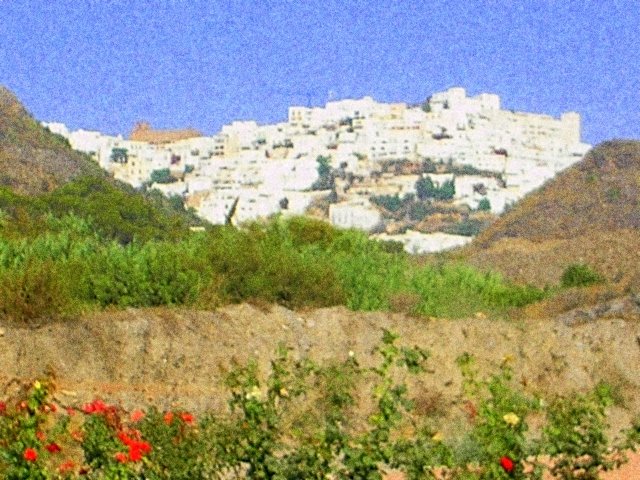
Wednesday, August 09, 2006
Dearest Beloved
Dear Ms Daboo, I was very sorry to hear about the tragic death of your father, the treasurer for the Bank of Umginginglovu. Truly sad.
Being a complete idiot, I believe every word of your tragic tale, and, since I am also a greedy idiot, I am intrigued by your kind offer to give me fifty per cent of the twenty five million dollars U.S. that your Dad left hidden under a rock just behind the B of U’s urinals. I understand that all I need to do is to give you my bank details, passwords and so on so that you can transfer this sum to my account, where I will hold it safe until you show up and I will give you half of it. I would be Honoured to be an instrument in your cunning yet noble plan to export your daddy's lolly to Civilization.
I have to tell you, I have received no less than seventy (yep, Seventy!) similar offers in the past month, all obvious frauds, and I must warn you to be on the look-out for clever yet dishonest people who rely on the duplicity of strangers.
Perhaps you should give me your bank details so that I can be sure that you won’t be defrauded.
Desmond.
Being a complete idiot, I believe every word of your tragic tale, and, since I am also a greedy idiot, I am intrigued by your kind offer to give me fifty per cent of the twenty five million dollars U.S. that your Dad left hidden under a rock just behind the B of U’s urinals. I understand that all I need to do is to give you my bank details, passwords and so on so that you can transfer this sum to my account, where I will hold it safe until you show up and I will give you half of it. I would be Honoured to be an instrument in your cunning yet noble plan to export your daddy's lolly to Civilization.
I have to tell you, I have received no less than seventy (yep, Seventy!) similar offers in the past month, all obvious frauds, and I must warn you to be on the look-out for clever yet dishonest people who rely on the duplicity of strangers.
Perhaps you should give me your bank details so that I can be sure that you won’t be defrauded.
Desmond.
Monday, August 07, 2006
Gimme a glass of milk – inna dirty glass…
Spain has always had an interest in milk, even if, until recently, you couldn’t find a cold glass of it anywhere.
The old milk was a definite bluish colour and came in a 1.5l glass bottle with a narrow top and a metal cramp, like a coke bottle. This stuff could sit in the sun for weeks without losing its taste and often did. Apparently, to help it last, they took the cream out of the milk and added a shot of pig fat. The blue colour came, apocryphally, from the formaldehyde that kept the mixture quiet. This explains why breakfast cereals came to Spain rather late. Pour that stuff over your Frosties, it would have eaten them before you could.
Later UHT milks from different companies, now mostly in the handy tetrabrik box, became acceptable for coffees and so on. A cup of (proper) tea would be shaken by this stuff, but you can get used to anything. Now, we even have sippin’ milk in the supermarkets. Tastes good.
While milk has never been considered a serious drink (despite the best efforts of some of the producers to tell us different in the usual kids adverts), it has certainly spawned a whole slew of versions. We have milk with vitamins, milk with calcium, skimmed milk, partially skimmed milk, milk with royal jelly, milk with acidophilus (a handy bacteria apparently found in drool), specially flavoured chocolate, vanilla and strawberry milks, rice milk and soya veggy milk. In point of fact, I doubt any of them ever loitered under a cow. Certainly Barbara’s pet calf, Petit Suisse, refused point blank to drink one particular brand, the Valencian-produced ‘Leche Ram’. I see the company has since gone pear-shaped. Perhaps the calf knew something.
At the same time, yoghurt has done just fine. I think I first tried yoghurts here in Spain as a child. The Danone people (a company from Barcelona), were putting out their early flavours by the time I first arrived here in 1966 (they actually started in 1919, selling the stuff in farmacias) and apart from the plain one (add jam and sugar), there was at least a strawberry one going strong. How long they might have lasted outside a fridge is probably best not to consider today. These days, there are an untold number of flavours clogging up the nation’s cold-shelves, with anything that grew on a tree or a stalk being processed into a yoghurt cup. You can now even get ‘Greek yoghurt’ (thicker than the usual stuff). Spain is not, with this notable exception, very kind to Greece (try and find a Greek restaurant, a pair of crapcatchers or a bottle of ouzo).
Together with yoghurt, another milk-based little number on the shelves is guajada, a set rennet made from sheep’s milk. It comes in a little stone pot. With a squirt of honey, it’s pretty good.
Spain triumphs with its ice creams. The main area for ‘artesanal’ ices is the interior of Alicante and Valencia provinces, notably Jijona (also famous for its nougat). Heladerías cover the main streets and offer dozens of alternatives. They (thank goodness) are all licenced, so you can put a shot of whisky on top of your tart. In fact, tarta al guisgüi (as the purists would spell it) is one of the best and most august of Spain’s postres, together with the ice-cream bar with two or three flavours (vanilla, strawberry and chocolate), natillas (a custardy thing) and the ubiquitous flan, the crème caramel. Then, there’s leche frita, or ‘fried milk’ – it comes in caramel covered chewy lumps – to try as well.
Before the fridge came along, and those fat blue bottles of Puleva ‘milk’ were still being used for arcane cooking reasons, Spaniards would often put condensed milk (which I think came from Holland) in their coffee. They still do, and as a ‘bonbón’, your coffee will give you a good kick-start.
The old milk was a definite bluish colour and came in a 1.5l glass bottle with a narrow top and a metal cramp, like a coke bottle. This stuff could sit in the sun for weeks without losing its taste and often did. Apparently, to help it last, they took the cream out of the milk and added a shot of pig fat. The blue colour came, apocryphally, from the formaldehyde that kept the mixture quiet. This explains why breakfast cereals came to Spain rather late. Pour that stuff over your Frosties, it would have eaten them before you could.
Later UHT milks from different companies, now mostly in the handy tetrabrik box, became acceptable for coffees and so on. A cup of (proper) tea would be shaken by this stuff, but you can get used to anything. Now, we even have sippin’ milk in the supermarkets. Tastes good.
While milk has never been considered a serious drink (despite the best efforts of some of the producers to tell us different in the usual kids adverts), it has certainly spawned a whole slew of versions. We have milk with vitamins, milk with calcium, skimmed milk, partially skimmed milk, milk with royal jelly, milk with acidophilus (a handy bacteria apparently found in drool), specially flavoured chocolate, vanilla and strawberry milks, rice milk and soya veggy milk. In point of fact, I doubt any of them ever loitered under a cow. Certainly Barbara’s pet calf, Petit Suisse, refused point blank to drink one particular brand, the Valencian-produced ‘Leche Ram’. I see the company has since gone pear-shaped. Perhaps the calf knew something.
At the same time, yoghurt has done just fine. I think I first tried yoghurts here in Spain as a child. The Danone people (a company from Barcelona), were putting out their early flavours by the time I first arrived here in 1966 (they actually started in 1919, selling the stuff in farmacias) and apart from the plain one (add jam and sugar), there was at least a strawberry one going strong. How long they might have lasted outside a fridge is probably best not to consider today. These days, there are an untold number of flavours clogging up the nation’s cold-shelves, with anything that grew on a tree or a stalk being processed into a yoghurt cup. You can now even get ‘Greek yoghurt’ (thicker than the usual stuff). Spain is not, with this notable exception, very kind to Greece (try and find a Greek restaurant, a pair of crapcatchers or a bottle of ouzo).
Together with yoghurt, another milk-based little number on the shelves is guajada, a set rennet made from sheep’s milk. It comes in a little stone pot. With a squirt of honey, it’s pretty good.
Spain triumphs with its ice creams. The main area for ‘artesanal’ ices is the interior of Alicante and Valencia provinces, notably Jijona (also famous for its nougat). Heladerías cover the main streets and offer dozens of alternatives. They (thank goodness) are all licenced, so you can put a shot of whisky on top of your tart. In fact, tarta al guisgüi (as the purists would spell it) is one of the best and most august of Spain’s postres, together with the ice-cream bar with two or three flavours (vanilla, strawberry and chocolate), natillas (a custardy thing) and the ubiquitous flan, the crème caramel. Then, there’s leche frita, or ‘fried milk’ – it comes in caramel covered chewy lumps – to try as well.
Before the fridge came along, and those fat blue bottles of Puleva ‘milk’ were still being used for arcane cooking reasons, Spaniards would often put condensed milk (which I think came from Holland) in their coffee. They still do, and as a ‘bonbón’, your coffee will give you a good kick-start.
Subscribe to:
Posts (Atom)