Monday, February 28, 2022

I Wanna Move to Spain (and so you should)

 Somebody was asking on Facebook – is it easy to move to Spain and get a job? I answered with that old chestnut: ‘the only way to make a small fortune here, is to start with a large one’ (cue laughter and approval from the usual suspects).

For Northern Europeans, their money here is good – after all, whose isn’t? One can buy something, a car, a box, a shirt or a meal – as long as they take it away with them shortly afterwards. A house though, and here’s the problem, it doesn’t move.

In the old days, when houses sold for pocket-change (I once foolishly failed to buy a large apartment in front of the Royal Palace in Madrid for the equivalent of 36,000€), the money was welcome enough, but now we have los nietos, the grandchildren, saying ‘Oh, why did abuelo sell that farm to the ingleses all those years ago for just a million pesetas?’

‘And they still don’t speak Spanish or help us with the olive-pickin’.

It’s probably a small gripe.

We open a bar, but only our fellow foreigners come and drink in it. A local story goes that Gordon – who had run La Sartén since God was a Boy – was feeling seedy and, one thing and another, he hadn’t been around for a few days to the nearby Gabila’s for his morning carajillo.

‘What’s up’, asked El Gabila, in that slow Spanish which is reserved for foreigners after bumping into Gordon one day in the supermarket, ‘why haven’t you been to my bar in the last week?’

‘Well’, asked Gordon reasonably, ‘why haven’t you ever been to mine?’

Our Facebook friends who want to move here from the UK might want to take note.

If they open a bar, they will compete with all the other guiris for the tourist trade, and if they stay open in the winter, then they can expect that the expats will drift in once the sun disappears (around half past five); but they won’t get the local trade – and nor indeed will the restaurants (although my mate Juan used to agree enthusiastically with me about ‘los fish y pips’ down at Mervyn’s).
So some of us turn to plumbing (no Spaniard would employ a British plumber – for two reasons – only the second being the paperwork), or they seek work as a mechanic, or a psychologist or a set designer. Maybe a crooner down at the campsite. How about an air traffic controller as somebody was asking today on Fb (after all, she points out, I speak pretty good Spanish)?

Of course, some of us do make a living: real estate or selling adverts or house-cleaning or putting in satellite systems, but our clients will all be fellow-foreigners.

The best way to live in Spain is with money coming in from abroad. Either a decent pension, or an income from business interests or, hey, even a monthly remittance from an angry parent… It’s all good.

Maybe one can swing one of those working-from-one’s-computer jobs from a nice place in Mallorca. These days, it all done on the phone…

If all fails, we must turn our talents to other ends. Ripping off gullible people is so easy (‘Ah yes, I speak the lingo, I’ll get you a deal’).

You see those stories every week in the local free press.

But we will have to prey on our own nationals, because Spaniards won’t fall for it. Then, if things turn out badly, there’s always the panicked ‘midnight runner’. Load the car, and head for the frontier.

‘How’s Bob, I haven’t seen him in a while… Say, isn't that his cat?’

Over the years, the times I’ve been swindled here has always been by fellow Brits. On one occasion, it was for quite a lot.

But don’t let me put you off. Spain is a great place to live; it’s just not a great place to make money.

Thursday, February 24, 2022

Our Romantic Trip

 My late wife Barbara wrote this one in 2012.

At some moment of time in the late eighties, I was writing a special for our newspaper on romantic get-aways and I contacted the head of tourism for the small resort of Lanjarón in Granada. In those days, newspapers didn't buy agency copy and we had to either write our own stuff or ask the fellow upstairs to pen something.

Lanjarón is a beautiful village, high in the Alpujarras and famous for its natural spring water and hot springs and old Moorish baths. It had to be a great place to visit, I thought.

After speaking with the head of tourism over the phone, he kindly invited me and a guest to stay in his hotel and spend a weekend taking in all of the wonders of Lanjarón. It was late November and Lenox’s birthday so I thought it would be a wonderful surprise that would normally be out of my price range.

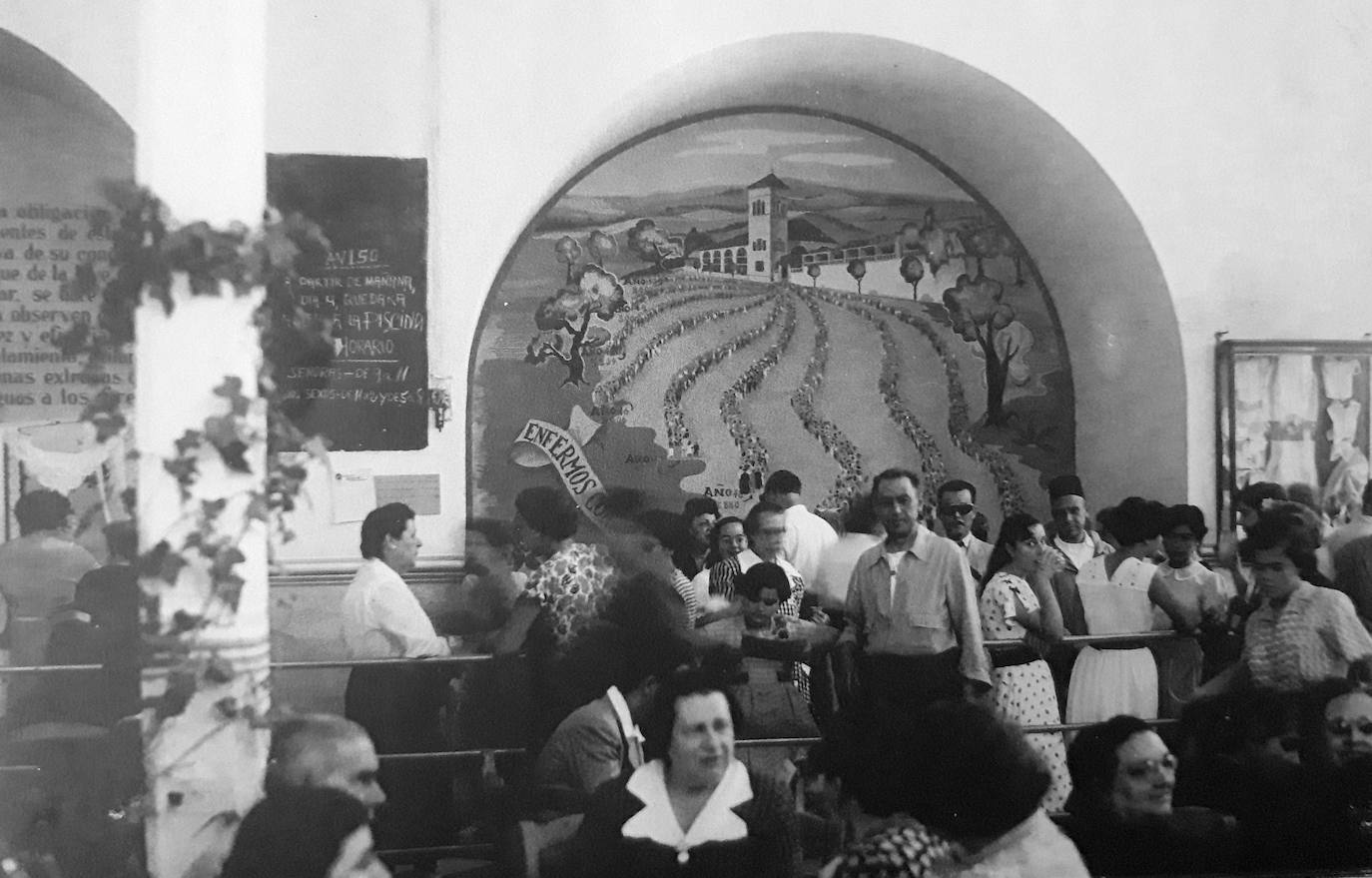
We had driven up to the city of Granada from the coast to make our way over the top of the Sierra Nevada on what turned out to be an alarming and stony track, with the snow either beginning to fall or already banked on the side on our route. The car was a rear-engined two-seater and we had no chains for the wheels if the going got any worse. We gingerly passed through little villages and hamlets at the very summit of the Alpurrajas. Arriving at last in the town made famous from its bottled water, we found the hotel to our surprise to be chained, locked and bolted. The neighbors said maybe the manager (and acknowledged expert on tourism) had gone into Granada to go shopping.

Or, who knows, maybe he had just bolted.

We spent the rest of the day wandering around the town - there was just the one street - and finally decided to take a room, at our expense, in the only hotel that was open. It turned out to be a hotel for senior citizens where the Spanish Social Security system brought elderly people by the bus-load in a service called El Imserso.

We checked into our room and were told that dinner was at seven. Our room was large, freezing and filthy. The view from our bedroom window was of snow; not a beautiful snowy landscape but of packed snow up against the window. We went to the dining room around 7.15 only to find that, in a most un-Spanish way, they meant dinner was served at seven and not, as usually understood, that it started vaguely anytime after seven but best show up around nine.

Every course was a type of purée. The soup, vegetable, meat and pudding had all been put through a blender. Who, we wondered, needs teeth with a meal like that? After this rather disappointing dinner we went out to find a bar and something proper to eat but along the main and indeed practically only street, everything was firmly shut; so we returned to the hotel bar. The only beverage on the shelf behind the bar was an elderly bottle of Cointreau, so Lenox ordered one and, to his gratification, was given a huge water glass full of this sticky orange-flavoured liqueur. I asked for a Coke and the bar-tender had to leave the building only to return ten minutes later with a can of Coke held firmly in his gloved hands: he must have got it out of a friend’s refrigerator.

Some of the other guests were gloomily playing dominoes in the lounge while others were watching the TV. We decided to retire to our icy room and go to bed.

We were wearing every piece of clothing we had packed while all of the blankets and towels were spread on the bed and yet we were still freezing. Lenox suggested adding the rug on the floor but it was covered with heavy clumps of what appeared to be human hair.

After an unsatisfying breakfast of puréed toast and with our hitherto benevolent opinion about Lanjarón firmly in retreat, we decided to leave the town, as even the hot springs and baths were closed for the season. We drove down the mountains towards the coast looking for somewhere beautiful and interesting. To our surprise, we came across a place called Orgiva – looking like the Santa Cruz Mountains of California wrenched directly from the 60s, with long-haired hippies wearing outsize velvet caps, a reek of patchouli oil, Tarot-readings in the market, and a few painted VW buses. The whole lot of them: all apparently moved in a woozy bulk to the Alpujarras of Granada.

We broke our trip briefly in another notable village, Yegen, where Gerald Brennan had lived for many years. The entire place appeared to us to have chosen in its origins to be built entirely in the shade. White houses grey. Our conclusion? Don’t visit it in November.

We continued eastwards, still in search of a nice hotel to roost in for a break - after all, I could always write about somewhere else. We coasted into Trevélez and came across a restaurant apparently famous for its trout so we pulled in to the car-park only to find three bus loads of German tourists parked in mathematical precision in front of us. That would be a lot of trouts for one day, we thought, so we gave up.

It was getting dark, but the only rooms we could find in Trevélez – tourism in the eighties evidently still not being a strong point from Lanjarón onwards – was above a gas station, so we decided to give up and go home. When we regained the coast we changed our plans, deciding not to let our romantic weekend be completely ruined so we went to a giant hotel located on the beach in Aguadulce, Almería. A least the bar would have something crunchy. The hotel was full of English and German tourists all looking to be entertained around the clock and, by chance, it was “Dress in Drag Night”. So nice to see the two nations coinciding for once – if only in complete idiocy.

I had never been so happy the following morning as to return to the beauty and comfort of Mojácar, and until now, all these years afterwards, I have never written that article I had promised Lenox and his readers about Lanjarón.

Saturday, February 12, 2022

'Click the Link Below to Read More'

There is a desire among newspapers and news-sites to get more readers, because more readers means more advertising revenue (apparently). 

This ruthless chase to the bottom is evident in the Facebook page of the Euro Weekly News, where evidently, anything goes.

Posts are now festooned with hashtags (such as #Spain or #LatestNews) which are used - in theory - to bring extra visitors. 

There is the good old click-bait. The headline leaves a teaser for the reader to click on, where  all will be revealed. Today, there's one that wonders how much the Spanish Royals make each year ('Find out here'); or this one (grammatical mistake included): 'Who remembers the serial killer Dennis Nilsen? Well one of his inmate's has a story to tell'.

They run riddles to gather those hits (visits, really). 'What goes up but never goes down?' is today's effort.

They ask questions like 'what is your favourite love song?' or 'would you eat crickets?' or 'Covid passports - is it time they were scrapped?'. No doubt the Spanish health authorities are biting their collective lip waiting for the answer of that last one from the Weenie readers.

Or, 'how many ducks are in this picture?' (unfortunately, I'm banned, so I couldn't give my considered answer).

My favourite of today's crop of drivel has nothing to do with Spain (or even the UK):  'Just how tolerant should the police be in removing protestors, has New Zealand gone too far...?' They apparently play Barry Manilow music to upset the protestors (and understandably so). 

Is there a daily quota or something?

Wisely, the search button shows no posts from Leapy Lee following one from 2020 where readers were asked to vote on this far-right one-note warrior (74% of those who showed a preference said they liked him).  

Facebook works by dropping a few of your 'favorites' into your feed, so unless you visit a particular site, you will only be treated to a reduced number of their posts. More, perhaps, if you keep clicking. I think, if you really feel you the want the news from this outfit, you should probably stick to their webpage (or maybe choose the BBC, or the Express, depending on your needs).


 This week's paper has a few eye-catching things about it as well. The front cover appears to be a girl who has taken off a flimsy undergarment in public. No wait, it's a face-mask.  I think I speak for all of us when I say I was sorry this picture (and news item) never made it to the Facebook edition - perhaps they were worried that it might have been misconstrued. But shouldn't this story have continued on Page Three rather than Page Two?


Friday, January 28, 2022

Did Spain Get a Bit Tamer Over the Years, Or Is It Me?

The subject of old Renault 4s came up somewhere. My dad had bought one back in 1967 which stood us proud until one day some nitwit from Melilla creamed us on the way to the liquor store in Vera. I was in the front with my dad and suddenly, so was the dog and several empty crates of beer. 

It was a wonder that nothing was spilled. 

The Renault had a push-pull gear lever, as did its rival the 2CV. If you are not familiar with this, then know that there's a stalk sticking up out of the motor, the gear lever, and then there's an umbrella handle poking through the dashboard somewhere with a little ring on the other end which is loosely held over the gear-stalk. All you had to do was waggle it in the right way, a bit like those cranes that win a prize in the back of most bars. There was a trick to it. Reverse was way over to the right.

Or was it the left?

After that experience, my dad stuck to Citroëns. 

And beer from the supermarket in cans.

Life in Spain was fun. Franco had closed the gates to Gibraltar but otherwise left us in peace. Indeed, a trip down to the Rock to change money - it had the nearest Barclays Bank - involved a detour via Tangier, which was always a blast. Morocco meant - and still does - trips to the souk and a growing collection of carpets, trays, jalabahs and Goulimine beads. Gibraltar was English beer, sausage rolls and people with funny accents; but hey, you can find those anywhere these days, Brexit notwithstanding. 

My father and I spent a few days in clink in Vera once. We had been cleaning up the local view-points (by sawing down a select choice of billboards) and were thrown into the calabozo below the Vera town hall for our troubles. Greenpeace would have been proud of us. To our surprise, we were arrested several months after we had hung up our saws by a contrite pair of Guardias (my dad used to send a crate of wine over to the cuartel every Christmas with his compliments), but justice in Spain is rarely swift. We spent five days in the pokey before being released on bail. I announced that I was leaving school (I was attending one in Seville) as the consequent result of having become an old lag at 17. And thus I grew up. Franco returns to the story here, as he celebrated around about then his thirty five years of terror with an amnesty for small-time evil-doers like ourselves. 

Thus nothing more was said.

I went off after that and conquered society; well, the warm bits anyway. As an adult, I have spent most of my time in Spain (with periods living in the USA, Mexico, Paris, Florence and so on). In all, I have spent maybe three months in the UK since 1970 - probably more than enough.

Spain had filled up over the decades with us Brits - or rather, a reduced number of coastal villages did. There aren't many of us to be found inland, or in the cities. Locating an English breakfast or a Union Jack pub is hard to do where I live - a suburb of the provincial capital with an abandoned beach where there are no hotels, souvenir shops, Indian restaurants or even tourists. We have no currency exchange places or charity shops or even, for that matter, earnest dog and cat people. Each morning I manage perfectly well with a slice of tortilla and the local newspaper.

I can't complain. I spent plenty of my time as a young whippersnapper in the discos and knock-shops with the best of them.

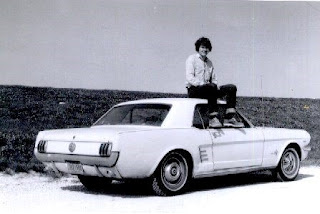
I smoked pot and still can't remember what I did when I was 27. I drove cars way to fast (I'm not counting my dad's Citroëns here) and was lucky in love. I travelled the world, or enough bits of it to catch a balanced viewpoint. I opened an expat newspaper here in Spain and ran it for fourteen years, which meant the end of my money.  I was married to a wonderful lady (she took this picture), who died in 2014; and above all, I read books. 

When we moved to Spain in 1966 - my parents, me and two whippets - we brought with us a half ton of books. These were not classics, or textbooks or anything of much value, but if there's one tradition that the Spanish will grimly stick with, it's broadcasting truly awful television. So I endlessly read novels. Indeed, as the years catch up, it's the one thing I can still do. And at the risk of contradicting myself - what a pity there's not a good charity shop handy! The nearest one - six books for a euro - is an hour down the road from me.

Monday, January 24, 2022

One Day, Somebody will Publish These Essays as a Book

I've been fixing some of my favourite stories and have posted them here. One day, maybe somebody will publish these things as a book. Judging by those volumes that friends have completed along the way, sales won't be brisk. One book co-authored by my late wife Barbara, along with a riding instructress and a physiotherapist, had such a small run, maybe ten copies, that one day a great-grandchild of mine will become wealthy from selling the last existing copy at Bonhams.

Selling books is about marketing. The publisher wants the author to agree to a minimum of three books, and also to give a talk or two, and a few book-signings.

But who cares. I write these things because they are fun, and maybe readers can learn a bit about Spain as they thunder through the collected works of L Napier, your servant. 

Saturday, January 01, 2022

The Morning Bracer Sets One up For the Day

I won't say that I started the year with a glass of tequila, mainly because I was in bed by half-past nine. Age takes its toll. Breakfast will come around in due course, and maybe I'll have a rare Bloody Mary to set me up instead of my usual glass of warm goat's milk. 

The more seasoned workers out here in the Spanish shires like to start their day with a bracer, to help them get going until the whistle goes for their merienda, sometime around eleven. Now a morning nip in Spain could mean a brandy or an anís (or indeed a fiery mixture of the two called a sol y sombra) but taking that as a regular morning wake-up will eventually rot your liver with the consequence that your retirement years chewing a pizzle-stick while looking tolerably wise will be all the shorter. 

The answer (if you are a drinker, that is) would be to  pour some hot black coffee over the hootch - hey presto: ¡un carajillo! Whether it's un brandy (we aren't allowed to say 'coñac' any more) or something from the cut-glass aniseed bottle with a picture of a monkey on it. 

Of course, the unconventional will order something less known, maybe a ponche (a late friend of mine thought it was the the fountain of youth and would switch to it, he said, when the brandy was paining him). Ponche, it comes in a silvered bottle, is pretty good stuff. It's a sort of sweet-orange syrupy little number. 

Huh, I just got corrected by Google (or, in this case, Gargle) who says  'The genuine Spanish ponche is made with five top-quality natural products that come from different parts of the planet: the skin of the best Andalusian oranges, cinnamon collected in Sri Lanka, vanilla from Mexico, cloves from Madagascar and nutmeg from the Moluccas Islands'. Geez, it certainly makes Sloe Gin look a bit foolish.

Yesterday, I was in the local bar having my morning half a toasted pan de hoy soaked with tomato and olive oil ('un medio con tomate') and a coffee, when the fellow next to me surprised me with his order. It was a glass half-filled with crema de menta, topped up with warm milk and a spoonful of sugar. After he had tottered out back into the inclemence of the January sunshine, I asked the old girl behind the bar whether she sold many of those. She said, that no, but that he was a retired Guardia Civil, and he evidently liked the colour. 

There's a popular kiosk in downtown Almería, near where I live, which serves a breakfast drink called un americano. This rare beverage is a leche manchada - a milky-white coffee - with a shot of dyed Licor de Kola (a strange Valencian alcohol based on the African kola-nut which is said to be brewed by the true inventors of Coca Cola). Served with a twist of lemon, some vegetable dye and a sprinkle of cinnamon. The bad news is that the kiosk has been bought by a teetotal Saudi who is planning on trimming the morning menu, leaving any ambitious Almerían cafetero with an interesting opportunity. 

For those who won't go with coffee, but want to keep their drinking civilized, one could not do better than to emulate my friend Manolo, who always takes un tewe - a tea with whisky.  If he were Scottish, I suppose he'd be pouring it into his porridge. Hell, I personally don't say no to a tot of Cap'n Jack poured on my ice-cream.  

And so, we return by a roundabout route to the Bloody Mary. The secret of which, and don't tell anyone I told you, is a surreptitious squirt of dry sherry into the shaker. 

Thus the day takes of a joyous and propitious view, whether it's to work, relax, write, or recall criminals apprehended or otherwise. A simple libation before the serious business of surviving until the cocktail hour.  

Friday, December 03, 2021

Whatever Happened to The Schrödingers?

 I suppose we all know where we stand when we come from the same village. We went to school together, grew up together, had the same football team, priest and accent. We slept with each others sisters (or attempted to) and then, By Gum, we married 'em. 

As we got older we worked the fields together, or opened a bar, or tearfully waved our hankies as one of us went off to Germany to seek his fortune. We bought a television and laughed at the same show; we got older still, sold an old farmhouse to an English family; and finally we died. Our companions went to the mass to see us off and that was that. If somebody remembers to pay for it, there'll be a photograph of us with our donkey or maybe our taxi glued to the funeral stone in the cemetery. 

Now, the extranjeros of course are different. We all came from somewhere else and mostly never knew anyone before we met up here. We could even, if we wished, rewrite bits of our past - not that any true expat would ever ask, or at least, listen to our story. There can, after all, be only so-many generals on the retired list. 

We are older, too. If the average villager is 37, then we are some twenty years their senior, and with poor dietary decisions and too much booze, we will quickly shoot to the top of the queue on the village Sick List. 

The cemetery that serves the village where I live, in a country not my own, is full of fellow Brits. Some of them have bits of English-as-she-is-wrote on the stones, things like 'My Hisband Bernie' and 'We Shall Met Again'. It doesn't matter so much, until you find that they've carved the marble to remember 'Brian' for eternity as 'Brain'. 

One thing though, we know what happened to the villagers, as well as to Bernie, Brain and the rest of us. All except for those who, for one reason or another, disappeared out of our routines. Some were the life and soul of the party, then abruptly went back to Where-ever-it-was that they came from, leaving behind them little more than some memories and a modest bar-bill. Somebody else, of course, quickly took their place.

And we wondered, as we went through the old photographs, what ever happened to Bertha and John, or Gitte, or the drunken Mrs Porridge? 

I suppose that it has become easier, in certain cases, with social media - I learned today of one poor chap who spent time here in our village in Spain and died this weekend in London of some horrible disease. But what of Erna who was a dancer and could still do the splits at eighty? She had come to us 'in her liddle car', because she said, she was heading for Austria but couldn't find the reverse gear. Some family was eventually dispatched from Copenhagen to take her home. But then what became of her...? 

The question is this: can you mourn someone when you don't know if they are dead? 

Now and again, a box arrives with the ashes of someone, who, last time you saw them, was singing something blue in the café down past the bank. He'd gone back to his country (he never did trust foreign doctors), no doubt was attended to by a doctor with a suspicious accent in his own national health service, and - well, the long and short of it - he wanted his ashes to be scattered in Spain. Anyway, the customs have him now and I wonder - does anyone have a spare fifty euros?


Tuesday, November 30, 2021

Olive Weekend

I had spent Thursday and Friday with my daughter and family, who live an hour down the motorway, celebrating first Thanksgiving (where one eats too much) followed the next day by my birthday (where one’s interests traditionally turn to drink). Coming into the weekend, and now safely home, I found myself in bed feeling dopey and with a lungy cough. My goodness! With fears of Covid, no one came close to see how I was doing. The best I got was a brief call from below. ‘You all right up there?’ 

They probably thought I was in the final agony of the virus and that their next sight of me would be a gloomy corpse staggering down the stairs and shouting 'brains!' 

Luckily I slept most of the time and had practically nothing to drink or eat except for a box of chocolates I had been planning to give to someone for Christmas.

There was no high-temperature as far as I could tell, but I suffered from lethargy and while not sleeping or dozing, I found reading to be too much of a bother.

I’ve had all my shots: corona and ’flu, so it could have been anything. In the old days, they’d have called it a ‘dreaded lurgy’.

By an agreeable coincidence, I missed the three days of intensive olive-picking down on the farm and, as I was house-bound on Tuesday, I also didn’t have to lug them down to the almazara for them to be turned into oil.

Think of it as a belated birthday present.

                                Just kidding, they got me on the second harvest. 😀


Sunday, November 21, 2021

Brexpat Day

It’s time that those of us who are British by birth (or passport) and have the good fortune to live in Spain, with papers allowing us to stay, wounded perhaps peripherally by Brexit (we suddenly went from second-class citizens of Spain to third class-residents of Europe, with the appropriate strictures that have been thrust upon us), should celebrate.

The tourist season (why do they call it that, if one is not allowed to shoot them?) is over for another six months or so, and we have the cooling beaches and emptied restaurants to ourselves. We need no longer need to queue to get into the health clinics and the bar-staff will once again greet us enthusiastically by name and, if there’s a karaoke, will even let us sing ‘My Way’ twice in a single evening.

Many of our brothers have fallen by the wayside in this heroic struggle between Europe and Stupidity. Those without the correct paperwork must now resign themselves to shortened visits to Shangri-La to avoid the British winter, and even entertain the possibility of having to sell their villa to a German or (irony alert), a Pole.

Other Brits have found that imports from the UK are a disaster, with even a Christmas card taking several weeks and being steamed open by the zealous Spanish aduana, before charging the mortified recipient a fortune for the time wasted.

We can’t vote in European elections any more, but then, which Spanish candidate ever did anything in Brussels – or elsewhere else for that matter - for the expats?

So, battered and bruised yet oddly triumphant, we British expats can now celebrate being able to stay here without many bothersome issues to worry us. We may not be immigrants (how many of us have taken out Spanish nationality?), yet we have – in our muddling way – won the ring.

There is, as any Spaniard will tell you, no time like the present, so I suggest that we invite the skeleton crew over from the British Government in Exile (it’s in the apartment upstairs from the English library), because Thursday, (Thanksgiving Day for the Americans) is upon us, and anyway, I’ve already ordered the turkey.

From this year onward, we who survived the horrors of Brexit must never forget: Brexpat Day – turkey, baked beans and a nice cup of tea.

Won’t you join us?