Saturday, April 23, 2022

Residents, Tourists and Beancounters (Part II)


We were looking at the number of foreign residents and their overall value to Spain.

Since last week, fresh totals have appeared, sometimes higher than the ones we produced. As always, they are painstakingly exact, and no doubt, utterly wrong.

A site from the Ministry of Labour and Social Inclusion gives the number of foreigners in Spain as at January 1st, of 6,007,553. So we know how we stand. Although the number is easier to appreciate if it is rounded out to six million foreigners.

Some of them retired, some of them living from income from abroad, some of them working and some of them studying. Some of them sending their money home to their families, as they should.

Spain has a population of 47,440,000 they say, so foreigners make up 12.6% of the whole – that’s one in every eight people.

The Brits are counted in the above guaranteed government figures at 407,628 (as opposed to last week’s padrón figures found elsewhere at 282,124). The Schengen Visa Info – quoting something called Statista, gives us a completely different Brit total in Spain of 313,975.

The ABC meanwhile claims 290,372 Brits resident in Spain (the comments from this right-wing paper about Spain’s foreign population are, as always, a pleasure to read).

Then there’s the INE – the official bean-counter site – which doesn’t have a clue. The best we can find from them is July 2021 ‘non-EU Europeans’, which come to… 603,162 (you see: the Brits, post Brexit, aren’t worth a place of their own any more).

There are other official government sites available, but the browser found a ‘potential security threat and did not continue to www.mites.gob.es’. So, we shall remain blissfully ignorant of the information to be found on that no doubt highly useful page.

Then we have The Mirror headline from October last year which reads: ‘British expats are said to be leaving Spain "in droves"’; while, conversely: Idealista says the opposite: ‘The Brits bought 7,560 homes in the second half of 2021 – the largest group of foreign buyers’. In all, nearly 64,000 homes were bought by foreigners between July and December last year. And that’s good money brought here almost exclusively from outside Spain.  

With all the confusion, the authorities will understandably react according to the figures to hand (once they’ve looked up the phrase ‘in droves’ in the dictionary), without worrying if they are correct; or maybe just go out for a coffee instead.

My estimate last week of the half a million wealthiest foreign residents, worth to Spain some 10,000 million euros each year (plus their 250,000€ homes and 20,000€ cars and so on), brings us back to the question: why chase after just the tourists while ignoring the foreigners who live here, or who potentially could?

The only time the subject of the foreigners come up – beyond of course at Vox rallies – is when it’s time to tax us.

But you won’t find any official agency or policy that promotes foreign home-buyers investing in Spain!

The tourists are counted in a similar exact but hopelessly wrong way as the foreigners. Someone is paid to provide the numbers (a bit like the new school they’re building near us at €724,027.27 – now fellers, hold on just a minute, does that include the chalk?). Perhaps, by not rounding them off, they show how hard they work at these sums.

Tourists, then, are described as anyone foreign who comes to Spain (even if they are taking an onwards flight to somewhere else and never even leave the airport), plus all the people on all the cruise ships – regardless of if they disembark for a two-hour stroll around Málaga harbour or not – plus all the people who hop over to Spain every weekend (add ’em all together José), but not the ones who drove across the frontier or who slept in the guest room last night or on the sofa.

Then we have those non-EU citizens who own homes here are but aren’t allowed to stay for more than 90 in any 180 days. What are they exactly – residents, home-owners, tourists? No one knows or seems to care – except of course for the affronted local businesses.  

A few years ago, I went with a couple of senior local Brit spokesmen (if you see what I mean) to see the delegación provincial – the government representative for Almería and his team – to make the point that, with so many small and disappearing villages, a possible answer might be to turn one or more into an old-folks’ retirement centre for rich wealthy well-heeled foreigners. Do you see the idea? Bring along a few English-speaking nurses – after all, there are plenty of disillusioned Spanish professionals returning from London thanks to the Brexit fallout – to bring movement and life back to some moribund pueblo that has no earthly source of income. You could even sell the homes as lifetimes leases.

Anyway, they said they’d get back to us.   

Tuesday, April 19, 2022

Residents, Tourists and the Beancounters (Part I)

Over here at Spanish Shilling, I have often pointed out the difference (and benefit) to Spanish society between foreign tourists and foreign settlers. Most notably – the former receives enormous media attention, massive investment, endless promotions both at home and abroad, heavy institutional advertising and even a dedicated government ministry along with its regional equivalents. In several communities and resorts, the councillor for tourism is the second most visible politician in the government.

On the other hand, foreign settlers can fend for themselves.

But then, as Spain basks in the huge amount of money brought here by tourism (forgetting that a sizable chunk of this stays in the country of origin to pay agencies, airlines, insurers and so on), along comes something to put the cork in – maybe a pandemic like the one that has assailed the industry for the last two years.

If tourism dropped by 75% in 2021 over 2019 (the last halcyon year for tourism) then foreign residents either stayed the same (they couldn’t sell, what with one thing or another) or even rose in numbers (that’s of course not including those who took out Spanish nationality).

There are over six million foreigners resident in Spain at the present time – up from 4,850,000 at the beginning of 2019. That’s ten per cent of everyone. Some/many of those are immigrant workers, since the largest collectives are Romanian, Moroccan and Colombian, yet the fourth largest group of foreigners currently living in Spain are the British at 282,000 souls. Rather than try and figure out the number of foreign residents who are retired or live from funds from abroad (including a clutch of wealthy Americans, some rich Venezuelans, a few idle Chinese and a sprinkle of superannuated New Zealanders), but not Tommy who works at the campsite, we can only choose a wildly inaccurate number – say 500,000 – to contrast with the tourists, whose statistics thanks to the enormous machine dedicated to surveying them we know down to the last digit.

Figures suggest that the average age of this sub-group of half a million – that’s to say, those who live comfortably in Spain without employment – is around 61 years old, against tourists who are (I’m diving through the INE records) maybe 20 years younger.

Then of course, residents often take trips within Spain – not to all-inclusive hotels on the beach, full of fellow-Brits or Europeans, but to more expensive destinations, such as the Parador hotel chain or to fancy restaurants, or to areas away from the sol y playa; which makes them, in the eyes of the Spanish authorities (if only briefly), tourists.

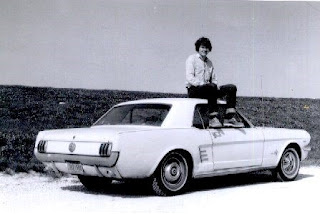
Hey, that's my old car

So, if the money spent by the wealthier foreign settlers – let’s say 500,000 multiplied by a year’s worth of living – is contrasted by the amount spent by the tourists, then the residents are clearly a group to treasure. At 20,000€ a year (my guess, and we shall ignore the investment of buying both a house and a car) that’s 10,000,000,000€ per year spent by the higher end of the resident foreigners in Spain. The average visitor, here for five days rather than 365, is going to be a lot less.

The official estimate of this once-in-a-lifetime pandemic on the shortfall of tourist money lost to Spain is 160,000 million euros. Last year’s tourist income – 31.1 million foreigners visited – is figured at 34,800 million: nice money if you can get it.

But then, right after the Covid, along comes a war. The fourth wealthiest tourist to Spain per capita is the Russian one, and in 2019, 1.3 million of them came to visit, spending 2,000 million euros. How many Russians will be coming to visit this year? There are some estimates to suggest that the tourist numbers this year could be even lower than the last two years due to the war in the Ukraine.

Maybe next up, there’ll be a tourist bombing, or an earthquake, or something poisonous in the water. Maybe Portugal will drop its prices or Greece will give free ouzo to visitors. Tourists are just fine, they leave money and go away with a sunburn and a hangover. But they are finicky, and without an obligation or an emotional link to return.

But the residents will stay. They have an investment in Spain: their property.

Why can’t the authorities see this? There is so much more opportunity in this field.


Monday, April 18, 2022

This Thing about Learning Spanish

This thing about learning Spanish. It's hard to pick up a new language, especially if you plan to chat, gossip, converse or argue the issues of the day with someone sat on a bench wearing a beret and absently chewing on a bull's-pizzle a bit beyond 'Cor, it's hot today'. 

That was about the first thing I learned - a sort of Mediterranean version of the standard English comment 'it looks like rain again', with the massive positive - at least for me - that being too hot beats being too wet any day of the week.  

It's useful too, because your partner in conversation can shake his head, if he has the energy to, and reply, 'eyep' or the equivalent in our local version of castellano, which might be 'joder' or some other positive and considered answer.

Which doesn't get you very far in practicing your Teach yourself Spanish, Chapter Two, the verbs. 

Bloody verbs, grammar and future imperatives. There's not one person in a thousand who knows his way around the infinitives and the gerunds back home, and now we are faced with them here, along with the huge lists of vocab - and that's just to buy something in the market. 

'Leeks, Señora, I want leeks! Hold on, here it says... puerros! Did I pronounce that right?'

One lady I knew learned her Spanish entirely from a book. She was quite good, too, only her pronunciation let her down. 'Hooeyvos' for eggs. Or 'heggs', as a Spanish market-fellow helpfully told me the other day. 

All that effort and they try and answer in English!

Another lady, also a master of Spanish, got hers from a course in XVI Century plays, and would say to the barman something out of a Calderón de la Barca primer like 'Prithee, varlet, bring me a flagon of your finest grape'. Imagine explaining that to Antonio, who had only that very morning learnt not to put hot milk in our teas. 

When we do learn Spanish - the type for conversation rather than the one for ordering half a kilo of rice - we will need something to talk about. Which is where knowing about Spanish culture comes in.  An example would be the vice versa experience of the other day, when the man at the gas station told me that he once lived in Dartmouth 'just over the bridge'. Ahh, I said wisely. 

I have no idea where Dartmouth is, although Google says there's one in Canada with a floating pontoon.

Knowledge of the Spanish culture - having something to talk about - means knowing the geography, history, politics, literature, music, gastronomy, bullfighting, TV shows and the latest sports results. There's no point in interrupting a talkfest to announce 'I bought a kilo of leeks yesterday in the market'. There may be a couple of seconds pause as everyone digests this in companionable silence, before the conversation about putting in solar electricity on Paco's roof will resume once again.

To learn these things - throw your English-language TV, books and newspapers out of the sitting-room window (after all, they talk about where you are from, now about where you are now) and read and watch Spanish stuff. Armed with what you've learned, be like a parrot. Repeat. 

A Brit asked me the other day while I was enjoying a noisy beer in Antonio's - there was a football match going on the TV - how to say 'Kill the Ref!' in Spanish. I told him the magic words which he then shouted out at the top of his lungs. We both drank free than evening until the bar closed. 

A hobby is a good idea. Join the local railway club, or historians society, or painters' nook. You already have something of interest shared by all the group - if it's only where to buy a decent tube of umber. 

Speaking Spanish can sometimes feel frustrating, when the addressee refuses to understand you. This may be because you don't look like a local person, so logic dictates that you therefore must be a foreigner, who - as everyone knows - speaks foreign. Which, tragically, he spreads his hands in apology, he doesn't.

There are ways around this of course, you can try wearing a beret and ordering a bull's-pizzle from Amazon. Or you could consider calling them on the phone. I always wanted to grow a pencil-thin moustache to look the part, but my hair is too blond and patchy. 'Shut your eyes' I tell 'em, 'you'll see'. 

In short, it may not be easy, but it's worth it.


Monday, April 04, 2022

The Inns and the Outs

Whether it's part of a business trip or maybe a leisurely visit-and-souvenir hunt, one's new hotel room can be an adventure in itself. 

We've just come back from a rare trip away - indeed, the first time I've been out of Andalucía in three and a half years. Alicia and I had gone to Sitges, just down from Barcelona. Alicia to go on a course - a new-fangled way of communicating with a horse (a sugar lump is considered so infra dig these days) - while I had the pleasure of a couple of days wandering around the resort.

The hotel was distinctly odd, at least for a rube like myself who hasn't slept in any bed than my own for a long time. To begin with, there was no reception, no nothing and nobody there. On arrival, you are meant to tap in a number on a box at the door and your memory card falls out, which fixes both the front door and your room upstairs, at least, until your pre-paid stay runs out of credit.

I've notched up many a hotel-stay in my lifetime, in several continents. The odder ones remain with me now. A hotel in Almeria with springs, springs! in the pillows. Another, I think in Alicante, where a spring suddenly broke out of the mattress below me while I had my late wife bouncing about above me. Transfixed, as it were, by a half inch of iron dug into my left cheek, I felt it was no time to call a halt to what we were doing. She told me later that she was mightily impressed by my shrieks. I still have the scar.

Another time, in a far-off place in Central America, where the rooms in those days were only one dollar a night, I was having some fun with a local lady who made a rather poor living out of entertaining gentlemen. The wooden flophouse we were in was just a line of rooms with no reception and, down at the far end of the passageway, a shower. I seem to remember the whole place was painted entirely in green. And it was very hot. We were even hotter after a strenuous couple of hours and decided to cool ourselves off with a refreshing ducha. With just one small towel between us, thoughtfully provided by the management at no extra price, we made our way to the facility only to discover that there was no water. As we returned to our quarters, we found that the door had closed and locked itself, leaving us in the hallway, naked except for that one towel. An hour passed before I had persuaded the girl that I might be able to push her through the empty transom window at the top of the door - she wasn't too happy about how she would land safely on the other side - and it was thus that we were discovered by the morning cleaners as they opened the front door - me wearing nothing more than a sheepish grin and my hands raised and supporting the rear-half of the woman that was sticking out of the gap above the door. The towel on the floor. A perfect cameo and a good opportunity to practice my very best 'Buenos días'.

A hostel in Fuengirola - we used to run a Brit newspaper down there - furnished me with an itchy allergic reaction, and a very large and dead bed-bug trapped between my fingers as I woke up. Another, in a fine hotel in Melilla, had one of those wrappers around the lavatory describing its sanitary excellence - and an impressively large turd floating in the pan when I opened up the lid. No, I have no idea. Still another, in Lanjarón, was so chilly, we had to put the curtain on top of the blanket and spend the night fully clothed. 

One time, sleeping in a train along with my father coming from Romania to Hungary during the latter days of Ceaușescu, the cabin was so cold, at -2C, that we were obliged to even keep our boots on in the bunk. The carriage, in solidarity with the dictator's wishes, was honoring the electricity cut in the capital city (even though, on  a train, the heat is free). The engineers generously turned on the radiators as we crossed the border. Even some East German students we had got to know on the journey let out a ragged cheer.

Later on the same train, the Hungarian border guards told us we were not allowed to export Romanian brandy into Hungary and that we must consume our bottle before we arrived that morning in Budapest. Which, well: which we did, By Jingo. (The two guards helped).

My son flew over from Texas to visit a couple of years ago and we took him and his wife up to Córdoba. A friend of Alicia's had recommended some place in the narrow streets of the antique Moorish quarter, where unfortunately, an all-night Flamenco party was being held just on the other side of our wooden shutters. I think my daughter-in-law was impressed, even if the rest of us weren't. Give them their due, those gypsies, they played a lot of songs I hadn't heard before. 

Recently in Antequerra, late at night as Alicia and I were on the way home from Seville, we found a hotel in a back street and checked in. The room we were showed to had seven single beds in it. Although nobody else was sharing that night (just as well, I think), we had to bounce on all seven (none were the same as the others except in their stragginess), until we found two that more or less suited us. Cheap, though, I'll give it that.

The joint in Sitges, where we spent last weekend, is located in the old part of town, which always means the same thing: nowhere nearby to park. It's cold up there right now, at least for someone who lives in Almería. Lugging our cases through the rainy streets, looking for our lodgings, and tapping in the correct number in the small box to get a card to grant us entrance. Isn't modern life grand?

The next morning, as I explored the town, Alicia went off to meet her new friends. But alas, as I returned to the hostel to retrieve my wallet to buy myself some lunch, I discovered that my card didn't work in the street-door.  The neighbour,  a friendly sort who works in the tattoo trade, didn't know where I might find a staffer, and so I tried to Google the hostel for a phone number. The best I could find was their email, to which I sent a rude letter, tapped out on my mobile phone. They still to this day (checks Gmail) haven't answered. That evening, cold and disheveled, I was picked up by Alicia and her friends, one of whom told me that putting a mobile phone next to a hotel card in the same pocket could easily wipe the card.

Well fancy that. You learn something new every day.  

Thursday, March 17, 2022

Facebook Jail

Right now, I am cooling my heels in Facebook Jail. It's a bit frustrating, as I had got into the habit of posting pictures of kittens and so on with social media; but the other day - out of the blue - someone in the comments under a particularly delightful kitty gave to understand that he thought me to be a c**t (don't wanna upset Google, there were no stars in the original). 

I naturally dashed off a reply telling him to go f**k himself (also, no stars), and look -  here we are!

I've been cashiered for 'bullying'!

The bully is of course Facebook. There's no proper court, the victim is not allowed to defend himself and the only judge is some underpaid creature from Bangladesh. Probably barely speaks English and thinks the only good use for a cat is to prepare it for lunch.

Casting about for something else to do with my time, I've taken to lying on the roof with my mouth open, trying to see whether it will fill up first with orange dust from the Sahara or with rain from Celia. Right now, it's about a draw, with a gob full of mud. Just the thing for when I return in a few days - God how the time crawls when you are in Facebook Jail - to my regular pass-time of posting frothy nonsense. 

Oh, and f**k Facebook too!


Tuesday, March 15, 2022

Red Rain and an Unexpected Increase in the Number of Brit Residents

Housebound today, as the red dust blown in from the Sahara makes it a chore to breathe if I go outside. Maybe the red rain which will be coming along tomorrow will be a relief. At least it'll wash the air, even if it leaves a muddy tinge on the walls, roof and windows. We shall be needing sponges and paint from the shop soon...

The new figures for the number of foreigners registered on the padrón (town hall registries) are out. If you aren't on the padrón you don't exist, so that's an easy way for the bean-counters to arrive at an exact if hopelessly wrong figure. 

The interesting thing is how much older we expats are than our Spanish neighbours - in Almería we are apparently 20 years senior. No wonder we don't like fireworks. In truth, we are pretty elderly, with our average age in this province put at 61 years. Indeed, our largest age-group is 70-74 with 2,870 of us tottering about and, as above, waiting for this blasted red rain to have finished with us. Aged sixty and up, there are 10,996 of us: which works out at the remarkable news that very nearly two-thirds of us Brits living in Almería are over 60 years old. In all, including the nippers, we are 17,200 souls, says the official Padrón site here, up from the previous year with an extra 1,210 of us to annoy the staff at the medical centre. 

Across Spain, there are 282,124 Brits on the padrón, and we are fourth in foreign numbers behind the Moroccans, Rumanians and the Colombians. The Germans are 13th with 109,556 residents (a smidgen in front of the French at Nº 14 with 109,397). The official British presence, Brexit notwithstanding, has increased for the current 2022 figures by 19,239, but again, our oldies are more than our young'uns, with 33,100 of us inexplicably trapped at the 70-74 age (25 of us are 99 or older).

So the Red Rain probably won't put us off coming to live in Spain, and neither will the Eurovision Song Contest. Somehow, we are managing to work our way around the pen-pushers too... One day, maybe they'll write an epic poem about us. 


Monday, February 28, 2022

I Wanna Move to Spain (and so you should)

 Somebody was asking on Facebook – is it easy to move to Spain and get a job? I answered with that old chestnut: ‘the only way to make a small fortune here, is to start with a large one’ (cue laughter and approval from the usual suspects).

For Northern Europeans, their money here is good – after all, whose isn’t? One can buy something, a car, a box, a shirt or a meal – as long as they take it away with them shortly afterwards. A house though, and here’s the problem, it doesn’t move.

In the old days, when houses sold for pocket-change (I once foolishly failed to buy a large apartment in front of the Royal Palace in Madrid for the equivalent of 36,000€), the money was welcome enough, but now we have los nietos, the grandchildren, saying ‘Oh, why did abuelo sell that farm to the ingleses all those years ago for just a million pesetas?’

‘And they still don’t speak Spanish or help us with the olive-pickin’.

It’s probably a small gripe.

We open a bar, but only our fellow foreigners come and drink in it. A local story goes that Gordon – who had run La Sartén since God was a Boy – was feeling seedy and, one thing and another, he hadn’t been around for a few days to the nearby Gabila’s for his morning carajillo.

‘What’s up’, asked El Gabila, in that slow Spanish which is reserved for foreigners after bumping into Gordon one day in the supermarket, ‘why haven’t you been to my bar in the last week?’

‘Well’, asked Gordon reasonably, ‘why haven’t you ever been to mine?’

Our Facebook friends who want to move here from the UK might want to take note.

If they open a bar, they will compete with all the other guiris for the tourist trade, and if they stay open in the winter, then they can expect that the expats will drift in once the sun disappears (around half past five); but they won’t get the local trade – and nor indeed will the restaurants (although my mate Juan used to agree enthusiastically with me about ‘los fish y pips’ down at Mervyn’s).

So some of us turn to plumbing (no Spaniard would employ a British plumber – for two reasons – only the second being the paperwork), or they seek work as a mechanic, or a psychologist or a set designer. Maybe a crooner down at the campsite. How about an air traffic controller as somebody was asking today on Fb (after all, she points out, I speak pretty good Spanish)?

Of course, some of us do make a living: real estate or selling adverts or house-cleaning or putting in satellite systems, but our clients will all be fellow-foreigners.

The best way to live in Spain is with money coming in from abroad. Either a decent pension, or an income from business interests or, hey, even a monthly remittance from an angry parent… It’s all good.

Maybe one can swing one of those working-from-one’s-computer jobs from a nice place in Mallorca. These days, it all done on the phone…

If all fails, we must turn our talents to other ends. Ripping off gullible people is so easy (‘Ah yes, I speak the lingo, I’ll get you a deal’).

You see those stories every week in the local free press.

But we will have to prey on our own nationals, because Spaniards won’t fall for it. Then, if things turn out badly, there’s always the panicked ‘midnight runner’. Load the car, and head for the frontier.

‘How’s Bob, I haven’t seen him in a while… Say, isn't that his cat?’

Over the years, the times I’ve been swindled here has always been by fellow Brits. On one occasion, it was for quite a lot.

But don’t let me put you off. Spain is a great place to live; it’s just not a great place to make money.

Thursday, February 24, 2022

Our Romantic Trip

 My late wife Barbara wrote this one in 2012.

At some moment of time in the late eighties, I was writing a special for our newspaper on romantic get-aways and I contacted the head of tourism for the small resort of Lanjarón in Granada. In those days, newspapers didn't buy agency copy and we had to either write our own stuff or ask the fellow upstairs to pen something.

Lanjarón is a beautiful village, high in the Alpujarras and famous for its natural spring water and hot springs and old Moorish baths. It had to be a great place to visit, I thought.

After speaking with the head of tourism over the phone, he kindly invited me and a guest to stay in his hotel and spend a weekend taking in all of the wonders of Lanjarón. It was late November and Lenox’s birthday so I thought it would be a wonderful surprise that would normally be out of my price range.

We had driven up to the city of Granada from the coast to make our way over the top of the Sierra Nevada on what turned out to be an alarming and stony track, with the snow either beginning to fall or already banked on the side on our route. The car was a rear-engined two-seater and we had no chains for the wheels if the going got any worse. We gingerly passed through little villages and hamlets at the very summit of the Alpurrajas. Arriving at last in the town made famous from its bottled water, we found the hotel to our surprise to be chained, locked and bolted. The neighbors said maybe the manager (and acknowledged expert on tourism) had gone into Granada to go shopping.

Or, who knows, maybe he had just bolted.

We spent the rest of the day wandering around the town - there was just the one street - and finally decided to take a room, at our expense, in the only hotel that was open. It turned out to be a hotel for senior citizens where the Spanish Social Security system brought elderly people by the bus-load in a service called El Imserso.

We checked into our room and were told that dinner was at seven. Our room was large, freezing and filthy. The view from our bedroom window was of snow; not a beautiful snowy landscape but of packed snow up against the window. We went to the dining room around 7.15 only to find that, in a most un-Spanish way, they meant dinner was served at seven and not, as usually understood, that it started vaguely anytime after seven but best show up around nine.

Every course was a type of purée. The soup, vegetable, meat and pudding had all been put through a blender. Who, we wondered, needs teeth with a meal like that? After this rather disappointing dinner we went out to find a bar and something proper to eat but along the main and indeed practically only street, everything was firmly shut; so we returned to the hotel bar. The only beverage on the shelf behind the bar was an elderly bottle of Cointreau, so Lenox ordered one and, to his gratification, was given a huge water glass full of this sticky orange-flavoured liqueur. I asked for a Coke and the bar-tender had to leave the building only to return ten minutes later with a can of Coke held firmly in his gloved hands: he must have got it out of a friend’s refrigerator.

Some of the other guests were gloomily playing dominoes in the lounge while others were watching the TV. We decided to retire to our icy room and go to bed.

We were wearing every piece of clothing we had packed while all of the blankets and towels were spread on the bed and yet we were still freezing. Lenox suggested adding the rug on the floor but it was covered with heavy clumps of what appeared to be human hair.

After an unsatisfying breakfast of puréed toast and with our hitherto benevolent opinion about Lanjarón firmly in retreat, we decided to leave the town, as even the hot springs and baths were closed for the season. We drove down the mountains towards the coast looking for somewhere beautiful and interesting. To our surprise, we came across a place called Orgiva – looking like the Santa Cruz Mountains of California wrenched directly from the 60s, with long-haired hippies wearing outsize velvet caps, a reek of patchouli oil, Tarot-readings in the market, and a few painted VW buses. The whole lot of them: all apparently moved in a woozy bulk to the Alpujarras of Granada.

We broke our trip briefly in another notable village, Yegen, where Gerald Brennan had lived for many years. The entire place appeared to us to have chosen in its origins to be built entirely in the shade. White houses grey. Our conclusion? Don’t visit it in November.

We continued eastwards, still in search of a nice hotel to roost in for a break - after all, I could always write about somewhere else. We coasted into Trevélez and came across a restaurant apparently famous for its trout so we pulled in to the car-park only to find three bus loads of German tourists parked in mathematical precision in front of us. That would be a lot of trouts for one day, we thought, so we gave up.

It was getting dark, but the only rooms we could find in Trevélez – tourism in the eighties evidently still not being a strong point from Lanjarón onwards – was above a gas station, so we decided to give up and go home. When we regained the coast we changed our plans, deciding not to let our romantic weekend be completely ruined so we went to a giant hotel located on the beach in Aguadulce, Almería. A least the bar would have something crunchy. The hotel was full of English and German tourists all looking to be entertained around the clock and, by chance, it was “Dress in Drag Night”. So nice to see the two nations coinciding for once – if only in complete idiocy.

I had never been so happy the following morning as to return to the beauty and comfort of Mojácar, and until now, all these years afterwards, I have never written that article I had promised Lenox and his readers about Lanjarón.

Saturday, February 12, 2022

'Click the Link Below to Read More'

There is a desire among newspapers and news-sites to get more readers, because more readers means more advertising revenue (apparently). 

This ruthless chase to the bottom is evident in the Facebook page of the Euro Weekly News, where evidently, anything goes.

Posts are now festooned with hashtags (such as #Spain or #LatestNews) which are used - in theory - to bring extra visitors. 

There is the good old click-bait. The headline leaves a teaser for the reader to click on, where  all will be revealed. Today, there's one that wonders how much the Spanish Royals make each year ('Find out here'); or this one (grammatical mistake included): 'Who remembers the serial killer Dennis Nilsen? Well one of his inmate's has a story to tell'.

They run riddles to gather those hits (visits, really). 'What goes up but never goes down?' is today's effort.

They ask questions like 'what is your favourite love song?' or 'would you eat crickets?' or 'Covid passports - is it time they were scrapped?'. No doubt the Spanish health authorities are biting their collective lip waiting for the answer of that last one from the Weenie readers.

Or, 'how many ducks are in this picture?' (unfortunately, I'm banned, so I couldn't give my considered answer).

My favourite of today's crop of drivel has nothing to do with Spain (or even the UK):  'Just how tolerant should the police be in removing protestors, has New Zealand gone too far...?' They apparently play Barry Manilow music to upset the protestors (and understandably so). 

Is there a daily quota or something?

Wisely, the search button shows no posts from Leapy Lee following one from 2020 where readers were asked to vote on this far-right one-note warrior (74% of those who showed a preference said they liked him).  

Facebook works by dropping a few of your 'favorites' into your feed, so unless you visit a particular site, you will only be treated to a reduced number of their posts. More, perhaps, if you keep clicking. I think, if you really feel you the want the news from this outfit, you should probably stick to their webpage (or maybe choose the BBC, or the Express, depending on your needs).


 This week's paper has a few eye-catching things about it as well. The front cover appears to be a girl who has taken off a flimsy undergarment in public. No wait, it's a face-mask.  I think I speak for all of us when I say I was sorry this picture (and news item) never made it to the Facebook edition - perhaps they were worried that it might have been misconstrued. But shouldn't this story have continued on Page Three rather than Page Two?


Friday, January 28, 2022

Did Spain Get a Bit Tamer Over the Years, Or Is It Me?

The subject of old Renault 4s came up somewhere. My dad had bought one back in 1967 which stood us proud until one day some nitwit from Melilla creamed us on the way to the liquor store in Vera. I was in the front with my dad and suddenly, so was the dog and several empty crates of beer. 

It was a wonder that nothing was spilled. 

The Renault had a push-pull gear lever, as did its rival the 2CV. If you are not familiar with this, then know that there's a stalk sticking up out of the motor, the gear lever, and then there's an umbrella handle poking through the dashboard somewhere with a little ring on the other end which is loosely held over the gear-stalk. All you had to do was waggle it in the right way, a bit like those cranes that win a prize in the back of most bars. There was a trick to it. Reverse was way over to the right.

Or was it the left?

After that experience, my dad stuck to Citroëns. 

And beer from the supermarket in cans.

Life in Spain was fun. Franco had closed the gates to Gibraltar but otherwise left us in peace. Indeed, a trip down to the Rock to change money - it had the nearest Barclays Bank - involved a detour via Tangier, which was always a blast. Morocco meant - and still does - trips to the souk and a growing collection of carpets, trays, jalabahs and Goulimine beads. Gibraltar was English beer, sausage rolls and people with funny accents; but hey, you can find those anywhere these days, Brexit notwithstanding. 

My father and I spent a few days in clink in Vera once. We had been cleaning up the local view-points (by sawing down a select choice of billboards) and were thrown into the calabozo below the Vera town hall for our troubles. Greenpeace would have been proud of us. To our surprise, we were arrested several months after we had hung up our saws by a contrite pair of Guardias (my dad used to send a crate of wine over to the cuartel every Christmas with his compliments), but justice in Spain is rarely swift. We spent five days in the pokey before being released on bail. I announced that I was leaving school (I was attending one in Seville) as the consequent result of having become an old lag at 17. And thus I grew up. Franco returns to the story here, as he celebrated around about then his thirty five years of terror with an amnesty for small-time evil-doers like ourselves. 

Thus nothing more was said.

I went off after that and conquered society; well, the warm bits anyway. As an adult, I have spent most of my time in Spain (with periods living in the USA, Mexico, Paris, Florence and so on). In all, I have spent maybe three months in the UK since 1970 - probably more than enough.

Spain had filled up over the decades with us Brits - or rather, a reduced number of coastal villages did. There aren't many of us to be found inland, or in the cities. Locating an English breakfast or a Union Jack pub is hard to do where I live - a suburb of the provincial capital with an abandoned beach where there are no hotels, souvenir shops, Indian restaurants or even tourists. We have no currency exchange places or charity shops or even, for that matter, earnest dog and cat people. Each morning I manage perfectly well with a slice of tortilla and the local newspaper.

I can't complain. I spent plenty of my time as a young whippersnapper in the discos and knock-shops with the best of them.

I smoked pot and still can't remember what I did when I was 27. I drove cars way to fast (I'm not counting my dad's Citroëns here) and was lucky in love. I travelled the world, or enough bits of it to catch a balanced viewpoint. I opened an expat newspaper here in Spain and ran it for fourteen years, which meant the end of my money.  I was married to a wonderful lady (she took this picture), who died in 2014; and above all, I read books. 

When we moved to Spain in 1966 - my parents, me and two whippets - we brought with us a half ton of books. These were not classics, or textbooks or anything of much value, but if there's one tradition that the Spanish will grimly stick with, it's broadcasting truly awful television. So I endlessly read novels. Indeed, as the years catch up, it's the one thing I can still do. And at the risk of contradicting myself - what a pity there's not a good charity shop handy! The nearest one - six books for a euro - is an hour down the road from me.

Monday, January 24, 2022

One Day, Somebody will Publish These Essays as a Book

I've been fixing some of my favourite stories and have posted them here. One day, maybe somebody will publish these things as a book. Judging by those volumes that friends have completed along the way, sales won't be brisk. One book co-authored by my late wife Barbara, along with a riding instructress and a physiotherapist, had such a small run, maybe ten copies, that one day a great-grandchild of mine will become wealthy from selling the last existing copy at Bonhams.

Selling books is about marketing. The publisher wants the author to agree to a minimum of three books, and also to give a talk or two, and a few book-signings.

But who cares. I write these things because they are fun, and maybe readers can learn a bit about Spain as they thunder through the collected works of L Napier, your servant. 

Saturday, January 01, 2022

The Morning Bracer Sets One up For the Day

I won't say that I started the year with a glass of tequila, mainly because I was in bed by half-past nine. Age takes its toll. Breakfast will come around in due course, and maybe I'll have a rare Bloody Mary to set me up instead of my usual glass of warm goat's milk. 

The more seasoned workers out here in the Spanish shires like to start their day with a bracer, to help them get going until the whistle goes for their merienda, sometime around eleven. Now a morning nip in Spain could mean a brandy or an anís (or indeed a fiery mixture of the two called a sol y sombra) but taking that as a regular morning wake-up will eventually rot your liver with the consequence that your retirement years chewing a pizzle-stick while looking tolerably wise will be all the shorter. 

The answer (if you are a drinker, that is) would be to  pour some hot black coffee over the hootch - hey presto: ¡un carajillo! Whether it's un brandy (we aren't allowed to say 'coñac' any more) or something from the cut-glass aniseed bottle with a picture of a monkey on it. 

Of course, the unconventional will order something less known, maybe a ponche (a late friend of mine thought it was the the fountain of youth and would switch to it, he said, when the brandy was paining him). Ponche, it comes in a silvered bottle, is pretty good stuff. It's a sort of sweet-orange syrupy little number. 

Huh, I just got corrected by Google (or, in this case, Gargle) who says  'The genuine Spanish ponche is made with five top-quality natural products that come from different parts of the planet: the skin of the best Andalusian oranges, cinnamon collected in Sri Lanka, vanilla from Mexico, cloves from Madagascar and nutmeg from the Moluccas Islands'. Geez, it certainly makes Sloe Gin look a bit foolish.

Yesterday, I was in the local bar having my morning half a toasted pan de hoy soaked with tomato and olive oil ('un medio con tomate') and a coffee, when the fellow next to me surprised me with his order. It was a glass half-filled with crema de menta, topped up with warm milk and a spoonful of sugar. After he had tottered out back into the inclemence of the January sunshine, I asked the old girl behind the bar whether she sold many of those. She said, that no, but that he was a retired Guardia Civil, and he evidently liked the colour. 

There's a popular kiosk in downtown Almería, near where I live, which serves a breakfast drink called un americano. This rare beverage is a leche manchada - a milky-white coffee - with a shot of dyed Licor de Kola (a strange Valencian alcohol based on the African kola-nut which is said to be brewed by the true inventors of Coca Cola). Served with a twist of lemon, some vegetable dye and a sprinkle of cinnamon. The bad news is that the kiosk has been bought by a teetotal Saudi who is planning on trimming the morning menu, leaving any ambitious Almerían cafetero with an interesting opportunity. 

For those who won't go with coffee, but want to keep their drinking civilized, one could not do better than to emulate my friend Manolo, who always takes un tewe - a tea with whisky.  If he were Scottish, I suppose he'd be pouring it into his porridge. Hell, I personally don't say no to a tot of Cap'n Jack poured on my ice-cream.  

And so, we return by a roundabout route to the Bloody Mary. The secret of which, and don't tell anyone I told you, is a surreptitious squirt of dry sherry into the shaker. 

Thus the day takes of a joyous and propitious view, whether it's to work, relax, write, or recall criminals apprehended or otherwise. A simple libation before the serious business of surviving until the cocktail hour.