Monday, March 25, 2024

I Belong to Glasgui

 There comes a time, perhaps, when your Spanish might be described as being pretty damn good. You can read the instructions, the newspaper and the nice letter from the power company, and you can understand the news on the TV – understand the words, that is, if not the context.

The context, because the background is all important. We must grasp the culture to know what’s going on, and indeed, why it’s going on. Take a course in Spanish politics, history, geography and art. Get a Spanish companion and go together to a wedding or a matanza – a pig killing. Go to the football game. Join the local train spotters group. Speak loudly and often.

But let’s look at a rarely mentioned corner of the pronunciation jungle. You have mastered the jota and you can roll your rr more or less, but how do you pronounce foreign words in Spanish?

Answer: as a Spaniard would.

Let’s start with a drink – a soda pop. There’s Sprite (pronounced espry), there’s 7Up (siete oop, maybe? No, they’ll just call it seben), Pepsi Cola is pesi and then there’s Schweppes (no one can pronounce that in any language, but in Spanish it’s just called eshwehs) and thus, to no one’s great surprise, we all drink La Casera.

Do you see the difficulty?

Some foreign place-names have been spanishified. 

There’s Londres for London, Edimburgo up in Scotland, and (for some reason) Cornualles for Cornwall. But if you go to Middle Wallop, then you are in for a treat. It’s pronounced Mid.del gualop. Wolverhampton becomes Guolberhanton. For Heathrow, you drop the second h. Liverpool has a b. 

As for Worcestershire, don’t even try.

Now me, I’m from Norfolk, and luckily, that’s more or less the way you would say it if you were talking in Spanish.

It’s all about communication of course; saying it in a way that the listener will understand. After all, we are in espain.

Oh, and by the way, jappy easter.

(Pido disculpas a él que se siente ofendido por lo anterior)

Friday, March 22, 2024

A Picture is Worth a Thousand Right-wing Lies

 Sometimes we are a little silly. Facebook got steamed up about a picture I posted - which came with the headline from a magazine article.

You know what they're like - oh, we are going to move this post down into some forgotten closet, because it goes against our principles. Why don't you post pictures of kittens anymore?

Or Gaza - they don't seem to mind photographs from Gaza 😒.

Now, Facebook will add the first picture (and yes, it's a cutie all right) if one were to publish this on their social media platform, rather than the second. Sigh! 

Anyway, now we are all happy, I suppose, and I can get on with my point.

The article comes from a Spanish right-wing bank-supported website with appropriate news and opinion. It's called The Corner.

It publishes in English. 

Their title today: 'Immigrants – 8.8 million – account for 18.1% of population in Spain'.


(With a nice photograph of us immigrants – I mean, the ones at the top left in the picture, of course).


Sunday, March 17, 2024

Sometimes, We Must Laugh at Ourselves

 It's been a tough few months recently for the country - with protests of one sort or another receiving coverage in the national newspapers.

A long-term protest is the one currently going on outside the head offices of the PSOE, the ruling government party which is the socialist party. Those to the right, the PP and the Vox, agree on one point, that everyone else in Spain is not only wrong, but shamefully so. 

Thus inspired, they wrap themselves in the Spanish flag - it's odd how national flags these days only belong to the far-right - and get on down to the Calle Ferraz in Madrid for some good ol'-fashioned protestin'. Maybe burn the president in effigy or howl some appropriate insults. The police will likely turn a blind eye (Madrid is a conservative city) and the media will be there. 

What with the tractors all driving through the city, lovingly decorated once again with Spanish flags (the agricultural workers who really do all of the picking, wrapping and dodging work inspectors will have stayed home); the angry protests outside the headquarters of the smellysocks; the populists banging on in their heavily subsidised media (Madrid spends 27 million this year on 'institutional advertising' for friendly newspapers and TV channels) and the current issues with the regional president Isabel Díaz Ayuso, Madrid is as usual the centre of attention in Spain.  

But let us move our attention to another city, usually (if not currently) in the hands of the left: Valencia. There, the fallas have just finished. The fallas are a week-long festival with lots of music, fireworks and a tradition of comic papier-mâché models which will be judged and them, with one saved for posterity, thrown into the flames. It's like we read it in Gormenghast, with the Hall of the Bright Carvers. 

But not every model - they are called ninots - are destroyed, and one must be saved. My own favourite this year is the old lady with the sun-glasses and the Spanish flag.

Now, where have I seen her before?

Monday, March 04, 2024

Dere's a Rat in Me Kitchen

 There’s a major bookshop in our local city, and I’ve dropped by there a few times – either to buy a novel in Spanish (which I can read, if sometimes a bit slowly), or one in English from their foreign-language nook downstairs. Three or four shelves in English, plus a few books scattered in there in German – hey, it’s all foreign, right?

The spines on Spanish books are always printed upside-down which means that the usual book-stocker employee, unaware that this peculiar custom has yet to emigrate beyond the Pyrenees, will put the English (and German) books on the shelf the wrong-side-up so as to match the other shelves upstairs. Then along comes a Brit and pulls a few out to scope the back-cover and before you know it, the foreign books are higgledy-piggledy, which means, when I come along for a spot of browsing, I have to throw my head from one side to the other, wrenching my neck, to glom the offers on display.

At twelve euros a pop or maybe more, they ain’t cheap, neither.

So, in the Brit community fifty miles to the north, there’s a few charity shops that sell books.

The Brits will volunteer to run these shops, collecting funds for some Noble Cause (dogs and cats, usually – they haven’t yet run to helping the Palestinians).

The charity shops work on stuff being brought around and kindly donated.

Often after a local funeral.

Books are considered as a filler, I suppose, as they are usually sold at six for a shilling. Which is fine by me. See the difference here? One book at twelve euros in the city, versus seventy two charity books in guiriville for the same price. I mean, if I get half-way through and decide that it’s tripe, then I’m down by fifteen cents.

So the other night, I am lying in bed in the place I’m looking after, a country-home. Nice, very quiet, lots of trees and birdies. Reading some rubbish about a pretty detective who rides a Ducati through the worst streets of Washington (I do love to travel), I was interrupted by a large rat galloping across the bed and disappearing under the wardrobe.

So the next day, I went to buy some poison. A box with a dozen blue cubes of some dreadful stuff that disagrees with rats and I leave one on the kitchen counter, and returned to my detective, now in bed with her lawyer.

The next day, the poison had gone. But, you know, judging by some evidence in the fruit bowl, the rat hadn’t.

Or maybe there were two rats. I put another cube out.

The following day, the second cube had gone, but someone had got into the rice crispies.

I put out a third cube, put everything edible in a steel case with a combination lock, and returned to my pile of books.

And so, Best Beloved, every day and until the box was empty, the daily poison has been taken away from its place in the kitchen. Seems I either had a very strong rat on my hands, or I was doing the Devil’s Work and killing the babies living in some hitherto undiscovered hole.

I found one possible lair under the wardrobe and wedged the detective and her motorbike in it. It was about time she did something useful.

Today, a friend gave me a humane rat-trap. You leave a chunk of cheese within, the trapdoor goes *clunk* and you take him outside and toss him out in the campo a few kilometres from home. That’s the theory, anyhow.

I also bought a box of strychnine this morning, just in case.  

Saturday, February 17, 2024

The Bar Indalo

 In the old days - the sixties through the early eighties - the Hotel Indalo, located in the Mojácar Square, housed the Bar Indalo: the focal centre of the pueblo.

It was an ugly bar, dark and scruffy. They rarely managed any tapas and the decoration was bleak. There were a couple of tables and a black and white TV, switched on whenever there was a football game.

As somebody says, the toilets were pretty grim as well.

Outside, there were a few tin tables and chairs.

It was where we all met to catch up on the day's gossip.

I think it was a terrible shame when the hotel and its bar were demolished, along with the Aquelarre theatre, to make room for the 'multicentro' - three stories of grim souvenir shops.

In the picture, Antonio and Diego were for many years the two barmen.

The Rudderless Island

 Those of us who moved to Spain from the United Kingdom will have our view about how the old country has either prospered or gone to the dogs since the Brexit, or perhaps even before that particular upset.

My dad used to trace Britain’s final decline to the Suez Crisis in 1956. Now, I think it was when they arrested Julian Assange in 2010 on a trumped-up rape charge (oh look, I’ve gone and used the t-word!).

But we all have opinions. Those of us Brits who are living in Spain have other things to think about – unless we are among those unfortunates who find themselves enmeshed in the 90/180 Schengen Trap – then it’s a daily and anxious look at the calendar and the doubt about who to look after the house for the next three months.

Another way to look at the UK comes from a Spanish journalist who works at El País called Ana Carbajosa, who after travelling extensively across Britain has written a book called ‘Una Isla a la Deriva’: the drifting (or rudderless) island. The write-up provided by the printers, Península, says, ‘When did the United Kingdom collapse? How is it possible that the empire in which the sun never set has ended up becoming an increasingly isolated, fragmented and unequal place? How much has Brexit contributed to deepening cracks that had been opening for decades? How were unscrupulous politicians like Boris Johnson or Liz Truss able to end up running the country?’

elDiario.es interviews Ms Carbajosa. Their first question is: ‘What misconceptions are there in Spain about the United Kingdom?’

She answers, ‘We probably think that the United Kingdom is a unit and that the United Kingdom is the English (los ingleses). In truth, the United Kingdom is a very complex and diverse country due to the geographical and regional differences that, as the experts I spoke with for the book explained to me, are the most noteworthy in all of Europe. In all European countries there are differences between rich and poor regions, but the poor ones are not as poor as those in the United Kingdom, which is (by the way) also the sixth largest economy in the world. There is a brutal regional inequality that we are not aware of and that has contributed to Brexit and other political phenomena’.

She tells us that the media and politicians who she meets there talk of ‘Broken Britain’.

But that’s all happening elsewhere. We live in Spain, with its own triumphs and failures (of which, if we stick to The Euro Weekly and other low-shooting English-language media, we are blissfully unaware of).

Perhaps we can stay here – or perhaps some hostile currents in Iberian politics or the media (chucking Spaniards out of the UK needs some retaliation, maybe) may send us abruptly home. There are 5,700 Spaniards currently living in the UK under threat of deportation.

After all, as we fail to concern ourselves about Rishi Sunak’s hostility towards the immigrants, it’s not like we have the ear of the Spanish legislators.

Most unlikely, of course, but there you go. We live in unlikely times.   

Friday, January 26, 2024

Now, They'll Let Us Vote... (in the UK)

It was a shame that those of us Brits who back then in 2016 had lived abroad for fifteen years couldn’t vote in the famous referendum over leaving the European Union. The Brexit as it became known: the one where the UK would steer a new course all by itself.

As to where it was going, who could be sure? Glory, success and ennoblement of course, but maybe only for those few millionaires who had wisely moved their funds offshore beforehand.

But that’s the problem for the United Kingdom and its inhabitants to face. Brexit will bring some benefits perhaps, along with some unpleasant realisations and lessons.

Over here in the remains of the European Union, things appear to be moving along. We are managing quite well in the absence of the British, and wish them well with their straight bananas and trade deals with Timbuktu.

We couldn’t vote, us lot. Normally, voting for a candidate to become either a member of parliament or to crash and burn might be useful enough for those who live there – a good candidate will have ideas and energy to spruce things up locally – with the benevolent support and indulgence of his party – but we live, and have lived for a long time – in foreign parts.

The French have long had a group within their parliament which represents Frenchmen abroad. They have eleven seats in the National Assembly. Nice.

The referendum, of course, was different. Instead of discussing the pros and cons of increasing the acreage of sugar-beet (I’m from a bucolic part of East Anglia: left for Spain when I was thirteen), it was about a subject which would enormously affect us expats – traitors and malingers as we might have been considered back in Henley – in many ways.

Sugar-beet, by the way, is a kind of turnipy-thing that you can either get sugar from, or can feed to the cows.

Yet we couldn’t vote in the one thing that would have affected us.

Back then, I doubt even the British media bothered to ask us our views, despite there being 1,300,000 of us living in the EU and another 4,200,000 living elsewhere in the world.

Regardless of the usefulness or otherwise of swelling my North Norfolk constituency by one person; and following a change in the law, we Brits abroad (fifteen years and up) are now encouraged to register (every three years) and to call for our postal vote. This register of Brits abroad may not be huge (although they endearingly estimate three million potential voters – spread of course across 650 polls), but it might attract a few extra donations to one party or another which will no doubt be welcomed (if criticised elsewhere).

Right now, I’m renewing my passport (they do this these days in Belfast). My current one has ‘European Union’ stamped in gold on the cover. My new one won’t.

I suppose you are right – I should be looking for Spanish citizenship after all these years here. After all, I speak Spanish and know my way around – even if I do happen to look extremely and pinkly Nordic.

All I wanted, really, was to be a European.

Anyway, it boils down to this: either get myself a Spanish passport, or find out more about the fascinating politics of sugar-beet.

Monday, December 25, 2023

Put some Brits Together, and They'll Start a Newspaper

 It’s a funny world – the expat press.

Over here in Spain, there are a small number of both Brit free-sheets and paid newspapers, all solemnly ignored by the national advertisers. The free-sheets have more locally-sourced adverts (they have to cover their costs somehow, and the printed copy is about a euro a pop these days). Does anyone read those adverts, or simply gloss over and past them?

The pay-for newspapers can probably spend a bit more on copy and rely a bit less on promotions. I also don’t doubt but that their print-run is far smaller. One of them, the weekly Costa Blanca News, has a copy price (August 2022) of 2,70€. It’s been going since 1973. Another one, the daily Majorca Daily Bulletin, as the ‘Iberian Daily Sun’, was going as far back as 1969. The oldest of them all is the monthly Guidepost (since February 1958) out of Madrid and still ‘published continuously and unfailingly from then onward’.

I ran a weekly for a while called The Entertainer during the eighties and nineties, eventually learning that there is no honor among thieves and that it's hard to pay off a large mortgage (for printers bills) when there's nothing coming in.

An English-language daily started in Madrid called The Standard back in 1992. It was a serious 'European' kind of newspaper, priced I think at 50ptas. The paper, once again ignored by the national advertisers (they seem to prefer to go through media-buyers who then take an annual cash return called un rappel from their chosen publications), folded after just forty days. 

Indeed, not only do the larger advertisers stick to the tried-and-true (did you ever see an advert for a leading car company in an expat newspaper?), the so-called institutional advertising - propaganda bought and paid for by the provincial, regional and national governments (to keep everybody in line) - never appears in the foreign-owned newspapers - English, German or Dutch. The few smaller agencies that will deal with the foreign press like to pay out typically on 120 days (the printer likes his money after 30 days). 

There are quite a few of these newspapers and magazines about - some large with others being a spot more modest. On the Costa del Sol, there’s the Sur in English, a Spanish-owned freebie in operation since 1986 (it began as a couple of pages once a week in the local Spanish version, to later expand into its current dominant position). Two others of note are the biweekly free newspaper called The Olive Press which at least uses journalists and professional writers and produces some investigative journalism; and finally the downmarket Euro Weekly News (which self-importantly claims that it is known to its readers as The People’s Paper, although it’s more often referred to as The Weenie). This particular free-sheet has featured Leapy Lee among its columnists for the last twenty years or so. The notorious Mr Lee pumps out a far-right tirade about the United Kingdom each week, evidently to the approval of the publication’s readers. This paper appears to mix up its content without much attention to where or what it is on about, rarely providing much useful news about Spain, preferring to entertain the readers with a fruit-salad of filler, dogs, puzzles and lottery winners. Perhaps you read it: perhaps you wrap the fish in it. 

Put it this way - you are not going to pass the current affairs test put out by the Instituto Cervantes as a step towards gaining Spanish nationality if you only source of information on this great country is The Weenie

There are some glossy Costa magazines past and present (Lookout 1964 – 1986 was the best I think) and various what’s-on guides, plus a couple of English-language radio stations and, of course, lots of Internet news and help-pages, blogs, vlogs (video-blogs) and other sites.

All, with the exception of Business over Tapas and a few of my fellow bloggers, decorated with endless and aggressive advertising. At least one has to patiently sit through an advert on the radio. In print, you merely skip past it.

It’s certainly true that, these days, it’s a hell of a lot cheaper putting out one’s copy there on the World Wide Web than it is taking it down to the printers, so – I dunno – perhaps at least on Facebook we could forego the click-bait?  


Monday, December 18, 2023

Good Cheer, and Watch Those Polverones!

 Christmas in Spain. At least down where I live, it doesn’t quite ring true like the old traditions in England. There’s no holly or mistletoe (acebo and muérdago) to leave on the shelf or kiss the maid under. Come to think of it, there’s no maid either. The tree looks a bit out of place as well, and some of us settle for the dried flower from a century plant, una pita, bedecked with a ribbon or two.

I just have the one Christmas card this year to put on the – well, the chimney-piece if there was one. It’s from my old nanny from when I was a child in Norfolk (it’s almost sixty years since I’ve last seen her). It has a snow-scene and a short poem in a rather wonky metre. It was posted in late October and I gather that it must have travelled about fifty kilometres a day to reach me in Almería a mere seven weeks later. Well done our friends at Correos, and don’t forget the seasonal tip for Mr Postie!

The thing is, the old traditions don’t really have the same thrust over here. For me, Deep and Crisp and Eeeven only works with Domino’s Pizza! I suppose one can buy Christmas Pud at the English shop in our local market town, and douse it with brandy, but I’ll pass on that, thanks. The turkey is fine, although my Spanish family prefers plates of jamón serrano and gambas.

I think they may have a point.

We have plenty of cakes here though. The Roscón de Reyes is as delicious as the polverones are terrible. These floury morsels are quite impossible to swallow, even with a seasonable glass of anís. I wonder - do the banks still offer this interesting combination to its customers (usually consumed before one see one's balance)? I will have to go down and look…

Carol singing in England for me as a child was a quick couple of verses of ‘The First Noel’ followed by mince pies and some warming toddy. Then off to the mansion at the other end of the lane for a repeat. Here we are regaled ceaselessly throughout the entire season by villancicos: horrible songs pumped out all day long through the Nation’s municipal and supermarket loudspeakers as performed by cute little choristers and their noisome piping voices.

Dressing up as Santa Claus is just silly. He wears a heavy red outfit with cap and mittens, while our local temperature is in the high twenties thanks to Global Scorching.

I think just a red tee-shirt would be quite enough to go with the ho ho ho.

There’s no Christmas stocking here, and indeed the whole presents-under-the-tree thing is another foreign import. I suppose that, reeling as we are (or will be) from not winning the Christmas lottery, something in gaudy paper to unwrap on Noche Buena – Christmas Eve – might be a good idea. A kind of consolation gift.

The small presents given out by the Spanish for January 6th, the Feast of Epiphany – usually falling on the day before school begins – don’t quite hit the spot.

I was once one of the Three Kings – the blond one of course. All went well as we arrived in the town square in a dumper truck but when the first, rather fat child sat on my knee to receive a dinky-toy, he spotted that under the heavy makeup lurked a guiri. He let out a quite improper shriek, even though I explained that all three of the Reyes were indeed foreigners. From afar.

The best thing about our Christmas season, and you will notice it in the photos we send to our families and friends in far-off England, is the fact that we are all wearing tee-shirts under a warm blue sky.

Could there be a better gift than that?

Thursday, December 07, 2023

Madrid's Barajas Airport

 My own experience of galloping through the Madrid airport with my wheelie-suitcase last week, with eighty minutes to disembark at the international end of the huge installation, go through immigration (as a non-EU foreigner), take the underground train-link, the security inspection and then the race through the garish duty-free corridor and onward for the local flight at the other - furthest - end just in time to join the back of the queue as they boarded the Almería flight, makes me anything other than a fan of that dreadful airport. 

It seems that I’m not the only one: From El Español here: ‘How the Aeropuerto Adolfo Suárez Madrid-Barajas is no longer the best airport in Europe in just one year: it has dropped 30 places’. 

I remember the first time I landed in Barajas, back in the sixties. I had arrived on a flight from London on a BEA Comet. The airport was - of course - much smaller then, and certainly friendlier. They had a free cinema to while away the time before one's next flight. I shouldn't be surprised to learn that more than a few travelers, enveloped in the comforting arms of Disney, consequently missed their connection to Rio.

Those who didn't fancy the cinema could sit on a sofa rather than a metal bench, sturdily designed with arm rests to stop one from stretching out for a time-consuming zizz. Not many of us carry a book any more, and one can only stare at a mobile phone for a limited period. No wonder we untidily lie on the floor with our suitcase for a head-rest. 

They even had large paintings on the walls in those times to lull away our anxiety.

The bar was cheaper too - with prices only twice what they should have been. And you paid the waiter, not a machine. 

Security didn't exist, beyond the odd bored-looking cop. Now, and this happens in all airports, we must waddle through a metal detector while holding up our trousers: our diminutive suitcase pitifully opened by some creature with rubber gloves asking what's in this lead-lined box? It's me teef mister. 

As for flying with a proper suitcase which can hold more than a single change of clothes, well they charge extra these days don't they? 

But times change, and airports grow as they must cater to evermore clients. The Barajas airport now handles some 50,600,000 passengers every year besides me, and probably couldn't care less how happy or otherwise their customers may feel.  

So, here I am. The plane has stopped and the seat-belt light is off. Everyone has stood up, stretching after the cramped nine-hour flight and now they are now taking their cases down from the overhead lockers and standing around in that narrow walk-way looking impatient. 

Naturally, I'm at the way-back of the airplane - and there's just one hour and twenty minutes to go before my connecting flight.

Friday, November 17, 2023

More Fast Cars, Some Good Food and Plenty of Jesus: American Travels

I am  still in Oklahoma for a couple of weeks to come, staying with my son who runs the local water  company. He is fond of fast cars, when he has the chance, and we have just been for the Porsche Weekend in Arkansas, with a side trip to Missouri. 

We drove there - three of us - in three separate vehicles: an old red souped-up Corvette, a 2023 Corvette, and my son's Dodge Hell-Cat (fast on the straights, terrifying on the corners). There were around five-hundred Porsches at the hotel in the small resort of Eureka Springs, displayed with their proud owners. Later, they would drive slowly and noisily through the streets in caterpillar style. One of the cars exhibited at the fayre and for sale was a Porsche GT4: I had driven it up there last year in another adventure. 

We carried on, that second day, to a peculiar resort in Missouri (me now driving the modern black Corvette: its elderly owner, a splendid character who once invented a system to clean oil from impurities and has not drawn a sober breath from that day forward). Our destination was a place called Top of the Rock, a large and peculiar castle high in the Ozark Mountains. There's a golf course apparently, but we had parked and were bussed straight to a massive building which is built in huge rough-stone blocks. Inside there are terraces, several restaurants, a whisky bar, a museum and other wonders too. After refreshing ourselves - we are now eight - with a scotch or two, we went to a private room for our dinner.  

And so we come to food in America. Or at least, in the Mid-West. It's usually very good, huge and generous proportions, talkative waitpersons (ours was called Dan), although it ain't cheap no more like it used to be. Plus that tip, now twenty or even twenty-five percent.

I've always eaten well over in America, and will need to go on my regular crash diet when I get home again to Spain. 

The next morning, now once again in Eureka Springs, we tramped down the road from the motel to an eatery for breakfast in a nod to the Stop Oil people. The idea of sidewalks and even bicycle lanes here are still in the future: in most of America, everyone drives. 

Our drinking friend wanted to break his fast with a Bloody Mary with a bit of bacon sticking out of it (this is America folks, they've never heard of celery), while I ordered something rather more modest, along with several cups of cawfee. 

At the next table, a lone diner was seated with his back to us. Here and there, a staff-member would sit with him for a minute or two in conversation. I learned that he was travelling around the country on foot, carrying an eight-foot tall wooden cross. As he left, I went outside to speak with him. He called me 'Brother' and told me that he left his job and gave away his house and car almost four years before. Since then, he has walked across fourteen states with his cross and the clothes he stands up in (refreshed here and there by admirers). He looked good for another twenty states or so. And talking of the Lord's Work, a few nights later, back in Oklahoma, I was invited around to an old Cherokee's house for an evening of Inspirational Songs (two guitars, a drum box and a pair of singers - it reminded me in that respect of a flamenco evening back home). My daughter in law is a member of this admirable tribe. We thus joined in with some of the neighbours, singing for an hour or so - songs in both English and Cherokee. 

And let's end where we began: Driving fast cars around the countryside. I even got stopped the other day and interviewed by the local TV as, er, 'President of the Tulsa Porsche Club' (standing in temporarily for my son, who is camera-shy), explaining why we were all driving domestic muscle-cars ('Porsche-owners have to work all week to pay for them' I explained). 

As above- there are two more weeks to go...   

Friday, November 03, 2023

Fast Cars in Oklahoma

Right now, I'm in Oklahoma staying with my son Daniel. I'll be here for the month of November, including a few days trip to Colorado in his muscle-car, and also to Porsche Weekend in Eureka Springs to the east, in Arkansas.  Daniel likes his cars, and knows people who like to race them.

That first day, we were driving up the forested hill from the local town, rounded a bend, and found a double-wide house on the back of a truck coming in the other direction and occupying the entire width of the road. In America, they usually build  their houses out of wood and then haul them to wherever they are needed. Preceded along the route - at least as a rule - by a van with a light on top and a sign saying 'Caution: Wide-load'. 

This one didn't. We had to swerve off the road into the ditch. Otherwise it might have been a case not so much of a car driving into the side of a house as a house driving into the side of a car.

My boy's car is a cobalt-blue Dodge Challenger 'Hell-Cat' which has a powerful acceleration and has over seven hundred horsepower. He picked it up second-hand, and in its favour, it can be used as a sober vehicle for taking granddad for a ride, or for some volume-shopping down at Walmart. The boot ('trunk') is massive. 

And thus it came to pass that, on my second day in Daniel's town (an hour north of Tulsa), we drove down to the track at Hallett, a circuit somewhere south of Tulsa. We were going racing. 

They give you a talk at the race-track. Drive with your window open (in case you need to be rescued). Wear a racing-car helmet. Empty the trunk of anything loose. Watch the flags. Don't do this, don't do that. There were around twenty drivers (and one passenger) taking this all in. Anyone have an electric car? No? Good. We hope no one's been silly enough to bring a Hell-Cat? (Laughs). 

There are several groups of five who will drive for fifteen minutes - the first time for practice and getting to know the track - no passengers. So I went over to the stand to watch them go.

Later, it was time for my ride. I put on the helmet in the enclosed space - it's not easy - and we drove down to the chequered flag and then, away...

Daniel is a good driver, but the Dodge weighs a lot and, as happens with American cars anyway, it doesn't do corners very well. It has excellent acceleration, but we had to slow down long before any corner to get around it. There are a couple of nasty corners at Hallett. All went well, although after the session was over, we found we had burned the brake-pads - perhaps not surprisingly. 

We stayed for lunch and talked shop with the others. I told them about my Citroen back in Spain. I don't think they were very impressed.

After lunch, Eddie invited me to ride in his new Lamborghini STO. Eddie is a great driver and once I had crawled into the car and somehow managed to put on my helmet after putting the back of the seat down to *flat*, we took off. 

A car like this holds the road and is so much lighter that the Dodge that it zipped around the corners with incredible grip. Gosh, it was fast. An amazing experience and my thanks to Eddie for the ride. 

I shall be asking Santa for one of those.         

Sunday, October 15, 2023

Take the Train

 The best thing about the train is that it will take you into the centre of the city. You won’t be dumped in some stainless steel and marble airport half an hour or more – by taxi - from the downtown.

Living in Almería – one of the cities that has waited patiently for about twenty years for a high-speed train to take us somewhere, indeed anywhere… we have either had to get in the car, or on a very uncomfortable and slow bus, or take the trouble to buy an air-ticket, or climb aboard the one existing slow train – there's only one train station in the entire province, and that's in Almería City: a line which meanders across the landscape before eventually hooking up with civilization in Linares (Jaén) and so on northwards or alternatively west to Seville. 

The problem with arriving by car at your city destination is increasingly - where to leave it? 

There never was much in the way of railways in Almería, beyond a few mining routes built with foreign investment in around 1900 – now all since lost beyond the elevated rail-head in Almería City (now restored and converted into a tourist attraction) known as el Cable Inglés.

Trains are the best, because one can wander around in them – pop into the bar for a brandy and to read the paper. Even seated, one can stretch one’s legs. There’s no baggage issues either. Bring along a full suitcase, why don’t you.

Many years ago, taking the Sleeper to Madrid was, if you’ll forgive the pun, just the ticket. The carriage, built in Birmingham in 1948, was sturdy and comfortable, and one was delivered on Platform One in Madrid’s Atocha railway station at seven in the morning – the perfect time for a coffee and a bun before taking a taxi to one’s appointments.

Trains are better than airplanes, and if they are fast, then there’s little more to be said. Downtown to downtown without taxi rides to and from the airport – plus one is doing one’s bit for the struggle against Global Warming and one's Carbon Footprint production.

(A pop singer called Taylor Swift who leads the pack in air-rides with almost 8,300 tons of CO2 emissions in 2022 might want to take note. Take the train, Child, we’ll wait).

Trains then, will deliver one feeling refreshed while other forms of transport lean towards leaving one nervous, washed-out and irritable.

They say that Almería – poor forgotten province in the south East of Spain – should finally have its AVE (tren de alta velocidad española) by 2026.

Until then, By Jove, I shall be staying home on the couch and reading some well-illustrated travelers’ guides.  

Saturday, October 07, 2023

Walt Was Here


I first came to Mojácar in 1966 with my parents who bought two apartments here (I’ve just found the escritura) for – apparently – 90,000 pesetas: that works out at just 260 euros per apartment.

We lived in the one upstairs with the three bedrooms and a roof terrace and rented the downstairs one to Michel for 1,000 pesetas a month, which he could never afford, and he would generally stay for dinner on rent-night instead.

One of the stories I heard (when not in school in the UK, polishing my Latin) was that a local woman had fallen into disgrace around 1899 and had taken ship to the Americas to hide her shame. She ended up in Chicago and found employment with the Disney family and after she died giving birth, the child was adopted by them.

A mere 25 years later, Walt Disney’s climb to fame began.

This seems unlikely as she wouldn’t have written home saying – I’m about to give birth to Walter (not an easy name to say), who will one day be a household name.

Furthermore, the Mojaquero version has it that the child was called José Guirao Zamora and that his dad was the Mojácar doctor of that period – who also apparently suffered from prescience.

Not that the family hasn’t always strenuously denied the tale.

We would tell of the two FBI agents asking to see the Church Registry sometime in the fifties, so as to keep the matter secret (why we would think that they must have come for Disney if it was a secret, is a secret). The twist is that all the documents were destroyed in the Civil War so no one could prove anything one way or the other.

It was all a good story, and while the Disney Corporation would tremble in outrage at the suggestion of their Founder being a Mojaquero, there wasn’t anything much to prove that he wasn’t.

Well, except for a birth certificate (which has never been found) or a Certificate of Baptism currently on display in the San Francisco Disney museum (‘Walter Elias Disney: 5 December 1901).

The old mayor of Mojácar Jacinto Alarcón once told me the story of Walt Disney. In his version, he and Diego Carillo (the village doctor) were once reading a magazine which had a picture of Walt Disney in it. ‘Coo’, said Jacinto, politely dropping the ñ, ‘he’s the spitting image of you. I bet you’re related to him’. 

Thus, after another round of Anis del Mono, was a legend born.

All Good Stuff, one might say, and we can’t dine out on Gordon Goodie the Train Robber (he had a beach-bar in Mojácar) for ever.

When asked if he was from Mojácar – so the story goes – Walt himself replied ‘Who knows…?’

Despite the fact that if he was, he certainly never came back – unless he was one of those FBI agents, of course.

So, fifty or sixty, or probably seventy years later, the Mojácar City Fathers have decided that, well, yes: Walt Was Here.

So now we have two enormous murals in the village, vast wall paintings of Mickey Mouse welcoming the tourists to come and buy some souvenirs. There’s to be a Plaza de Walt Disney and even a Walt Disney festival to be held in late November (unless they hear about it in San Francisco).

One little town in Andalucía has painted itself blue to accommodate the Smurfs, and now another has grown a pair of huge mousey ears – to please the shopkeepers.

Monday, October 02, 2023

The Curious New Laws Regarding Pets


I imagine that most of us have had a pet in the house since we were of the tenderest age all those years ago.

I certainly did.

What was yours called?

No, don’t tell me, or I’ll have your password figured out.

Now we read that, while some of the Animal Welfare Law hasn’t yet been ratified thanks to a conspicuous lack of government, other bits of it have. We don’t need to take lessons in how to entertain a pooch (which we have done, as above, since we started. After all, one is pretty much there with Walkies, Din-dins and Down Boy!).

But, let’s see – one can no longer take the dog out to go shopping and leave him tied to a post outside while we pick up a box of milk, some chocolates, a tin of dog-food and a free English-language paper (to wrap it all up in).

There’s anything up to a ten thousand euro fine if you are caught. More, probably, if your mascota (the Spanish name for pet) bites the nice policeman during the inevitable altercation.

To cure this problem, supermarkets have beggars which sit, slumped, outside the entrance. For a small consideration, they’ll be happy to look after Fido and you will be able to shop at your leisure.

Maybe throw in an extra tin of Chum for the hobo’s dog, or indeed a frosty can of beer for the deadbeat himself.

We must now take more care and not leave our dogs in the house alone for long – or chained up outside either.

Felines have a bit more liberty, as is only proper, but run the risk of returning home through the upstairs window a few grams lighter that when they left having been caught by one of those peculiar catch-neuter-release people that are always leaving food out for the feral cats.

There is also a list of pets which we just flatly aren’t allowed to keep. It’s easier just to note the few one can – which pretty much comes down to dog, cat, ferret (who on earth keeps a ferret for a pet?), tropical fish and that thing you shouldn’t get wet or feed after midnight.

All this, plus the looming dog insurance at around twenty-five euros a pop (while a very good idea as any postman will tell you), which may be beneficial to our furry (or scaly) friends as the legislators provided; although I rather think that there will be more than a few accidents or inexplicable losses of surplus critters of one sort or another reported in the inside pages.

Some causes in Spain remain sacred, and hunting dogs and fighting bulls, of course, need not apply.       


El Comercio has an exhaustive list of the new Animal Welfare Law do’s and don’ts here.

Saturday, September 23, 2023

Not Facebook Prison this time, not yet

I haven't posted anything - purposefully - on Facebook for the past week. You see, there's nothing I wanted to say or show of particular interest. 

However, the Facebook dweebs have wisely not dropped their vigilance and today I was warned that my comment didn't meet Facebook community standards. The message read: 'We removed your content. See why'

Which happens now and again (the Facebook censors are evidently poorly-paid foolish creatures with no better prospects in life than reading other people's opinions). 

Only, you see, I hadn't posted anything.


As is - vaguely - shown here (the exact notification is unavailable), I have taken one over the knuckles. However, the particular post I allegedly made has not been shown as 'Exhibit A' by the Thought-Police for my edification, so I can't share it with the Gentle Reader. 

Indeed, I have no idea what it was that offended these idiots, unless not posting anything in a week is itself an offense. 

I think sticking something on Facebook is an enjoyable enough pastime: showing points of view or a funny joke or a picture of one's pet: and these days, God knows, one needs all the endorphins one can get. 

Or wait, could it have been a post last week I made complaining about the adverts that Facebook keeps showing - hats (in particular), and tee-shirts and leather jackets. All on special one-day-only going-out-of-business sale, adorned with thousands of 'likes'?

If you check these 'sponsored' advertisers up on Scamwatcher, it will likely say something like - this company is very dodgy. Try it for yourself and see... 

(No - it wasn't that - I just looked and my post about the rogue fashion-outlets is still there...).

So what could it have been that tipped them again? 

Anyway, and once again: fuggem. 

 ...

Later. The message over at 'Notifications' has now been replaced with 'Your account looks good! Thanks for sticking to the rules and making Facebook a better place'.  

It's the only apology I'll get... 

Thursday, September 14, 2023

A Short Break in Foreign Parts

 Well, there's an experience: I’ve just been to the UK for a few days.

Since almost everyone who reads my Business over Tapas (a weekly review of Spanish news) will know the United Kingdom better than I do with my modest current score of just thirty days there in the last forty years, there’s probably not much I can add about the place, beyond noting that I never saw a single electric scooter in the local towns and villages in West Sussex - although I did notice that there are lots of expensive cars around, if not enough road for them all to share. I spent much of our time with my host on the country lanes stuck in long and tedious traffic jams.

That’s Conservatism for you, I thought. A fancy car in a queue.

I was staying in a place near Chichester: a genteel sea-village with a pebbled beach and a few fishermen dotted about selling dressed crab, and where some batty old dear knits woolen cosies and puts them on the lids of the letter boxes. To keep them warm, I suppose. The photograph of me posting a letter into one of these wholesome treasures unfortunately didn’t come out (due to the ill-placing of my chum’s thumb).

I did, however, pick up a joke:

A high court judge and his wife are returning from a very jolly dinner-party when they are stopped by the police.

‘Who are you, sir, and where are you from?’

‘I’m a high-court judge and I’m from Bognor’ said that worthy gentleman.

The policeman let them continue on their way.

‘But darling, we live in Chichester’ said his wife.

‘I know’, he answered, ‘but try and say that when you’re pissed’.

My old school friend and I had some distant memories to recall, a few local sites to explore, a decent curry to enjoy and a pint or two of local brew to quaff. Apparently, they hadn’t had any summer this year until I showed up. I expect they were glad to see me arrive. The temperature was high and the sky was sunny the five days I was there, but now it’s gone back to overcast with a chance of hail.

There are things about Blighty, you know, that never change.

Some travellers – the non-aggressive British word for gypsies, and I believe that’s now out-of-date as well – were occupying a field by the beach in the village and the local bars had all promptly closed with ‘gas-leaks’ and other tiresome issues, no doubt to remain firmly shuttered until the group had been moved on to pastures new by the local constabulary.  

They do like their doggies, the Brits. We had a meal in a Turkish tapa-bar (sic!), with the next table’s two customers in charge of no less than three dogs, the table behind with two more dogs and another table nearby with yet another pooch. All fulsomely excited, as only the canine-race can be, to meet new friends.

That wouldn’t happen in Spain – but then I suppose, neither would a Turkish tapa-bar.  

Of course, I had a good time munching pork pies and once a scotch egg in an otherwise rather boring art museum and, now returned home and suitably refreshed, I’m quite ready for una caña de cerveza and a decent tapa.


Saturday, September 02, 2023

The Pueblo Home

 During the fiesta in the small pueblo of Tahal in Almería, which falls in the early part of October, many local people who have moved away over the years to the City in search of jobs, wealth, comforts, distraction and a decent restaurant will return to the family home for a few days. They will be a bit better dressed, probably not wearing those ubiquitous carpet slippers, and will politely park their Mercedes down near the fountain to not unduly upset the locals with their old Renaults.

The pueblerinos will feel a little uncomfortable by their richer cousins but then they will reflect that – Bueno, they’ll soon be gone once again.

And so it is. Those villages more than an hour away from nowhere will have a small population, but a far larger number of maintained homes. The folk who moved to the city will keep an eye on the old property, fix the roof maybe, put in a proper cooker and a TV, and will visit once or twice a year (probably bring a hamper with them). There will be no tourism and the shop, if there is one, will be in the back of the bar. A van will regularly drive up the hill and honk its horn – the fish-man is here!

These villages are technically moribund, and there should be houses for sale there for those who crave a quiet and lonely life.

But few people want to buy, and the villages stay quiet – except for the annual fiesta with its enthusiastic band, its tin bar with tapas and draft beer set up in the square and the fireworks to round things off.

Those in the City will tell you of their home in the pueblo and enthuse about the tomates or the higos which can be found there.

The prettier pueblos nearer to the coast may count on foreigners buying property there, but again won’t see much tourism. A couple of shops and a bar or two, but most of the remaining Spanish population will be living on pensions.

Other pueblos, happily located nearer to Civilization, will have become dormer-towns and Goodness knows, they might have become perhaps a little funky over the years, but they’ll be full nonetheless.  

The Covid evidently brought about a modest renaissance in the pueblos, after all no one wants to get sick and if one owns a place to keep one’s head down, then why not – but that’s over with for now. Maybe, to extend that thought, they’ve been joined – in the harder to reach ones – by a few survivalists turning their backs on modern life.

But when you can’t get decent coverage on your Internet, then being a hermit begins to lose its shine.  

Friday, September 01, 2023

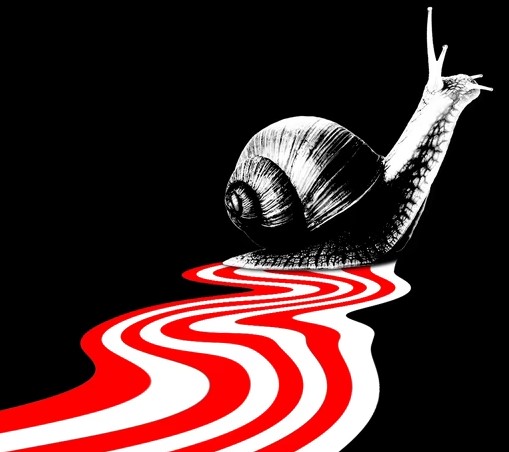
The Snails of Palomares (reworked)


A USAF B52 was taking on fuel from a flying tanker somewhere over Vera (Almería) on January 21st 1966 when something went wrong – the two aircraft touched, and exploded. Debris rained down on the fields and coastline below, including four unarmed nuclear bombs.

I mean, ‘four bombs which hadn’t been armed’, rather than ‘four defenceless bombs’. That would have been cruel.

The gerfuffle as the remains of the aircraft, blobs of raw plutonium and the four bombs were re-secured by the Americans are well known. Two bombs landed on the ground in Palomares (‘falling open and melting everything in their path’ according to unverifiable reports) and the other two fell in the sea, where one was soon found while the forth was finally located in a deep trench off the coast several months later by Alvin, that cute little mini-sub that starred in the National Geographic magazines of the period. Antonio the wise old fisherman with the 150-metre ice-blue stare suggesting fully-fledged insanity may have helped. He was certainly cheaper to fuel.

Franco was on board the Fifth Fleet American destroyer for a brief visit and toying with a complimentary Easter bunny as the bomb was fortuitously hauled aboard.

A suggestion from the time was that the last bomb was in a very deep hole in the sea and was impossible to extract, so a plastic reproduction had been lowered off the other side of the ship to be triumphantly raised in front of the mad Caudillo to cheer him up.

Fraga Irribarne the Minister of Tourism, perhaps unaware of this sleight of hand, famously took a dip in the sea with the American ambassador at the time to show there was no radiation. On the other hand, they carefully enjoyed their frolic in front of the Mojácar Parador, some ten kilometres down the coast.

The Marines removed 800,000 tons of topsoil, fertile and safe, and took it to South Carolina, because, you see, there was no radiation.

It's now used to grow terbacca.

Roberto Puig, an eccentric architect, was meanwhile putting the finishing touches to his Hotel Mojácar located in the village of the same name (many, many years later, Pedro Sánchez, the future president, bought an apartment within the since-converted hotel). Roberto hired a van and drove over to Palomares and managed to secure part of a wing from the bomber, which he proudly affixed to the wall in the cave-bar under his hotel. The local wags said it had an unearthly glow.

A small desalination plant was built in Palomares by the Americans for thirty million dollars as a kind gesture (it was quickly closed down after the resident engineer moved to Mojácar to open a beach bar and, seeing that he wasn't coming back, the Catalan caretaker sold the guts of the building for scrap). A few rusting Geiger counters were left to record the ambient radiation level – if there was any – and new construction extending from Vera Playa into Palomares and Villaricos was given the go-ahead by forward thinking planners (see, I could have written ‘greedy capitalists’).

A recent test on Palomares snails (please pay attention here if you count gastropods in your carefully balanced diet) has shown a higher than normal level of radiation. Their stomach is their foot, so what they walk on, so to speak, they eat. Snail poop, we read somewhere, might spread radioactive dust.

Of course, a light wind, common in that corner of dusty Spain, will spread a lot more dust, radioactive or otherwise.

But one has to start somewhere.

The American Department of Energy, together with the CIEMAT Spanish atomic agency, eventually bought ten hectares of land which had been previously cleared by speculators ready for some building, although the dust already raised and blown to the heavens by the tractors and… no, I’m not going there.

Local ecologists have reacted to the news by saying that a much larger area needs to be sanitised.

The half-life of plutonium is a lot longer than ours.

For the meantime, my advice is, don’t eat the snails.