Tuesday, June 21, 2016
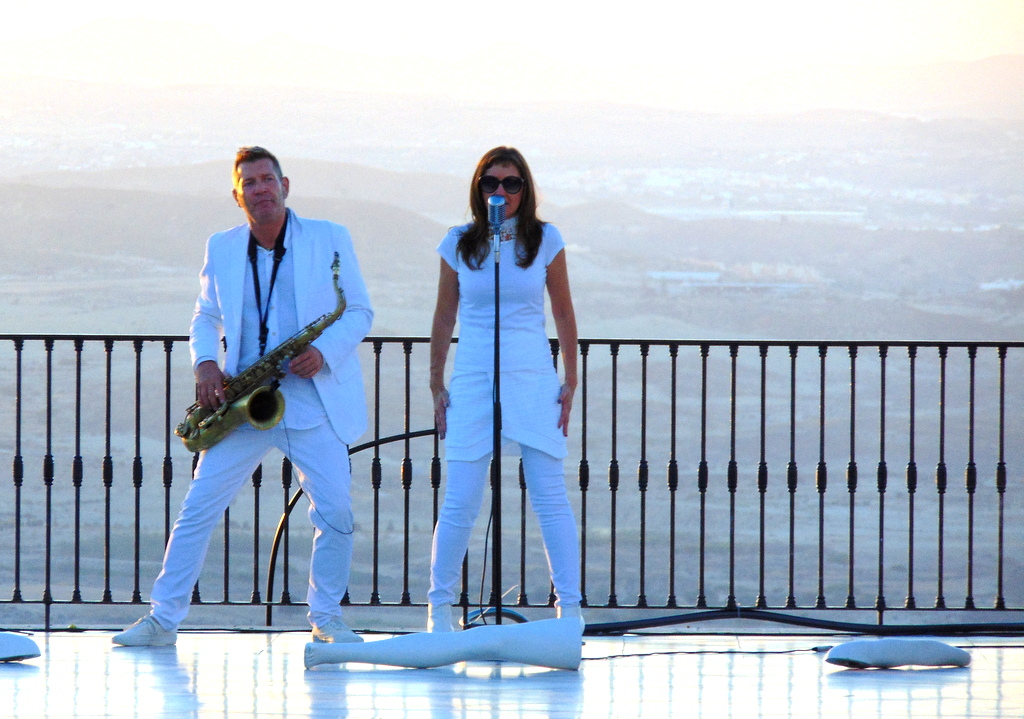
International Music Day, Mojácar Pueblo


Tuesday, June 07, 2016
An Interesting Time
We are approaching a couple
of key events – the British referendum on the European Union, and the Spanish General
Election. The first of these, on Thursday 23rd June, will be (we are told) ‘tight’.
If the British do decide to leave, there will be endless stories to report
about the fate of the ex-pats in Spain. There will probably be calls from other
European countries to hold similar referenda – it could even be, as the
melodramas have it – ‘the beginning of the end’ of the EU. If the UK leaves,
then we can expect the Spanish (and their European partners) to be a little
harsh with us, unforgiving and ungenerous. Are your papers in order?
But perhaps the ‘stay’ vote
will win the day. At least, there would be fewer surprises for those of us who
plan to continue living in Spain. Just three days after the
shock or otherwise of the British poll, the Spanish will be asked to kill
another Sunday with fresh parliamentary elections. There are similar choices to
the December ballot, with the exception of the union between Podemos and the
Izquierda Unida – a partnership which has seen the new ‘Unión Podemos’ move
into second place among the pollsters. Nevertheless, there still remains four
main parties to choose from (plus the regional ones and a few eccentric and slightly
pointless tiddlers). No one party will make it alone – and the ill-felt negotiations
of December might be repeated once again: to no one’s benefit. Unfortunately,
rather than watch the debates, Spain is once again romanced by the far more
compelling (if utterly pointless) Copa de Europa.
Just three days after the
shock or otherwise of the British poll, the Spanish will be asked to kill
another Sunday with fresh parliamentary elections. There are similar choices to
the December ballot, with the exception of the union between Podemos and the
Izquierda Unida – a partnership which has seen the new ‘Unión Podemos’ move
into second place among the pollsters. Nevertheless, there still remains four
main parties to choose from (plus the regional ones and a few eccentric and slightly
pointless tiddlers). No one party will make it alone – and the ill-felt negotiations
of December might be repeated once again: to no one’s benefit. Unfortunately,
rather than watch the debates, Spain is once again romanced by the far more
compelling (if utterly pointless) Copa de Europa. The BoT forecast: a coalition government made of Unión Podemos with the PSOE: Pedro Sánchez for president.
Editorial Business over Tapas 9 June.
Friday, June 03, 2016
The Spanish Legion
I was lucky enough to be invited on Monday to the Sappers
Patron Saint’s Day parade at the Spanish Legion Engineer Battalion’s base ‘La
Brigada Rey Alfonso XIII’ in Viator, Almería. The saint is San Fernando. The
invitation had come from Andrew Mortimer, who teaches English to the officers
(a vital language for any NATO commander). Indeed, Andrew is known to many
British families in Almería as he brings officers to stay with them in their
homes for a week improving their English while learning about sherry trifles
and how one really makes a sangria.

There were ten of us invited on to the base. We were taken
by Andrew (he’s known as Andy), who was in a jacket and tie and wearing a
legionnaire’s cap, to the museum, a fascinating building with memorabilia from
‘La Legión’, which was founded by an eccentric one-armed and one-eyed commander
called José Millán Astrey in 1920. The
museum holds uniforms, flags, paintings, and an alarming number of guns,
pistols, mortars, mines and other bloodthirsty souvenirs of service in the Rif,
in Lebanon, Afghanistan and elsewhere in the past hundred years. We heard that
Millán Astrey didn’t approve of smoking or drinking, so the squaddies – during
the Civil War – invented a concoction called Panther’s Milk: which held lots of
white spirit, mixed and hidden with condensed milk and a twist of gunpowder.

The long walk across to the parade ground – Viator also
houses regular army units (soldiers are known as ‘pistolos’ by legionnaires) – took us past tanks, personnel carriers
and an old Legionnaire’s land-rover to the stands where we were to receive the
Salute. In the event, around three
hundred soldiers marched briskly past us, formed into ranks, as the commandant
took the inspection and issued some ribbon. The musicians played as Christ on a
Cross was carried past reverently (but fast: the legion likes to go at 120
steps per minute). Finally, the mascot for the Spanish Legion was led past, a
magnificent white goat.
The Legion is known to be tough. Their motto is ‘Legionnaires
to the fight Legionnaires to the death'.
We met some of the officers for a drink (wine, thank
goodness) after the parade. They all spoke good English, a tribute to Andy’s
hard work.
Wednesday, June 01, 2016
Venezuela and Spanish Politics
Like the anti-Castroists living in Miami, there are many ‘exiled’ anti-Maduro Venezuelans living, usually in some comfort, in Spain. They are right to excoriate the Revolución Bolivar (although Hugo Chávez had his moments), and Venezuela, thanks to rock-bottom oil prices (96% of the country’s exports is oil) and the ineptitude of the Venezuelan Government (a video from comedian John Oliver explains) is in collapse. The current president Nicolás Maduro is out of his depth; before his ascent to power, he was a bus driver (Wiki).
Why is this of interest to a
news-letter about Spain? - Because the Podemos hierarchy has been identified
with Venezuela and its disastrous policies. Chávez is
said to have financed Podemos (now the even larger Unidos Podemos) or its
predecessor CEPS (for some unexplained
reason) and several past visits to Venezuela and sightings of Pablo Iglesias
(and others) with the Venezuelan revolutionary leaders must have some basis in
fact.
A visit to Caracas just last
week by the President of Ciudadanos Albert Rivera (following another recent
visit – from ex-PSOE leader José Luis Zapatero), in Spain’s pre-election
period, was without doubt a political act, although whether this was a
Ciudadanos initiative or one from the Partido Popular is still unclear.
Much, therefore, has been
written in the Spanish media about Venezuela, identified strongly – and
negatively – in the mind of the electorate with Podemos. An editorial from El País (in English here)
is titled: ‘Venezuela and Spain’s general election. The main political parties
are making their positions clear about the crisis in the South American country’.
The editorial calls for Podemos to ‘own up’ to whatever relationship they have
with Maduro. ‘There is a terrible violation of human rights in Venezuela’, says
the Partido Popular here.
Indeed, so much ink has been
spilt on this subject, some people might wonder if the upcoming vote is for
Spain or somehow for Venezuela. The respected journalist Iñaki Gabilondo (in a video)
thinks that the Spanish election could be won or lost in Venezuela: ‘...let’s
talk more about Spain, and less about distractions and rumour...’, he says.
200,000 Spaniards live in Venezuela, so Spain’s concerns are reasonable – but
how much truth are we offered? A
story in the ABC, suddenly
removed (after it had already gone viral) shows
a Spanish businessman in Caracas, posing in a supermarket in a recent
photograph taken in a wealthy part of the city. The shelves are full.
Business over Tapas editorial 2 June 2016
Tuesday, May 24, 2016
The Night Stalker
We were in the feed shop, to buy some provisions – a bag of
seed and some chicken pienso. The talk had turned to the local issue of the
jineta, a large and nasty predator that creeps around at night, breaking in to
the bird pens and creating carnage. A genet cat, apparently, although nobody
has seen it. The farmers say ‘the ugly face of the killer genet’, although in
truth it’s rather a nice looking creature.
 Aziz invited us to come into the back. Aziz is a Moroccan
graduate in international law, now working in Spain tossing hay and feeding the
chickens. I went with Alicia. ‘There’s where he got in’, said Aziz showing us a
modest looking tear in the bottom of the fence, ‘he killed sixteen pullets. He
bites off their heads and sucks the blood’. We shivered. We had had problems
with this thing as well. ‘Look, I’ve left a snare for him’. We looked (as did
two very worried looking chicks lurking uncomfortably on the far side of the
trap).
Aziz invited us to come into the back. Aziz is a Moroccan
graduate in international law, now working in Spain tossing hay and feeding the
chickens. I went with Alicia. ‘There’s where he got in’, said Aziz showing us a
modest looking tear in the bottom of the fence, ‘he killed sixteen pullets. He
bites off their heads and sucks the blood’. We shivered. We had had problems
with this thing as well. ‘Look, I’ve left a snare for him’. We looked (as did
two very worried looking chicks lurking uncomfortably on the far side of the
trap).
Back in the store, an old man was buying some pellets. ‘They
only do what they are meant to do, it’s not their fault’, he said. ‘Are you a
farmer?’ asked Alicia. ‘No, I’m a hunter’, replied the old man, adding ‘they are God’s
creation: creatures of Allah (he nodded at Aziz helpfully). Alicia became
annoyed, ‘it killed my pet rabbit and a cockerel the other night’, she said
indignantly.
We had found the tracks – heavier and larger than a cat. We
had also found the corpses. Now the other birds – a mixture of ducks, chickens
and peacocks – were all locked in a horsebox, which, judging by the sounds
coming from the other side of the door, they didn’t care for.
I had put something on Facebook. Don’t kill it, said the
British. Kill it, said the farmers. It’s a rare species said the ecologists.
They were brought here by the Moors, said a historian. Catch it and send it to
the zoo, said a girl. It’s a viverrid said a pedant. I’ll wring its bloody neck
myself, said Alicia.
An old news-story found on Google tells of the successful
and humane trapping of a genet which had killed any number of poultry in
Asturias. The unrepentant animal was taken off in its cage to somewhere quiet
in the countryside and was freed. Ecologists, don’t you love them?
Tonight, we wonder what’s happening in the neighbourhood.
There’s a monster loose.
Thursday, May 19, 2016
The Vera Demonstration with Helen and Len Prior

That's Gerardo Vásquez in the picture (left) - he's the British lawyer who has managed to get the Spanish Government to change the law on 'illegal houses' - now, there can be no demolition without a full refund to any 'buyer in good faith'.
Too late for the Priors, unfortunately.
The picture also shows Helen Prior (centre) and her husband Leonard (on the right). Len is holding two photographs: a before and after of their home. Helen says: 'Pictures speak a thousand words. This was our retirement dream. And this is our living nightmare'.


But, let's forget them too. The tragedy is wider still. The people of Almería - a province with 30% unemployment - have lost untold riches in foreign investment, in jobs. All thanks to this one case known to readers and TV viewers across Europe: the case of Helen and Len Prior, who lost their home in a barbaric attack in January 2008.
Tuesday, May 17, 2016
Butterflies in Nijar
There's nothing as sublime in life as being
surrounded by butterflies. Red ones, some a beautiful shade of green, large Mexican
turquoise butterflies, orange fritillaries from the Orient.
A modest zoo in Nijar (Almería) holds these and many others
inside a reserve, a large greenhouse with a garden, a pond, flowers, some
benches, soft piped music and a wonder of butterflies.
The butterflies dart about, except for the big
Mexican fellows – they’re called Blue Morphos, who seem to flap so slowly as
they spin through the air, they could be swimming. It was wondrously relaxing.
I felt like a character from Alice, perched on a mushroom and (figuratively)
wearing a felt hat and smoking a hookah.

 On hand were three women to explain the story of the
Mariposario de Nijar. They speak Spanish, French and English. They look after
their charges, providing bowls of sugar-water and a soft spray to keep the atmosphere
moist. One of the women is an 'educator', who looks after the young children
who visit, keeping them both out of trouble and armed with paper and crayons. Another
does brief tours around the greenhouse, here showing a butterfly laying eggs, there
showing a couple mating. Outside, in the gift shop, a Frenchwoman showed me
some charming butterfly-themed pottery. I would have asked them more about the
butterfly zoo, but I was too enchanted, and instead asked to borrow a crayon.
On hand were three women to explain the story of the
Mariposario de Nijar. They speak Spanish, French and English. They look after
their charges, providing bowls of sugar-water and a soft spray to keep the atmosphere
moist. One of the women is an 'educator', who looks after the young children
who visit, keeping them both out of trouble and armed with paper and crayons. Another
does brief tours around the greenhouse, here showing a butterfly laying eggs, there
showing a couple mating. Outside, in the gift shop, a Frenchwoman showed me
some charming butterfly-themed pottery. I would have asked them more about the
butterfly zoo, but I was too enchanted, and instead asked to borrow a crayon.
The Mariposario is just outside Nijar, on the spur
off the motorway. Open every day. The entrance fee is 8.50€ and down. They say in their leaflet: 'The butterfly is
like Happiness. If you seek it, it will remain beyond your reach; but if you
sit quietly and wait, it will come and settle on your shoulder'. Nice. Go
visit!

Subscribe to:
Posts (Atom)